
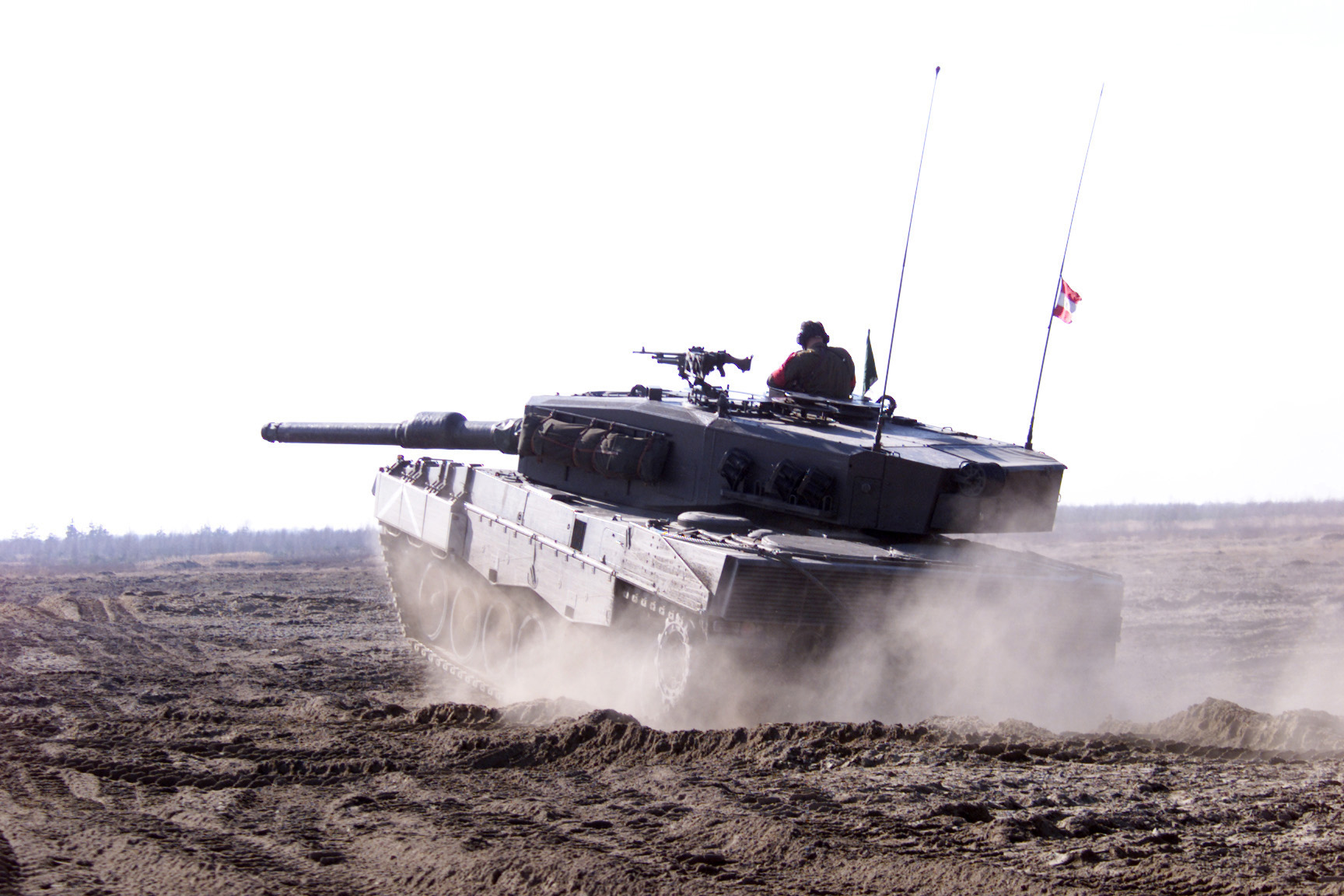
In mid-October 2026, in a small town in central Norway, workers began assembling Leopard 2A8 tanks. It took 18 months to set up the factory. It is a small scene, but it captures something much bigger: after three decades of shrinking armies and closing factories, Europe is rearming at a pace not seen since the Cold War.
In this article
Here is where the money is coming from, who is benefiting, and why spending more is not the same as being ready.
The scale of the spending
According to SIPRI, global military spending hit a record of around $2.9 trillion in 2025, with Europe and Asia driving the surge. European NATO members and Canada spent more than $570 billion on defence in 2025, up by roughly a fifth in a single year. EU member states alone spent an estimated €418 billion, according to European Defence Agency figures cited by analysts.
Three forces are pushing the numbers up: Russia’s war in Ukraine, doubts about America’s long-term commitment to Europe, and NATO’s 2025 pledge to spend 5% of GDP on defence by 2035, as we covered in our analysis of NATO 3.0.
Where the money comes from
In March 2025, the European Commission unveiled a plan, first called ReArm Europe and later renamed Readiness 2030, to mobilise up to €800 billion for defence. Most of that is not new EU money. Around €650 billion comes from letting governments spend more on defence without breaking EU budget rules, and €150 billion comes from a new loan scheme called SAFE. The first SAFE payment, to Poland, came in May 2026, later than planned.
Germany, long the most cautious big spender, has changed most dramatically. It loosened its strict constitutional debt rules for defence in 2025 and plans to spend well over €100 billion a year on its military by 2027.
Who is winning
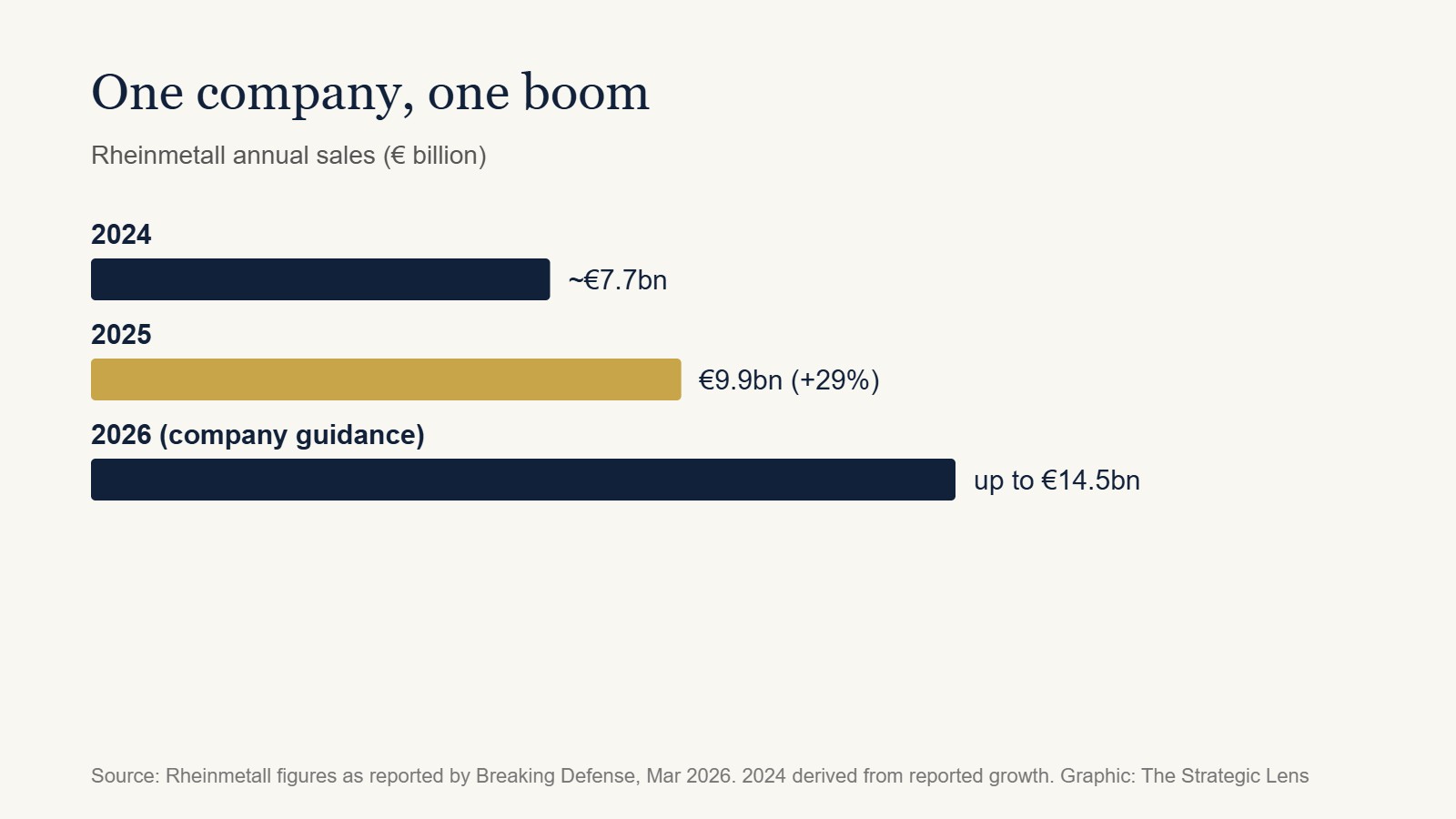
The clearest winner is Germany’s Rheinmetall, Europe’s largest maker of ammunition and armoured vehicles. Its sales rose 29% to €9.9 billion in 2025, its order backlog hit a record €63.8 billion, and it has guided for up to €14.5 billion in sales in 2026. It is even selling off its civilian car-parts business to focus entirely on defence.
But the boom is broader than one company. Joint projects are multiplying, like the Norway–Germany “Hansa” defence pact, under which Norway is building most of its 54 new Leopard tanks at home and both countries will operate the same new Type 212CD submarines.
Europe’s problem is no longer money. It is turning money into weapons, fast.
The bottlenecks
- Capacity. Factories, skilled workers, explosives and raw materials are all in short supply. EU auditors have warned that these bottlenecks could limit how much of the new money turns into real capability.
- Fragmentation. Europe still buys too many different types of tanks, guns and aircraft. Only about a quarter of EU equipment purchases were made jointly in 2025, below the bloc’s own 35% target.
- Buy European or buy American? The US still supplies most of European NATO’s imported major weapons, but its share has slipped from 64% to 58%. As America pulls back, pressure to buy European is rising.
- Not every bet pays off. Even Rheinmetall has taken losses, for example on a cancelled frigate programme.
What it means for India
Europe’s rearmament cuts both ways for India. European factories will be busy filling home orders, which could slow deliveries to export customers. But European governments are also looking for new suppliers and partners to expand capacity. Indian firms that make ammunition components, castings and electronics are already winning European contracts, a trend we track in our look at India’s defence exports.
Our take
Europe has decided to pay for its own defence. That is the easy part. The hard part is building the factories, supply chains and joint programmes that turn budgets into brigades. The next five years will show whether Europe’s rearmament is a real industrial revival or just a spending spree.
Frequently asked questions
How much is Europe spending on defence?
European NATO members and Canada spent over $570 billion on defence in 2025, up about 20% from the year before.
What is ReArm Europe or Readiness 2030?
It is the EU’s plan to mobilise up to €800 billion for defence, mostly through looser budget rules for member states plus €150 billion in SAFE loans.
Which companies benefit from Europe’s rearmament?
Ammunition and armoured vehicle makers such as Rheinmetall have seen the biggest gains, with record orders and sales.
More from Strategic Lens Defence: Defence Industry & Deals · Geopolitics
Sources and further reading
This is original analysis by Strategic Lens Defence. Key facts were cross-checked across multiple independent sources; where reports disagree or rest on a single source, we say so in the text. All wording and graphics are our own.
- CNBC — Global military spending hits record $2.9 trillion, SIPRI (Apr 2026)
- SIPRI — Global military spending rise continues (Apr 2026)
- Breaking Defense — Rheinmetall predicts $16.8B sales as it focuses on defence (Mar 2026)
- Defense News — Norway and Germany forge ahead with “Hansa” defence pact (30 Oct 2026)
- Defense News — Hasty US exit could drive allies away from American arms, RAND (Oct 2026)
- General Assets — Europe’s rearmament: from announcements to orders (Oct 2026)
- Wikipedia — Readiness 2030 (ReArm Europe)
- Wikimedia Commons — photo: Austrian 4th Infantry Brigade Leopard 2A4 MBT (public domain)


Leave a Reply