
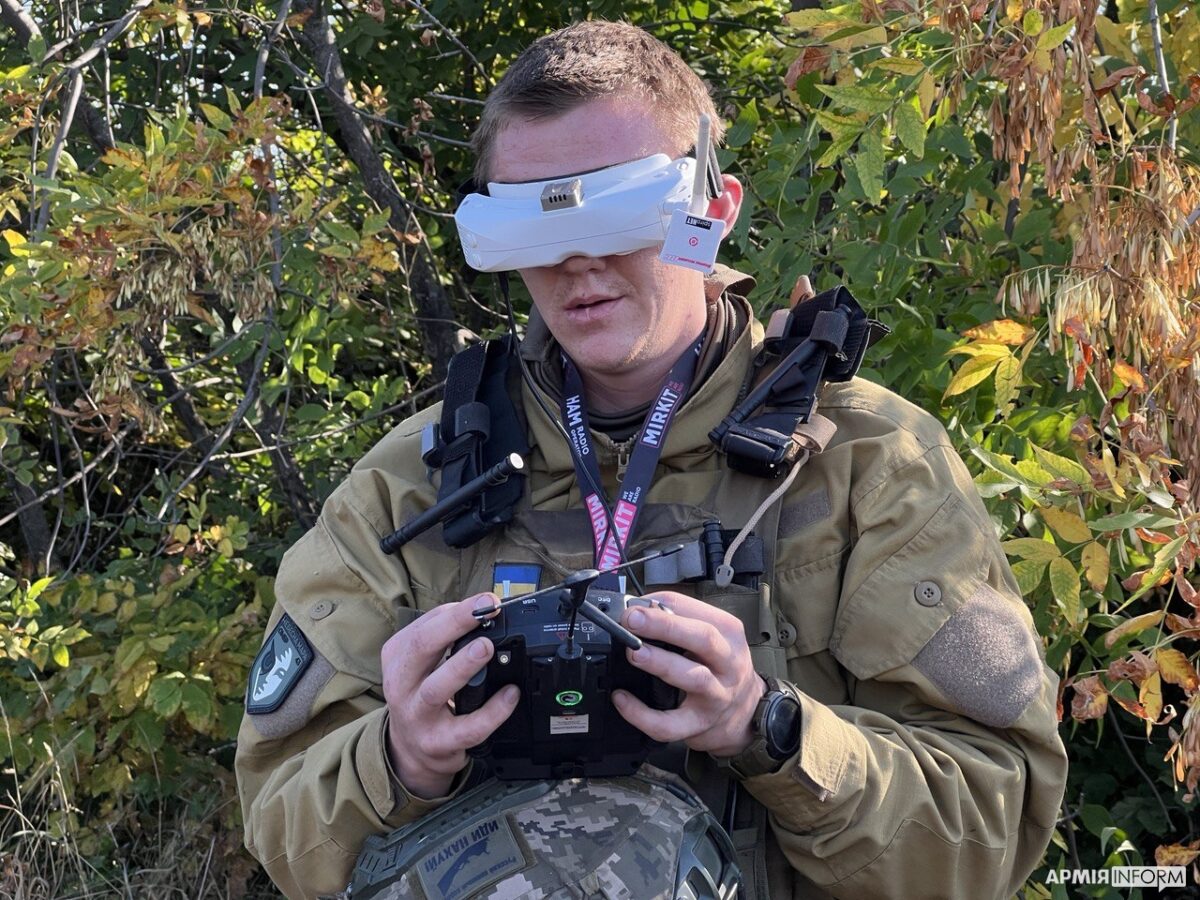
A few years ago, a drone unit in most armies meant a handful of specialists flying expensive surveillance aircraft from a trailer. Today, tank gunners in France are being retrained as drone pilots, the US Army is trying to put attack drones in every infantry squad, Israel has created a whole new branch of its military for robots and AI, and Ukraine runs an entire service built around unmanned systems.
In this article
The war in Ukraine forced this change. Cheap first-person-view (FPV) drones and loitering munitions now cause a large share of battlefield casualties there, and every serious army is racing to absorb the lesson. Here is how four of them are doing it, and what the early results really show.
France: tank gunners become drone pilots
France’s 1st Marine Infantry Regiment converted one of its three light cavalry squadrons into an all-drone unit, made up largely of former AMX 10 RC armoured-car gunners. According to Defense News, the squadron of about 120 people, around 100 of them pilots, has one reconnaissance platoon, two FPV strike platoons and one loitering-munition platoon. It was declared fully operational in April 2026.
The French Army’s chief of staff has told lawmakers he wants around 15 drone combat units by summer 2027, and one has already deployed to Romania. Different generals have given slightly different timelines, a sign the plan is still evolving.
United States: drones down to the squad
The US Army ran a temporary “Unmanned Assault Battalion” of about 600 soldiers to experiment with drone tactics, ending it after an exercise in Germany in 2026. The lesson it took away, according to Military Times, is to push one-way attack drones down to individual squads rather than keep them in specialist units. Army officers say around 10,000 drones are already fielded, with tens of thousands more on the way. The bottleneck is not hardware but training enough qualified pilots.
In October 2026, the Army also created a Futures and Autonomous Systems Command to weave autonomy into aviation, armour, artillery, engineering and logistics, with autonomous capabilities due to be fielded by 2028. It follows Defense Secretary Pete Hegseth’s announcement of a new Autonomous Warfare Command at the Pentagon level.
Israel: a new branch for robots and AI
In September 2026, Israel’s chief of staff announced an Unmanned Systems and Artificial Intelligence Branch. The Israel Defense Forces said it would be fully inaugurated by early December. Details on its size and budget have not been made public.
Ukraine: an army within the army
Ukraine went furthest, earliest. Its Unmanned Systems Forces were created in 2024 as a separate branch of the armed forces, with their own commander since mid-2025. Ukrainian commanders claim the force strikes tens of thousands of Russian targets a month, though such figures cannot be independently verified. Ukrainian drone operators have also played the opposing force against NATO troops in exercises, teaching Western armies what drone warfare looks like up close.
The reality check
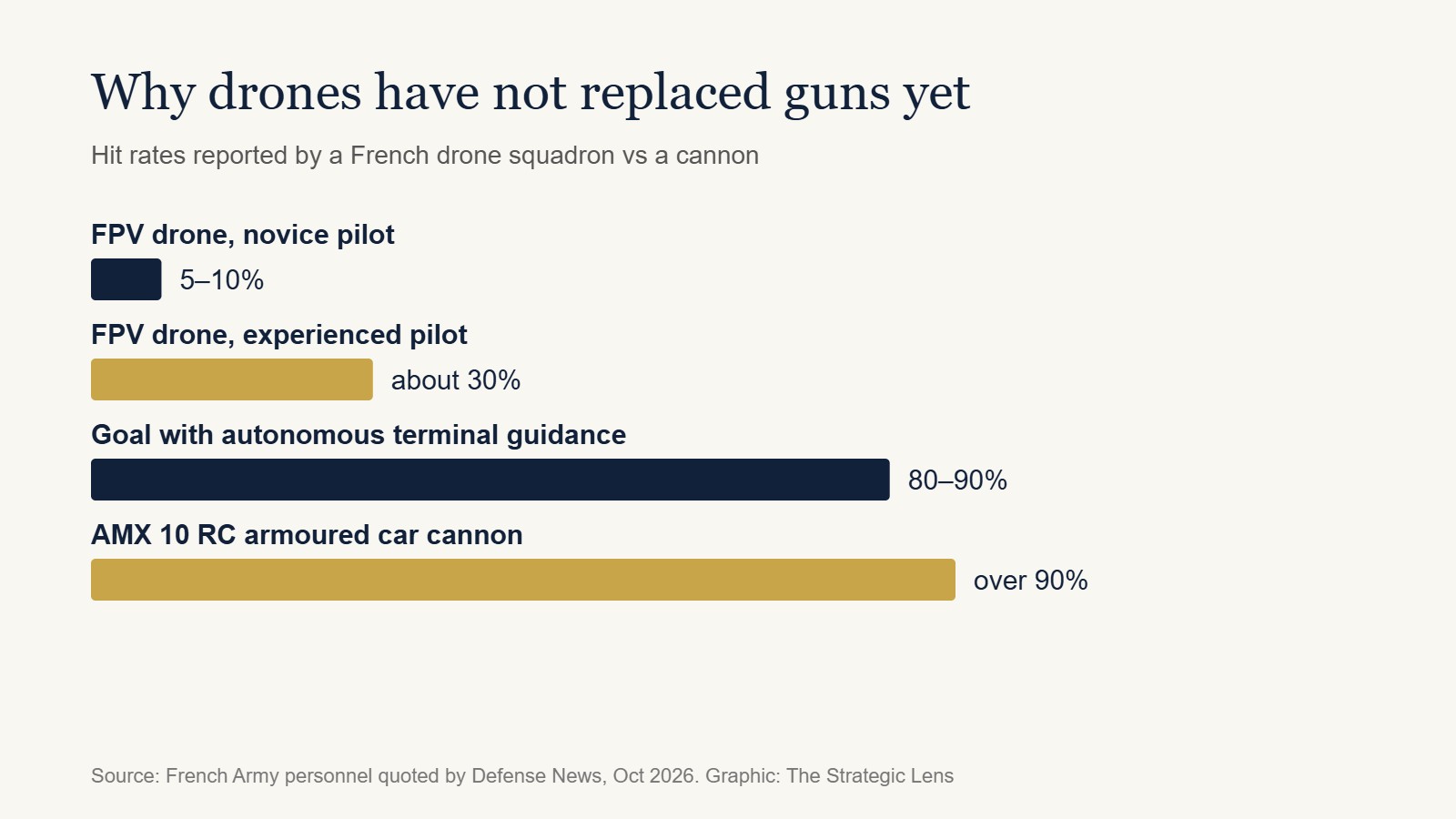
For all the excitement, the people flying these drones are frank about their limits. A French staff sergeant told Defense News that novice FPV pilots hit their target only 5 to 10% of the time, and experienced ones around 30%. The armoured-car cannon those same soldiers used to operate hits more than 90% of the time. The French are counting on autonomous terminal guidance, where software takes over in the final seconds, to push drone hit rates up to 80 to 90%.
Electronic warfare is the other big problem. French exercises found that jamming reduced drone effectiveness on several occasions, and units are still learning to tell when a failed strike was caused by jamming rather than pilot error. Range is limited too: doctrinal strike range for FPV drones in the French unit is about 10 km.
The lesson from every army is the same: drones add to firepower. They do not yet replace it.
What this means for India
India is on the same path. The Indian Army has added drone platoons to its infantry battalions, created new drone-heavy artillery units and set a goal of training every soldier to fly a drone, as we explained in our guide to Indian Army restructuring. The French and American experience suggests the hardest part will not be buying drones, but training pilots, protecting them from jamming, and fitting them into tactics alongside tanks and artillery.
Our take
The drone revolution is real, but it is a revolution in mass and cost, not yet in precision. Armies that treat drones as a replacement for traditional firepower will be disappointed. Armies that blend the two, and invest in training and electronic protection, will have the edge in the next war.
Frequently asked questions
Which armies have dedicated drone units?
Ukraine has a separate Unmanned Systems Forces branch, Israel has created an Unmanned Systems and AI Branch, France is building around 15 drone combat units, and the US is pushing drones down to squad level.
Are drones replacing tanks and artillery?
Not yet. Reported FPV drone hit rates are far lower than traditional weapons, and jamming remains a major problem, so armies are combining drones with conventional forces.
Why are armies reorganising around drones?
The war in Ukraine showed that cheap drones and loitering munitions can cause heavy losses, pushing armies to add drone units and train more soldiers as pilots.
More from Strategic Lens Defence: Armed Forces · Emerging Tech
Sources and further reading
This is original analysis by Strategic Lens Defence. Key facts were cross-checked across multiple independent sources; where reports disagree or rest on a single source, we say so in the text. All wording and graphics are our own.
- Defense News — Why France is turning tank gunners into FPV pilots (30 Oct 2026)
- Military Times — As experimental drone battalion ends, Army aims to push drones to every squad (Sep 2026)
- US Army — Army announces Futures and Autonomous Systems Command (Oct 2026)
- Breaking Defense — Israeli military creates new branch focused on AI, drones and robotics (Sep 2026)
- Breaking Defense — Is the Pentagon’s demand signal for drones working? (Oct 2026)
- Wikipedia — Unmanned Systems Forces of Ukraine
- Wikimedia Commons — photo: UA military FPV drones 09 (CC BY 4.0)


Leave a Reply