
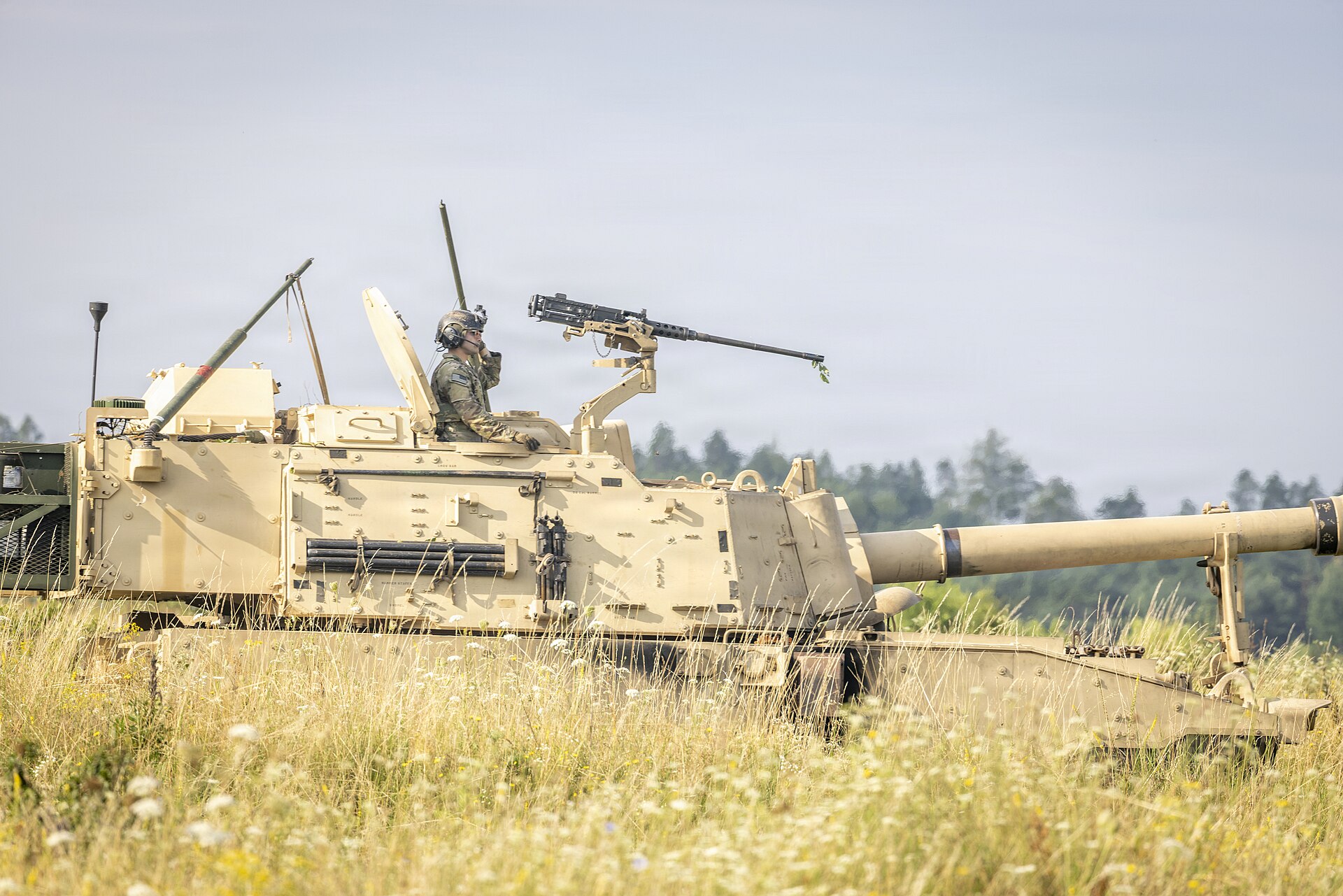
For 80 years, European security rested on a simple promise: if Russia (or the Soviet Union before it) attacked, American troops would already be there. In 2026, that promise is being quietly rewritten. US forces are leaving parts of Europe, a Pentagon review of the entire American presence is due by December, and Washington’s message to its allies is blunt: you take the lead on your own defence.
In this article
Officials in Washington call the new arrangement “NATO 3.0”. Here is what it means, what is already happening, and whether Europe can fill the gap.
What has changed this year
- Troop cuts. The US had roughly 80,000 troops at around 30 bases across Europe in 2025. In May 2026, it announced about 5,000 would leave Germany, with smaller cuts in Romania and the Baltics.
- A cancelled deployment. Also in May, the Army scrapped the planned rotation of an armoured brigade of roughly 4,000 soldiers to Poland, though President Trump later pledged 5,000 troops to Poland.
- A full review. Defense Secretary Pete Hegseth announced a review of US force posture in Europe in June. Reports say troop options were due to him in early November, with the full review expected in December.
- A change in tone. According to Reuters, Pentagon officials have even asked some European governments to tone down their public warnings about the Russian threat.
US officials have also floated reducing the number of rotational combat brigades in Europe from four to three, roughly where they stood before Russia’s full-scale invasion of Ukraine.
What “NATO 3.0” actually means
The idea, championed by Under Secretary of Defense Elbridge Colby, is that Europe should provide most of NATO’s conventional military power, its tanks, troops, artillery and air defences, while the United States remains the nuclear guarantor and strategic backstop. American attention and resources would shift towards the Western Hemisphere and the Pacific, where Washington sees China as the main long-term threat.
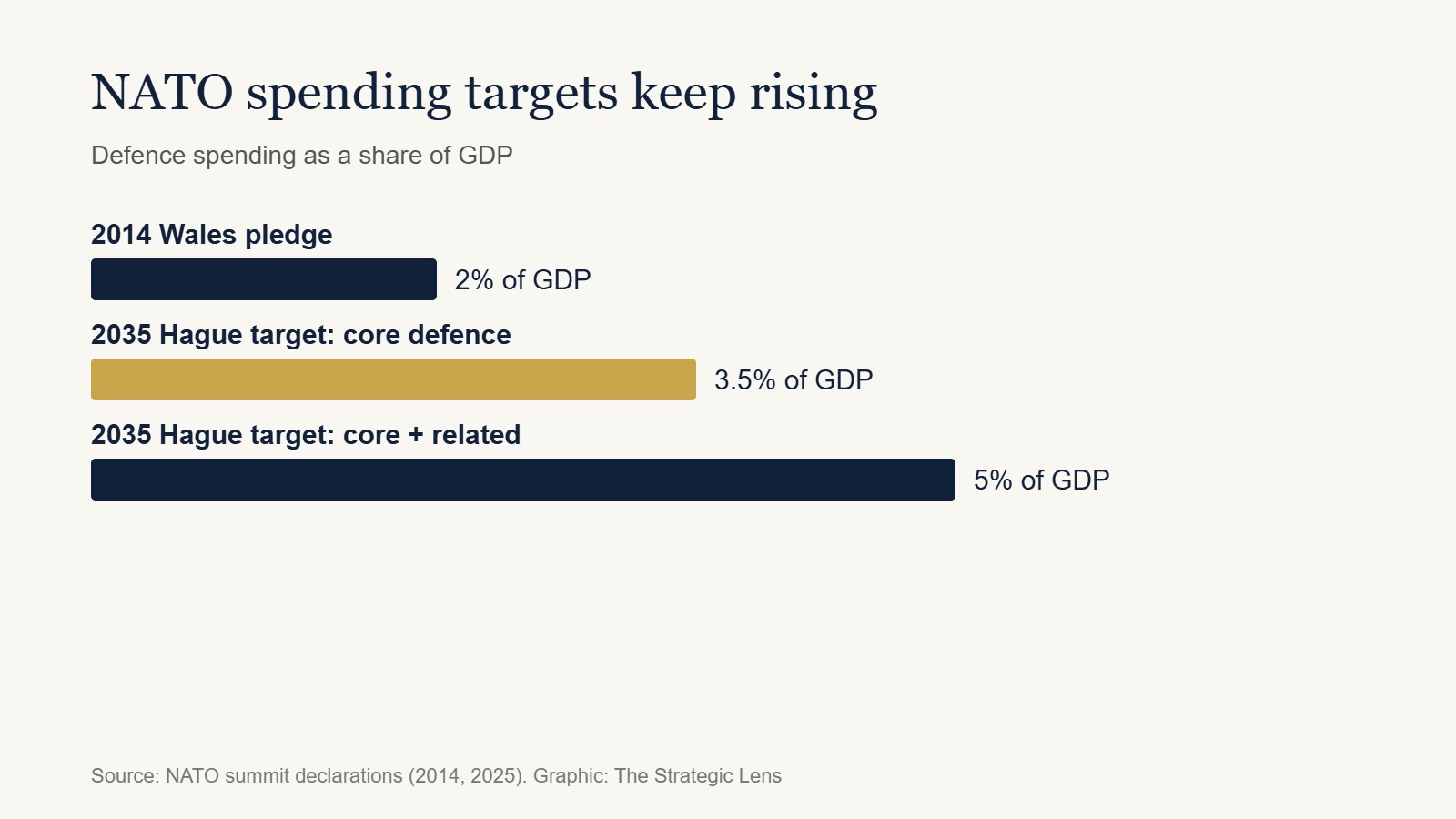
European governments have, in principle, already signed up to pay for this. At the NATO summit in The Hague in June 2025, allies agreed to spend 5% of GDP on defence by 2035, with at least 3.5% on core military spending and up to 1.5% on related areas like infrastructure and resilience. Spain secured an exemption.
Can Europe fill the gap?
On money, Europe is moving fast. European allies and Canada spent more than $570 billion on defence in 2025, an increase of roughly a fifth in a single year. On capability, the picture is mixed. Analysts at CSIS sort Europe’s needs into three groups:
- What Europe can largely do now: land forces, territorial defence and, increasingly, munitions production.
- What it is building: airlift, surveillance and long-range strike.
- What it still relies on America for: command and control at scale, intelligence fusion, integrated air and missile defence, and logistics.
Those last items are the expensive, invisible glue that holds a modern military campaign together. Estimates of what it would cost Europe to replace them run to around a trillion dollars above existing plans.
Europe can buy tanks quickly. It cannot buy a 70-year-old command network overnight.
How fast is too fast?
A RAND study released in late October, based on interviews in France, Germany, Poland and the UK, found that how the US leaves matters more than whether it leaves. A coordinated, long-term drawdown agreed with allies is manageable. A rapid, uncoordinated one would open major capability gaps. RAND also warned that a hasty exit could push Europeans away from buying American weapons; the US share of European NATO members’ major arms imports has already slipped from 64% to 58%, according to SIPRI data cited in the study.
Why it matters beyond Europe
For India, a Europe that spends more on its own defence is both a competitor and an opportunity. European firms will chase new orders at home, but European governments are also looking for new partners and supply chains. And an America more focused on the Pacific is, from New Delhi’s perspective, an America more focused on China.
Our take
NATO 3.0 is not the end of the alliance. It is the end of Europe’s free ride. The risk is not that America leaves, but that it leaves faster than Europe can build the command, intelligence and air-defence systems it has never had to own. The December review will show whether Washington is planning a handover or a walkout.
Frequently asked questions
What is NATO 3.0?
NATO 3.0 is the US vision for Europe to provide most of NATO’s conventional forces while the United States remains the nuclear guarantor and focuses more on the Pacific and the Western Hemisphere.
How many US troops are in Europe?
About 80,000 US troops were based in Europe in 2025. Thousands are being withdrawn in 2026, and a Pentagon posture review is expected by December 2026.
What is NATO’s 5% spending target?
At the 2025 Hague summit, allies agreed to spend 5% of GDP on defence by 2035: at least 3.5% on core defence and up to 1.5% on related areas.
More from Strategic Lens Defence: Geopolitics · Defence Industry & Deals
Sources and further reading
This is original analysis by Strategic Lens Defence. Key facts were cross-checked across multiple independent sources; where reports disagree or rest on a single source, we say so in the text. All wording and graphics are our own.
- CSIS — The Europe force posture review and the transition to NATO 3.0 (Aug 2026)
- Defense News — Pentagon has kicked off review of US force posture in Europe (Jul 2026)
- Defense News — Hasty US exit from Europe could drive allies away from American arms, RAND says (29 Oct 2026)
- Defense News — Pentagon tells Europeans to cool their rhetoric on Russia (30 Oct 2026)
- Defense News — Where the US Army moved in 2026 (19 Oct 2026)
- ICDS — Europeanising NATO: immediate response (Oct 2026)
- Wikipedia — Agreement on 5% NATO defence spending by 2035
- Wikimedia Commons — photo: U S Army Soldiers with the NATO FLF Battle Group conduct live fire exercise in Poland (9857367) (public domain)


Leave a Reply