
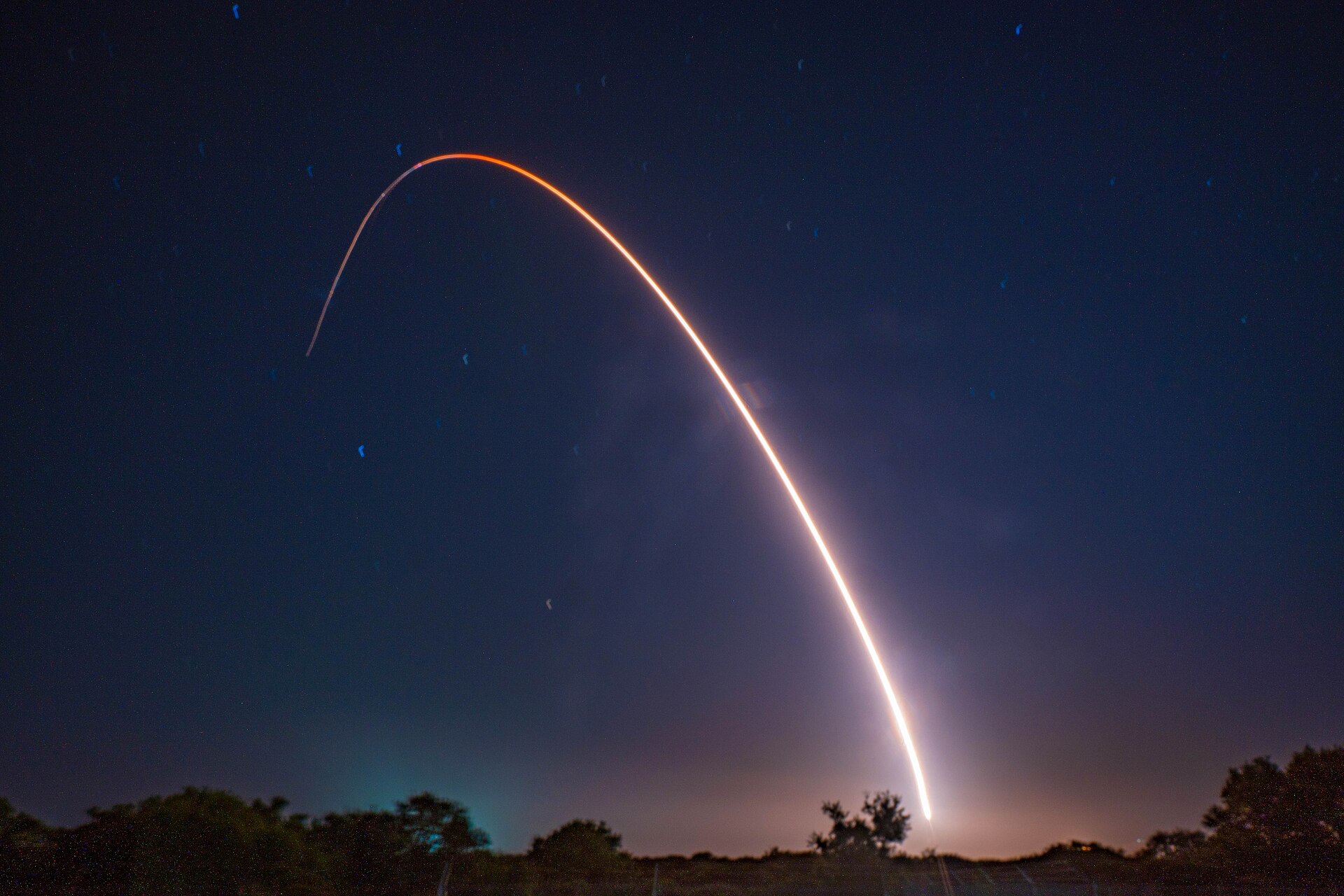
On 5 February 2026, something happened that had not happened since the early 1970s. The world’s two largest nuclear powers were left with no binding limits on their strategic nuclear weapons, and no new agreement under negotiation. The New START treaty between the United States and Russia simply expired. There was no ceremony and no replacement.
In this article
Nine months on, here is what that means, why it matters, and why China is now at the centre of the problem.
What New START did
Signed in 2010 by Presidents Obama and Medvedev, New START capped each side at:
- 1,550 deployed strategic nuclear warheads
- 700 deployed intercontinental missiles, submarine-launched missiles and heavy bombers
- 800 deployed and non-deployed launchers in total
Just as important, it let each side check the other through data exchanges, notifications and on-site inspections. That transparency was arguably worth more than the numbers. The treaty was extended once, in 2021, for five years, the maximum its terms allowed.
How it unravelled
The decline began in February 2023, when President Putin suspended Russia’s participation, ending inspections and data exchanges. In September 2025, Putin offered to keep observing the treaty’s central limits informally for one more year after expiry. President Trump initially called the idea good, but Washington never gave a formal answer.
When the treaty lapsed, Trump called for a “new, improved, and modernized” agreement. US officials said any new deal should include China and cover all Russian warheads, including the smaller tactical weapons New START never touched. Russia’s foreign minister said Moscow would respect the old limits for now, but only as long as the United States did too. As far as the sources we reviewed show, no replacement has been agreed since.
The China problem
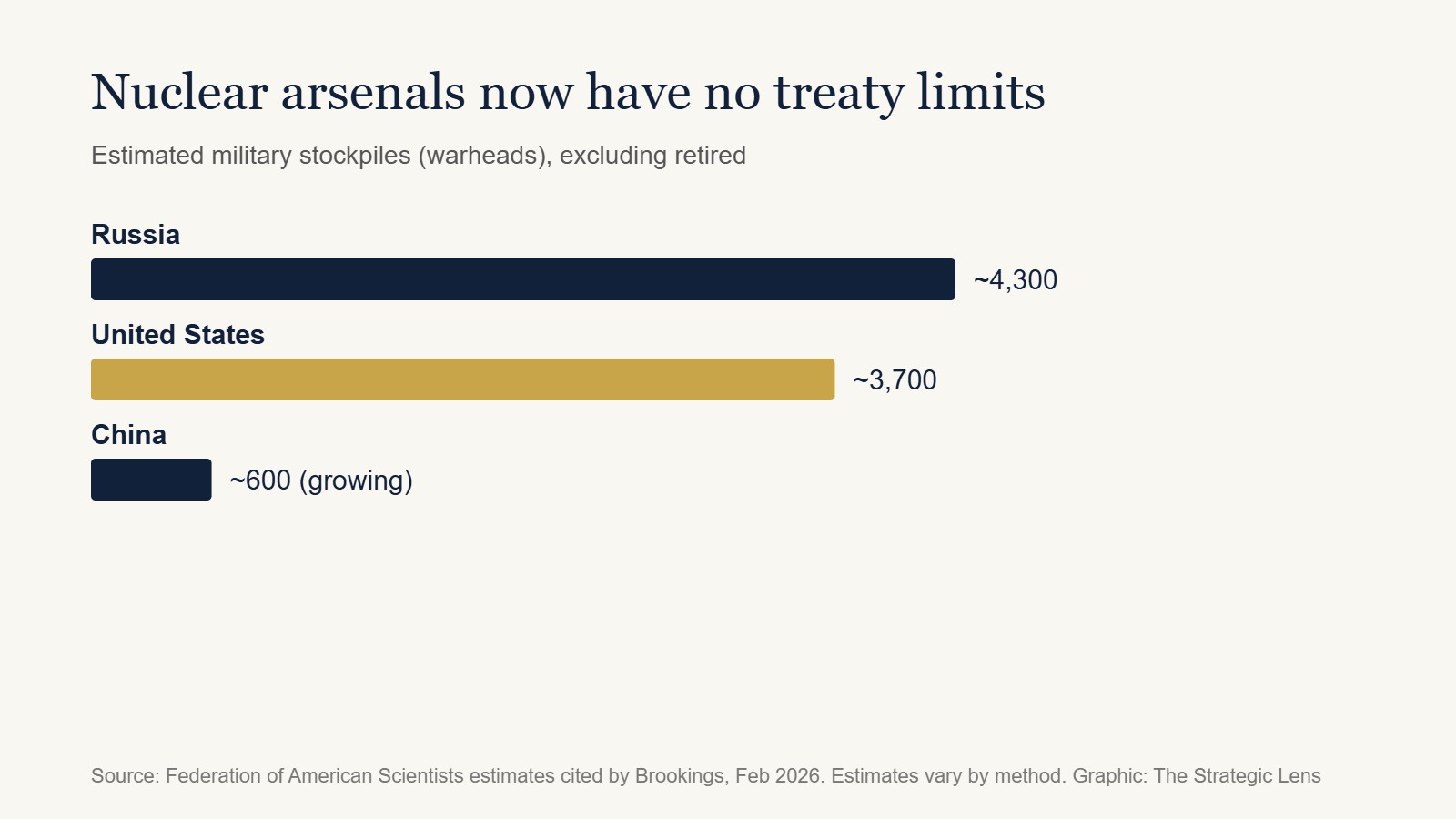
China’s nuclear arsenal has grown from an estimated 250 warheads in 2015 to around 600 today, and a Pentagon projection suggests it could pass 1,000 by 2030. That is still far below the US and Russian stockpiles, but it is the fastest growth of any nuclear power.
This is why Washington wants China at the table, and why Beijing refuses. China’s position is that it will not join disarmament negotiations at this stage, because the US and Russia hold far larger arsenals. A US attempt to bring China into talks in 2020 also went nowhere.
For the first time in half a century, nuclear planners in Washington and Moscow have to assume the worst about each other, with no inspections to prove otherwise.
Why it matters
- Uploading. Both the US and Russia have missiles that could carry more warheads than they do now. Without limits, either side could add warheads relatively quickly, and fear that the other will.
- Blind spots. Without inspections and data exchanges, each side relies on intelligence estimates, which tend to assume the worst.
- Missile defence. Plans like America’s Golden Dome, which we explain in our Golden Dome explainer, give Russia and China extra reasons to build more warheads to make sure some get through.
- Three-way competition. Arms control was built for two players. A three-way nuclear race is far harder to manage.
What it means for South Asia
India and Pakistan were never part of New START, but they live downstream of it. A faster-growing Chinese arsenal puts pressure on India’s own nuclear planning, and any Indian response is watched closely in Pakistan. The breakdown of US-Russia arms control also weakens the global norms, like the Non-Proliferation Treaty, that both countries’ nuclear status is measured against.
Our take
New START’s expiry did not cause an instant arms race. Both sides still seem to be living within the old limits. But it removed the guardrails that made restraint verifiable. The longer the world goes without them, the more likely it is that worst-case thinking, not treaties, will decide how many nuclear weapons exist.
Frequently asked questions
When did New START expire?
New START expired on 5 February 2026 after its one permitted five-year extension.
What were New START’s limits?
Each side was limited to 1,550 deployed strategic warheads, 700 deployed missiles and bombers, and 800 total launchers, with on-site inspections to verify.
Why won’t China join nuclear arms control talks?
China says its arsenal of around 600 warheads is far smaller than those of the US and Russia, and it will not join disarmament negotiations at this stage.
More from Strategic Lens Defence: Missiles & Nuclear · Geopolitics
Sources and further reading
This is original analysis by Strategic Lens Defence. Key facts were cross-checked across multiple independent sources; where reports disagree or rest on a single source, we say so in the text. All wording and graphics are our own.
- Arms Control Today — New START expires as US urges “modernized” treaty (Mar 2026)
- Chatham House — US and Russia’s nuclear treaty set to expire (Jan 2026)
- Brookings — What comes after New START? (Feb 2026)
- ICAN — The expiration of New START
- Center for Arms Control and Non-Proliferation — Statement on New START expiration
- Bulletin of the Atomic Scientists — Arms control after New START (Feb 2026)
- Congressional Research Service — US-Russian nuclear arms control
- Wikimedia Commons — photo: Unarmed Minuteman III ICBM launch – operational test – Vandenberg Space Force Base – May 21 2025 (public domain)


Leave a Reply