
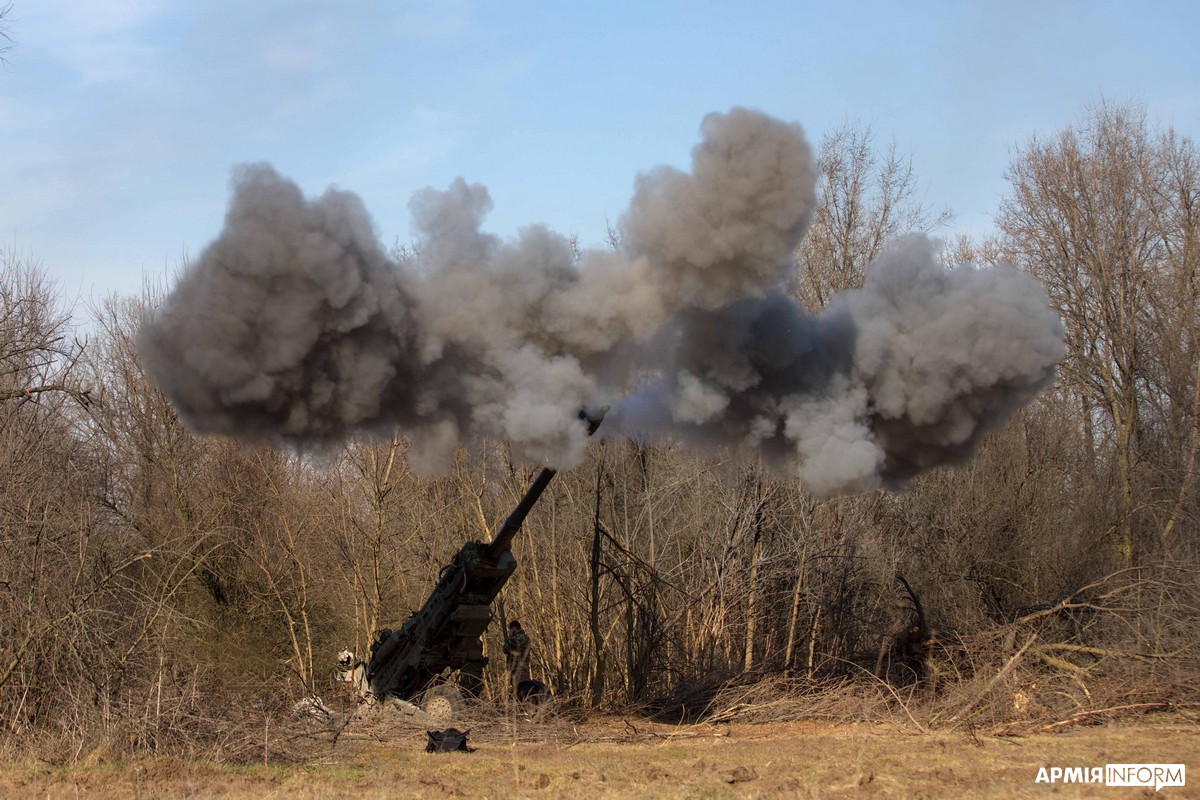
On 27 October, at four in the morning, the guns around one small town in southern Ukraine were supposed to fall silent. Oleshky sits on the occupied bank of the Dnipro, across the river from Kherson. Under a deal agreed a few days earlier, Russia and Ukraine would pause fire there so aid could get in, roads could be cleared of mines, and the town’s remaining residents, estimated at under two thousand people, could leave.
In this article
It is a tiny deal in a huge war. But as the two sides prepare for another round of US-brokered talks in November, Oleshky is a useful lens on the bigger question: can a string of small, local ceasefires build towards a real peace, or are they just pauses between offensives?
A year of talks that went nowhere fast
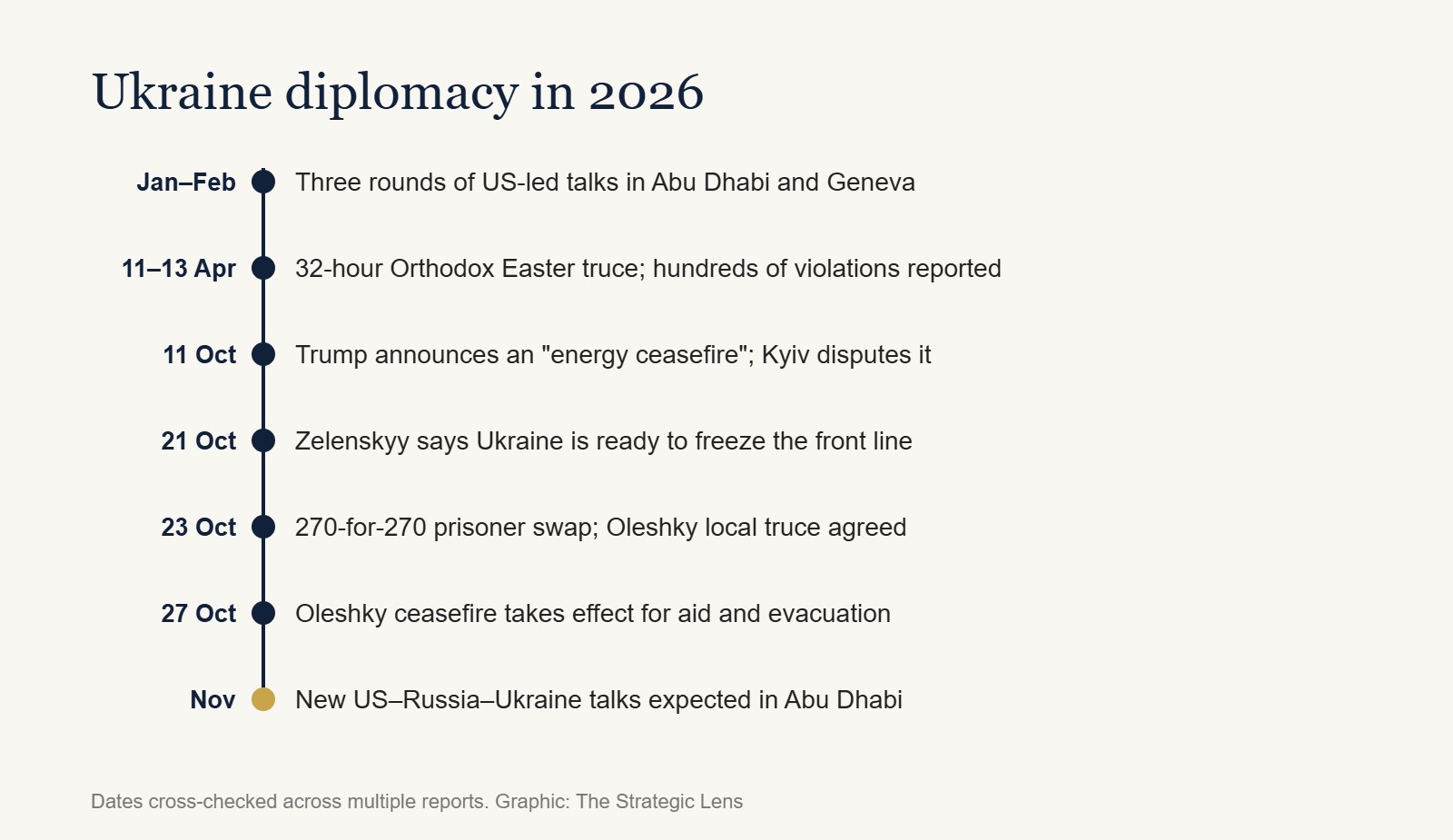
2026 began with genuine diplomatic movement. The United States hosted three rounds of trilateral talks with Russian and Ukrainian delegations in January and February, twice in Abu Dhabi and once in Geneva. They produced prisoner exchanges but little else, and by late February the process had stalled.
A 32-hour truce over Orthodox Easter in April showed how fragile any pause is. Ukraine reported hundreds of violations, mostly by drones, and full fighting resumed as soon as the clock ran out.
The October flurry
October brought a burst of activity. On 11 October, President Trump announced that both sides had agreed to an “energy ceasefire”, a halt to strikes on power and gas infrastructure. Kyiv said it had not been consulted, and within a day President Zelenskyy accused Russia of violating it after strikes on gas facilities in Kharkiv. The episode captured a recurring problem: truces announced in Washington before the warring parties have actually signed on.
Then things moved. On 21 October, Zelenskyy said publicly that Ukraine was ready to freeze the war along the current front line as a first step, provided it was followed by security guarantees from the United States and Europe. Two days later, the two sides swapped 270 prisoners each, the first exchange since August, and agreed the Oleshky arrangement, which the White House said was brokered with the involvement of First Lady Melania Trump.
Both Kyiv and Moscow have since confirmed a new round of trilateral talks in the first half of November, expected in Abu Dhabi.
The front line has barely moved in 2026. The negotiating positions have barely moved either.
The gap that has not closed
The core problem is the same as it was a year ago. Russia still demands that Ukraine hand over all of the Donbas region, including territory Russian forces have never captured. Ukraine refuses. Kyiv’s offer is to stop where the armies stand, then negotiate the rest with guarantees in place. Moscow’s position is that it does not want a general ceasefire until its territorial demands are met.
Other irritants have piled up. Ukrainians have complained about speed caps on Starlink satellite internet since mid-October, and about Washington’s easing of some sanctions on Russian diesel. Each one feeds suspicion in Kyiv that it is being nudged towards a bad deal.
Why small ceasefires still matter
- They build habits. Prisoner swaps and local truces force the two militaries to talk and to keep promises, however briefly.
- They save lives. For the people of Oleshky, a few days of quiet means food, medicine and a way out.
- They test intentions. If the energy and Oleshky deals hold, both sides have something to point to. If they collapse, it shows how far apart they really are.
What to watch in November
- Whether the Abu Dhabi talks happen on schedule and at what level.
- Any movement on Donbas from either side, which would be the first real sign of compromise.
- Whether European governments commit to concrete security guarantees, which Kyiv says it needs before any freeze.
- Strike patterns against energy infrastructure as winter arrives.
Our take
Local ceasefires are not peace. But in a war where both armies are exhausted and the front has barely moved, they may be the only bricks available to build with. The November talks will show whether anyone is ready to start building, or whether Oleshky becomes just another footnote in a long war.
Frequently asked questions
Is there a ceasefire in Ukraine?
There is no general ceasefire. A local truce around Oleshky took effect on 27 October 2026, and an “energy ceasefire” announced by the US in October has been disputed and violated.
When are the next Russia-Ukraine peace talks?
US-Russia-Ukraine talks are expected in the first half of November 2026, with Abu Dhabi named as the likely venue.
What does Russia want in Ukraine peace talks?
Russia continues to demand all of the Donbas region, including areas it does not control. Ukraine has rejected this and proposes freezing the current front line first.
More from Strategic Lens Defence: Conflicts & Flashpoints · Geopolitics
Sources and further reading
This is original analysis by Strategic Lens Defence. Key facts were cross-checked across multiple independent sources; where reports disagree or rest on a single source, we say so in the text. All wording and graphics are our own.
- Euronews — Zelenskyy confirms trilateral talks in November (25 Oct 2026)
- Anadolu — Kremlin says trilateral talks set for first half of November in Abu Dhabi
- The Moscow Times — Russia, Ukraine agree on ceasefire in Oleshky (24 Oct 2026)
- NPR — Local ceasefire starts in southern Ukraine (27 Oct 2026)
- CNN — Ceasefire takes effect around Oleshky (27 Oct 2026)
- Anadolu — Zelenskyy ready to freeze conflict along current front line
- Al Jazeera — Zelenskyy accuses Russia of violating energy ceasefire (12 Oct 2026)
- Wikipedia — 2026 Russo-Ukrainian truce
- Wikimedia Commons — photo: UA 406th bde M777 01 (CC BY 4.0)


Leave a Reply