
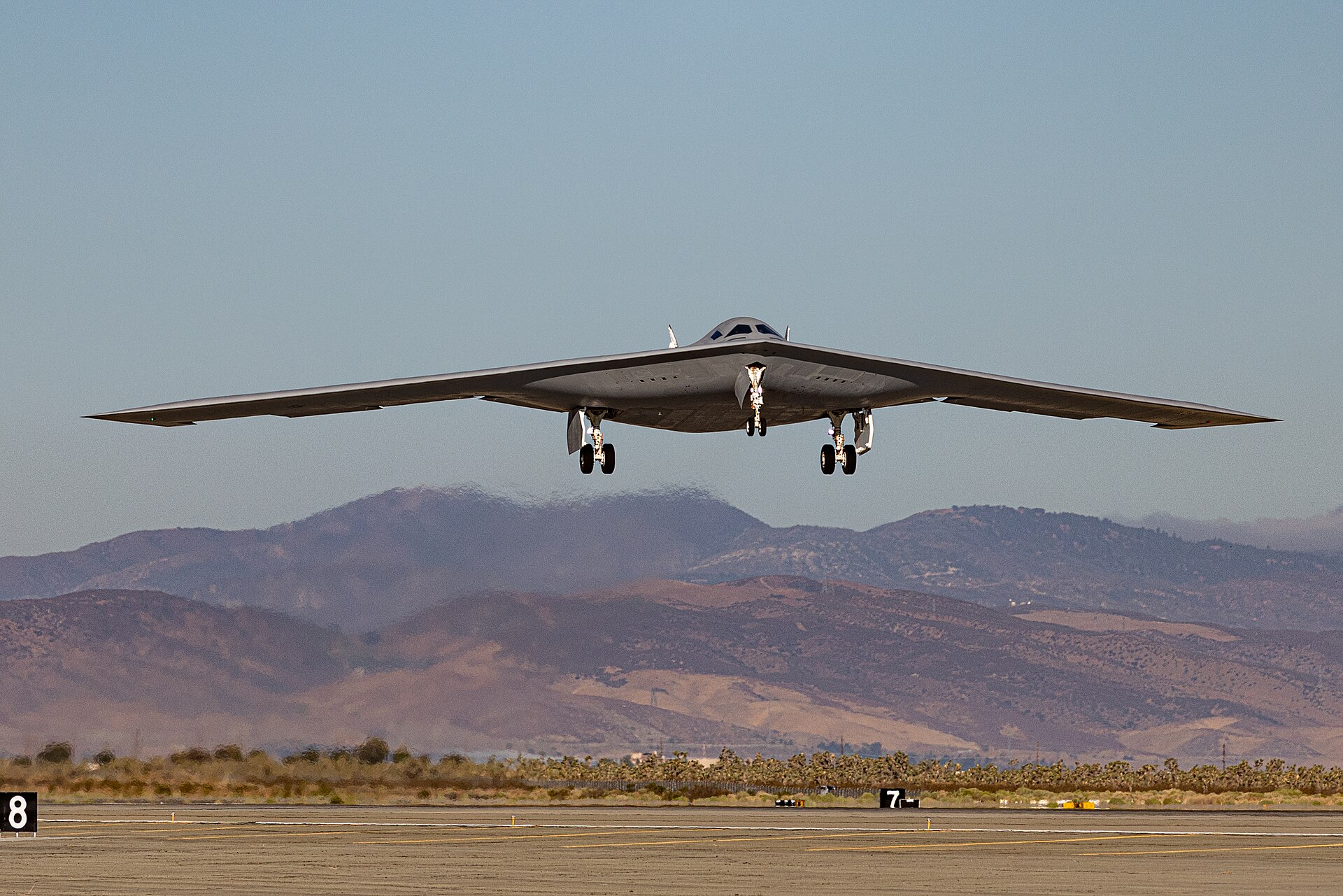
In June 2025, seven American B-2 bombers flew more than 30 hours from Missouri to drop 30,000-pound bunker-busters on Iran’s Fordow and Natanz nuclear sites, then flew home. Only the United States can do that. The catch is that there are only about 19 B-2s, and they are more than 30 years old.
The B-21 Raider is America’s answer: a new stealth bomber designed to slip through the world’s most advanced air defences, carry nuclear or conventional weapons, and be built in far larger numbers than the B-2. Here is what it is, what it can do, where the programme stands in late 2026, and why it matters well beyond the United States.
Quick answer: The B-21 Raider is a long-range, nuclear-capable stealth bomber built by Northrop Grumman for the US Air Force. It first flew in November 2023, a second test aircraft joined in September 2025, and it is in low-rate production. The Air Force plans at least 100, costing about $700 million each, with the first operational jets due at Ellsworth Air Force Base around 2027.
B-21 Raider at a glance
| Maker | Northrop Grumman |
| Role | Long-range stealth bomber, nuclear and conventional |
| First flight | 10 November 2023 |
| Status (Nov 2026) | Flight testing and low-rate initial production |
| Planned fleet | At least 100 (studies have suggested 145 or more) |
| Unit cost | About $700 million (2022 estimate) |
| Crew | 2 (optionally crewed operations have been discussed) |
| First base | Ellsworth AFB, South Dakota; then Whiteman and Dyess |
| Service entry | Around 2027 (planned) |
In this article
- What is the B-21 Raider?
- From LRS-B to Raider: a short history
- Where the programme stands in 2026
- Design and stealth
- B-21 specifications (estimated)
- Weapons: nuclear and conventional
- How it compares with the B-2, B-1 and B-52
- Why the B-21 matters
- Risks and debates
- Common misconceptions
- Our take
- Frequently asked questions
- Sources and further reading
What is the B-21 Raider?
The B-21 is a flying-wing stealth bomber: no tail, no fuselage in the usual sense, just a blended wing shaped to scatter radar energy. It looks like a smaller cousin of the B-2, also built by Northrop Grumman. At its unveiling in 2022, Northrop chief executive Kathy Warden said it is slightly smaller than the B-2 but has a longer range.
It has one job above all: get through dense, modern air defences, of the kind China has built, and hit targets anywhere. It can carry nuclear bombs and missiles as part of America’s nuclear triad, or precision conventional weapons for a non-nuclear war.
From LRS-B to Raider: a short history
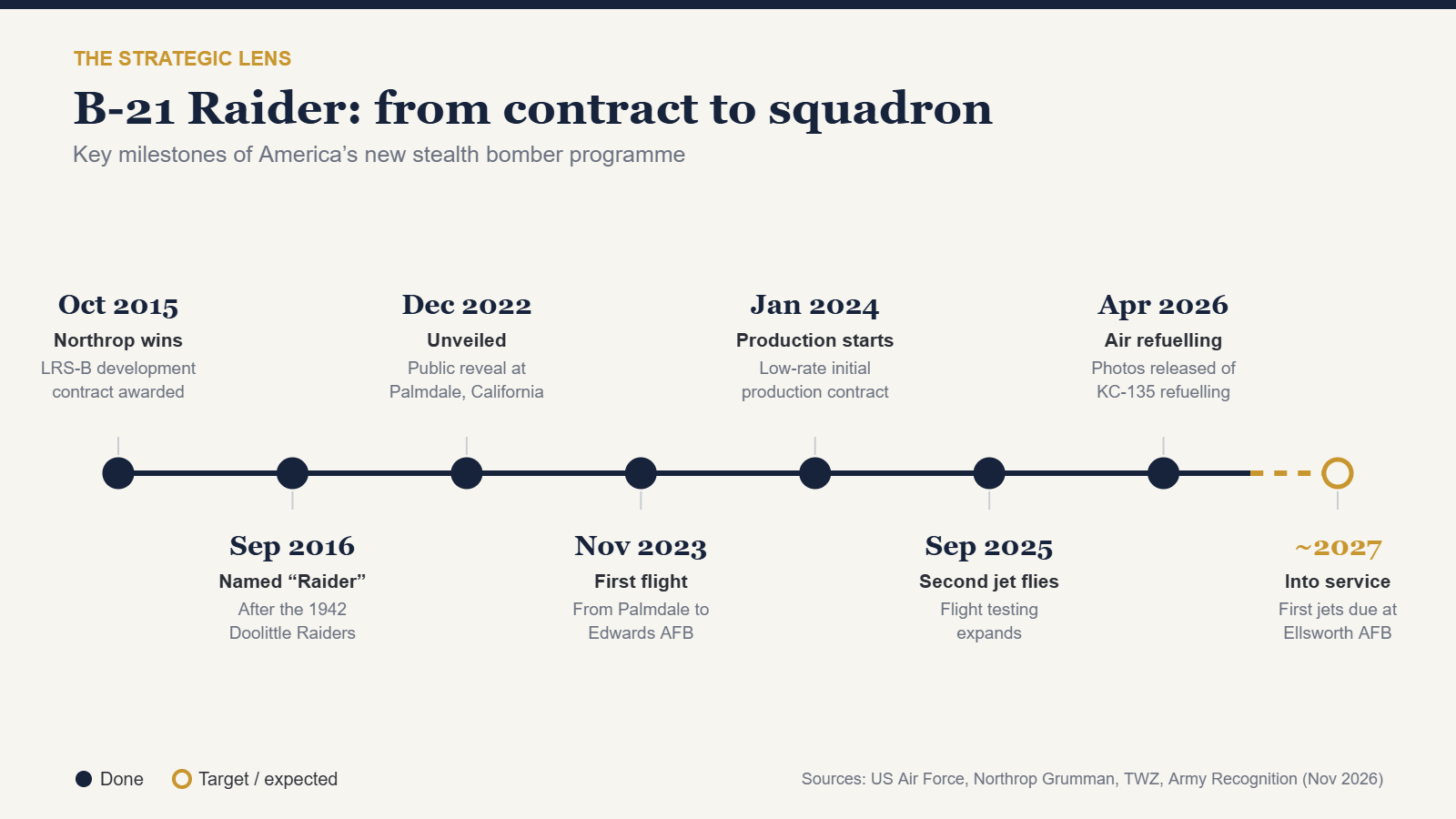
The programme began in 2011 as the Long Range Strike Bomber (LRS-B). Northrop Grumman won the development contract in October 2015, beating a Boeing–Lockheed Martin team, which protested. The Government Accountability Office upheld the award, saying cost was the deciding factor.
The bomber was named B-21 in 2016 and “Raider” later that year, after the Doolittle Raiders who bombed Tokyo in 1942. Unusually for a major US weapons programme, it has largely stayed on schedule and budget, helped by secrecy, digital engineering and a fixed design. It was unveiled at Northrop’s plant in Palmdale, California, on 2 December 2022.
Where the programme stands in 2026
- Flight testing: the first B-21 flew on 10 November 2023. A second test aircraft joined on 11 September 2025, and six pre-production aircraft are planned for testing.
- Combat-focused testing early: in June 2026, an operational test pilot flew the B-21 alongside a developmental test pilot, much earlier than usual. The Air Force says combining the two stages saves time.
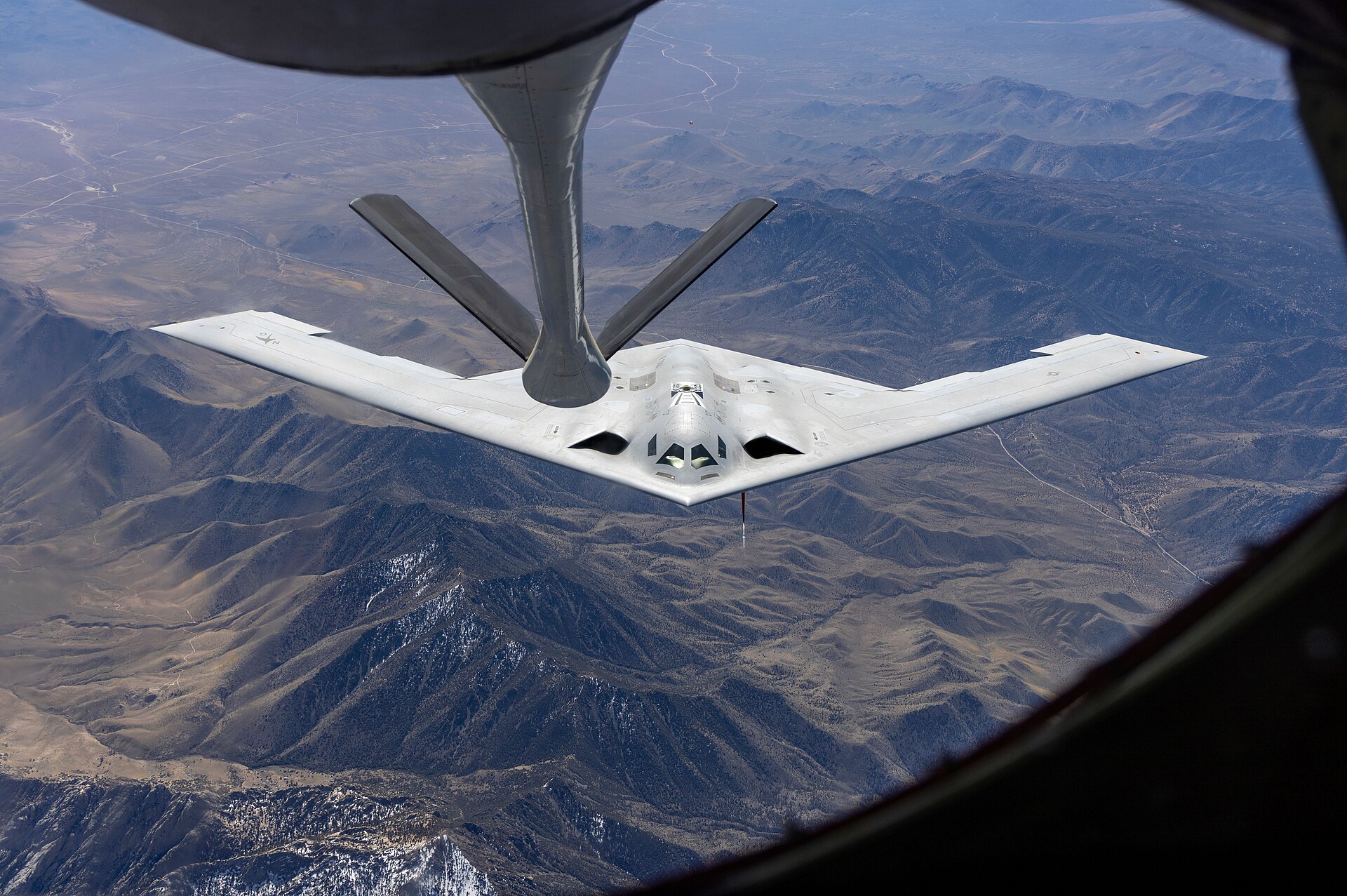
- Air refuelling: the Air Force released photos in April 2026 of a B-21 refuelling from a KC-135.
- Production: low-rate initial production began in January 2024, and the Air Force has said it is expanding production capacity.
- Bases: at Ellsworth in South Dakota, the Air Force has accepted new facilities as part of a roughly $2 billion construction programme, including a hangar for repairing stealth coatings.
Design and stealth
Almost everything about the B-21’s performance is classified, but some things are clear from the design and official statements:
- All-aspect stealth: the flying-wing shape, buried engines and hidden exhausts make it hard to detect from any angle, including by low-frequency radars that can spot fighter-sized stealth jets.
- Open systems architecture: its electronics are built so new sensors, weapons and software can be added quickly without rebuilding the aircraft.
- Digital design and maintenance: the B-21 was designed with digital engineering, and its stealth coatings are meant to be far easier to maintain than the B-2’s.
- Network role: it is expected to gather and share data as well as drop weapons, acting as a node in a wider kill chain.
It is powered by two Pratt & Whitney engines without afterburners, reportedly drawing on technology from the F-35’s engine to cut costs.
B-21 specifications (estimated)
The Air Force has released very few figures. These are estimates from official statements and analysts.
| Specification | B-21 Raider (estimated) |
|---|---|
| Crew | 2 |
| Wingspan | About 145–155 ft (44–47 m), analyst estimate |
| Engines | 2 × Pratt & Whitney turbofans, no afterburner |
| Speed | High subsonic |
| Range | Intercontinental with refuelling; longer than the B-2 (per Northrop) |
| Weapons bay | One large central bay (per imagery analysis) |
| Unit cost | About $700 million (2022) |
| 30-year programme cost | At least $203 billion for 100 aircraft (2022 estimate) |
Weapons: nuclear and conventional
- B61-12 and B61-13 nuclear gravity bombs, the latter designed to hit hardened, deeply buried targets.
- AGM-181 LRSO, the new nuclear-armed long-range stand-off cruise missile, which the B-2 will not carry.
- JASSM-ER conventional stealth cruise missiles with ranges of about 1,000 km.
- Precision-guided bombs such as JDAMs, and potentially new hypersonic weapons in future.
How it compares with the B-2, B-1 and B-52
| Bomber | First flight | In service | Stealth | Nuclear role | Future |
|---|---|---|---|---|---|
| B-52 Stratofortress | 1952 | About 72–76 | No | Yes | Re-engined as B-52J, flying into the 2050s |
| B-1B Lancer | 1984 | About 45 | No | No (conventional only) | To be replaced by B-21 |
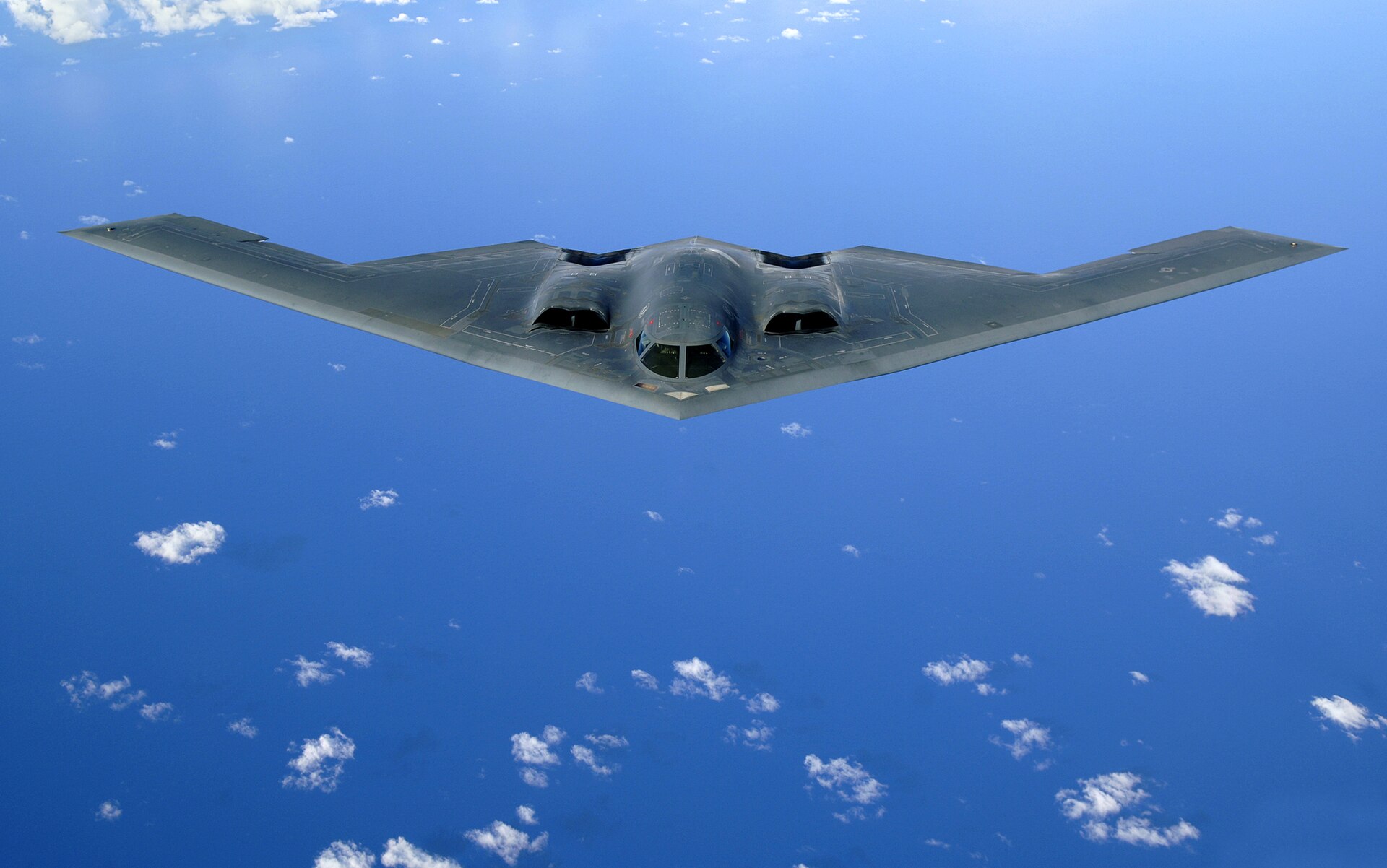
| B-2 Spirit | 1989 | About 19 | Yes | Yes | To be replaced by B-21 |
| B-21 Raider | 2023 | Testing | Yes | Yes | At least 100 planned |
The plan is a two-bomber force by the 2040s: B-21s for penetrating defended airspace and modernised B-52s firing long-range missiles from outside it. The B-21 is expected to roughly double the number of US nuclear-capable bombers.
Why the B-21 matters
- China: the B-21 was designed mainly with the Indo-Pacific in mind. Long range lets it operate from bases far from Chinese missiles. Our explainer on the Taiwan 2027 window shows why this matters.
- Nuclear deterrence: with arms control collapsing after New START, bombers give the US a flexible, recallable nuclear option.
- Conventional strike: the 2025 Iran strike showed how few countries can hit deeply buried targets thousands of kilometres away. The B-21 extends that ability for decades. Read our explainer on the Iran war and Hormuz.
- Numbers: with only about 19 B-2s, losing even a few would cripple US stealth bombing. A fleet of 100 or more changes that.
Risks and debates
- Fleet size: many analysts, and some Air Force leaders, argue 100 is not enough and that 145 or more are needed.
- Cost: the programme’s full cost is partly secret, and Congress has periodically pushed for more transparency.
- Schedule: service entry has already slipped from the “mid-2020s” to about 2027.
- Counter-stealth: rivals are investing in long-wave radars, sensor networks and space-based tracking designed to find stealth aircraft.
- Exports: Australia considered and rejected the B-21 in 2023, though some Australian politicians have since called for a rethink.
Common misconceptions
- “The B-21 is just a new B-2.” It looks similar, but it is designed around newer stealth materials, open electronics and much lower running costs.
- “It is a sixth-generation fighter.” It is a bomber. The US sixth-generation fighter is the F-47, covered in our piece on the sixth-generation fighter race.
- “It is already in service.” As of November 2026, it is still in testing and early production. Service entry is planned for around 2027.
Our take
The B-21 Raider is one of the few big US weapons programmes that looks on track, and that matters as much as the aircraft itself. If production ramps up as planned, the US will have a large, modern stealth bomber fleet just as China’s air defences and military reach peak.
The questions to watch are how many the Air Force finally buys, how fast production grows, and when the first jets reach Ellsworth. For countries like India, the B-21 is also a reminder of how far ahead the US remains in long-range stealth strike, and why China’s own H-20 bomber programme is worth watching.
Frequently asked questions
What is the B-21 Raider?
The B-21 Raider is a long-range stealth bomber built by Northrop Grumman for the US Air Force. It can carry nuclear and conventional weapons and is designed to penetrate advanced air defences.
When did the B-21 first fly?
The first B-21 flew on 10 November 2023 from Palmdale, California. A second test aircraft first flew on 11 September 2025.
How much does a B-21 cost?
The Air Force estimated about $700 million per aircraft in 2022, and at least $203 billion over 30 years to develop, buy and operate a fleet of 100.
How many B-21s will the US build?
The current plan is at least 100. Some studies and officials have argued for 145 or more.
When will the B-21 enter service?
Service entry is planned for around 2027, with the first operational aircraft going to Ellsworth Air Force Base in South Dakota.
Will the B-21 replace the B-52?
Not at first. The B-21 is meant to replace the B-1 and B-2. Modernised B-52Js are expected to keep flying alongside it into the 2050s.
Sources and further reading
Researched using official statements and published reporting up to 6 November 2026.


Leave a Reply