
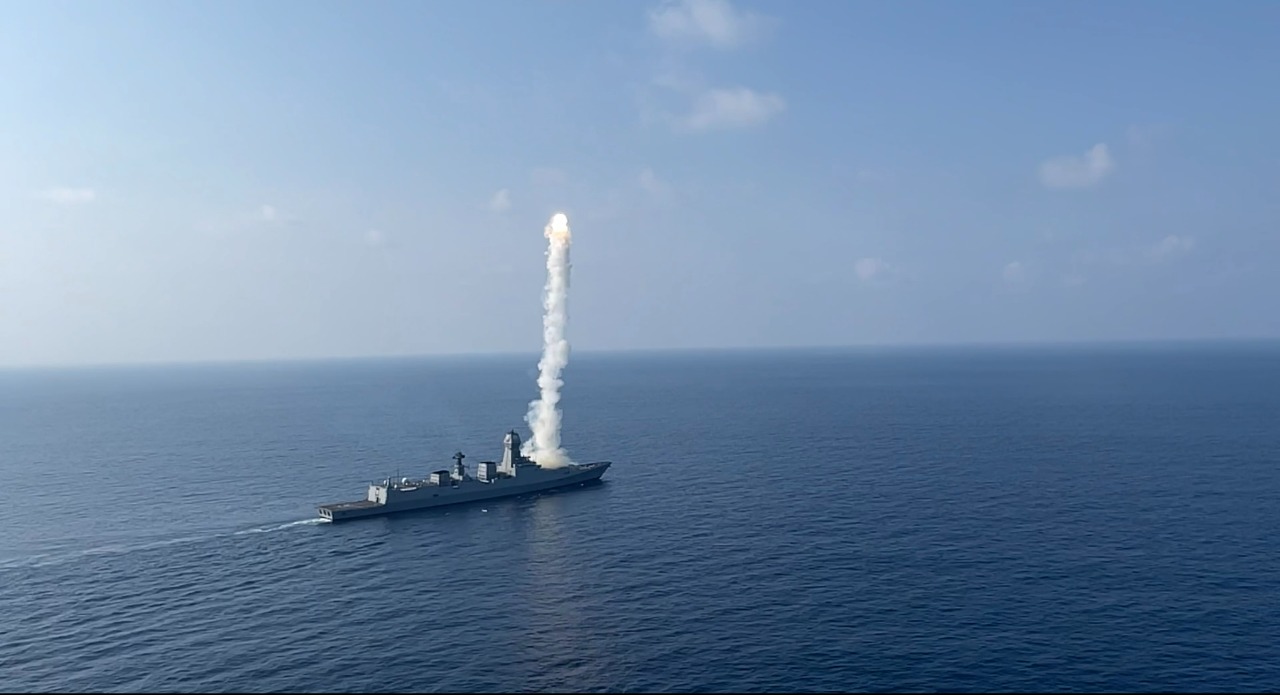
Few weapons carry as much national pride in India as BrahMos. It is fast, it is accurate, it has been used in combat, and it has become India’s biggest defence export. Defence Minister Rajnath Singh put it bluntly in October 2025: every inch of Pakistan, he said, is now within its range.
But BrahMos is also widely misunderstood. It is not hypersonic, it is not purely Indian, and its range has changed several times. This guide explains what BrahMos is, how it works, every major variant, its export story and its real strengths and limits.
Quick answer: BrahMos is a supersonic cruise missile built by BrahMos Aerospace, an India–Russia joint venture. It flies at around Mach 2.8, carries a 200–300 kg conventional warhead and can be launched from ships, land, aircraft and submarines. Its range has grown from 290 km to about 450–500 km, with an 800 km version under trials.
BrahMos at a glance
| Type | Supersonic cruise missile (anti-ship and land attack) |
| Developer | BrahMos Aerospace: DRDO (India, 50.5%) and NPO Mashinostroyeniya (Russia, 49.5%) |
| First test | 12 June 2001, Chandipur |
| Speed | About Mach 2.8 |
| Range | 290 km (original/export); 450–500 km (extended range); ~800 km version on trial |
| Warhead | 200 kg (ship/land); 300 kg (air-launched) |
| Launch platforms | Ships, land launchers, Su-30MKI aircraft, submarines |
| Combat use | Operation Sindoor, May 2025 |
| Export customers | Philippines; deals reported with Indonesia and Vietnam |
In this article
- What is BrahMos?
- A short history: from Moscow to Lucknow
- How BrahMos works
- Range: why it keeps growing
- Every BrahMos variant explained
- BrahMos in combat: Operation Sindoor
- Production: the Lucknow facility
- Exports: from the Philippines to Southeast Asia
- Strengths and limitations
- Common misconceptions
- Our take
- Frequently asked questions
- Sources and further reading
What is BrahMos?
BrahMos is a two-stage cruise missile designed to hit ships or land targets at very high speed. Cruise missiles fly through the atmosphere like small aircraft, unlike ballistic missiles that arc into space. Most famous cruise missiles, like America’s Tomahawk, are subsonic. BrahMos flies at nearly three times the speed of sound, which leaves defenders very little time to react.
It is a conventional weapon. India has never described BrahMos as a nuclear delivery system; that role belongs to missiles like the Agni family.
A short history: from Moscow to Lucknow
BrahMos grew out of an India–Russia agreement signed in 1998. The joint company, BrahMos Aerospace, is 50.5 percent owned by India’s DRDO and 49.5 percent by Russia’s NPO Mashinostroyeniya. Its name joins two rivers: the Brahmaputra and the Moskva.
The missile is based on Russia’s P-800 Oniks, adapted with Indian guidance, software and later more Indian parts. It first flew on 12 June 2001 from Chandipur in Odisha. The Indian Navy was the first to take it into service, followed by the Army’s first BrahMos regiment in 2007 and the Air Force’s air-launched version in 2020.
How BrahMos works
- Launch: a solid-fuel booster pushes the missile to supersonic speed and then falls away.
- Cruise: a liquid-fuelled ramjet takes over. A ramjet has no moving compressor; it uses the missile’s own speed to compress incoming air, which makes it efficient at high speed.
- Navigation: inertial guidance plus satellite navigation steer it toward the target. India has added its own navigation chip that uses GPS, GLONASS and India’s GAGAN system.
- Terminal attack: an onboard radar seeker finds the target. Against ships it can skim as low as 5–10 metres above the sea; against land targets it can dive steeply.
The result is a weapon with a reported accuracy of about one metre and enormous kinetic energy on impact, because a three-tonne missile arriving at Mach 2.8 does a lot of damage even before its warhead goes off.
Range: why it keeps growing
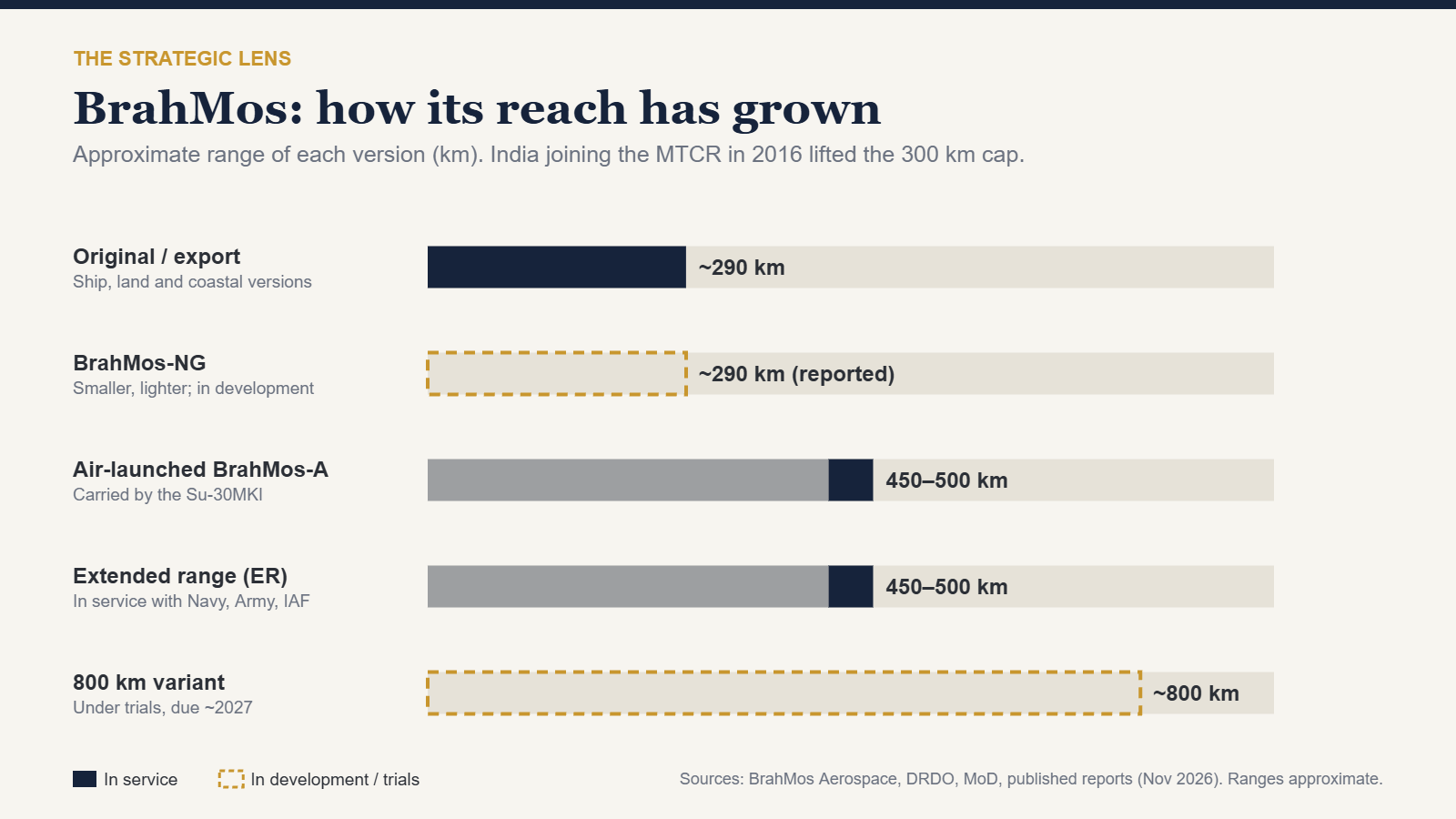
The original BrahMos had a range of 290 km for a simple reason: the Missile Technology Control Regime (MTCR) restricted the export of missiles with ranges above 300 km. Russia, an MTCR member, could not help India go further. When India joined the MTCR in 2016, that limit fell away, and extended-range versions of about 450–500 km followed. An 800 km version is under trials, reportedly due to finish around 2027. Export versions, like those sold to the Philippines, remain at 290 km.
Every BrahMos variant explained
Ship-launched
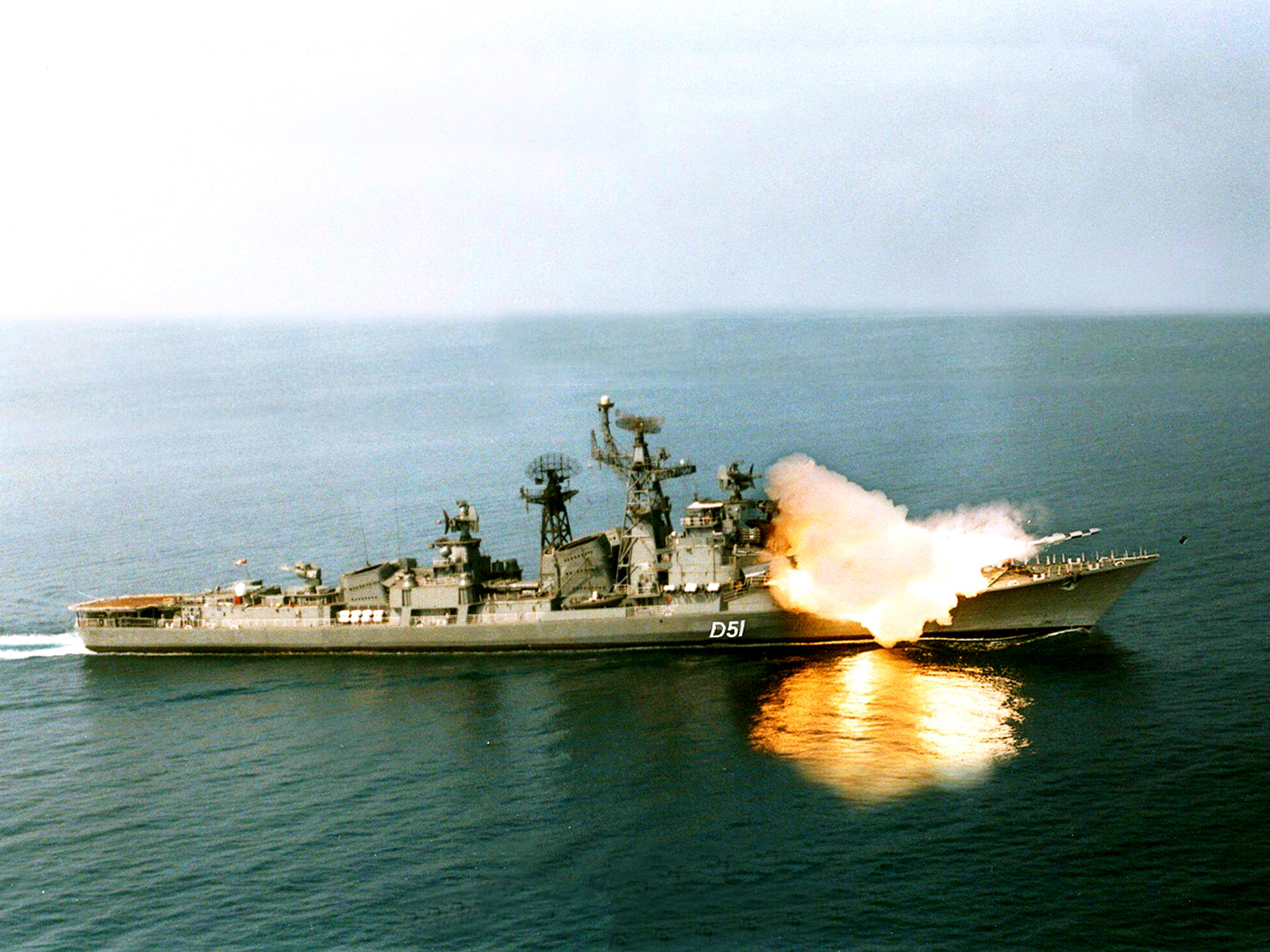
The Navy was the first user, and BrahMos is now the main strike weapon on most of its frontline destroyers and frigates, fired from vertical launch cells. In March 2024, the government signed a deal worth about ₹19,500 crore for more than 220 extended-range missiles for the Navy.
Land-based
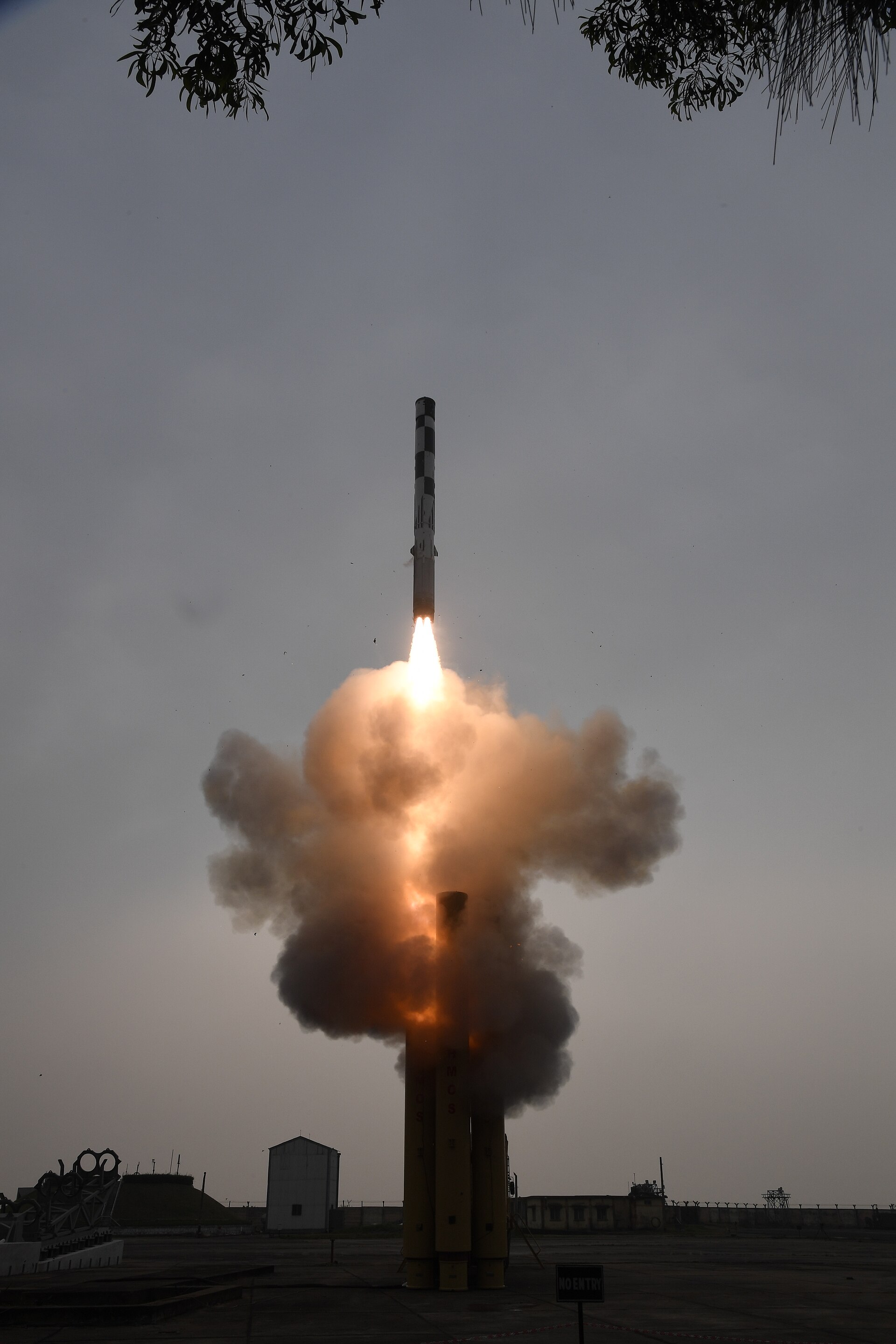
The Army operates several BrahMos regiments with truck-mounted launchers. Later blocks added a steep-dive attack mode to hit targets hidden behind mountains, which matters along India’s northern borders.
Air-launched (BrahMos-A)
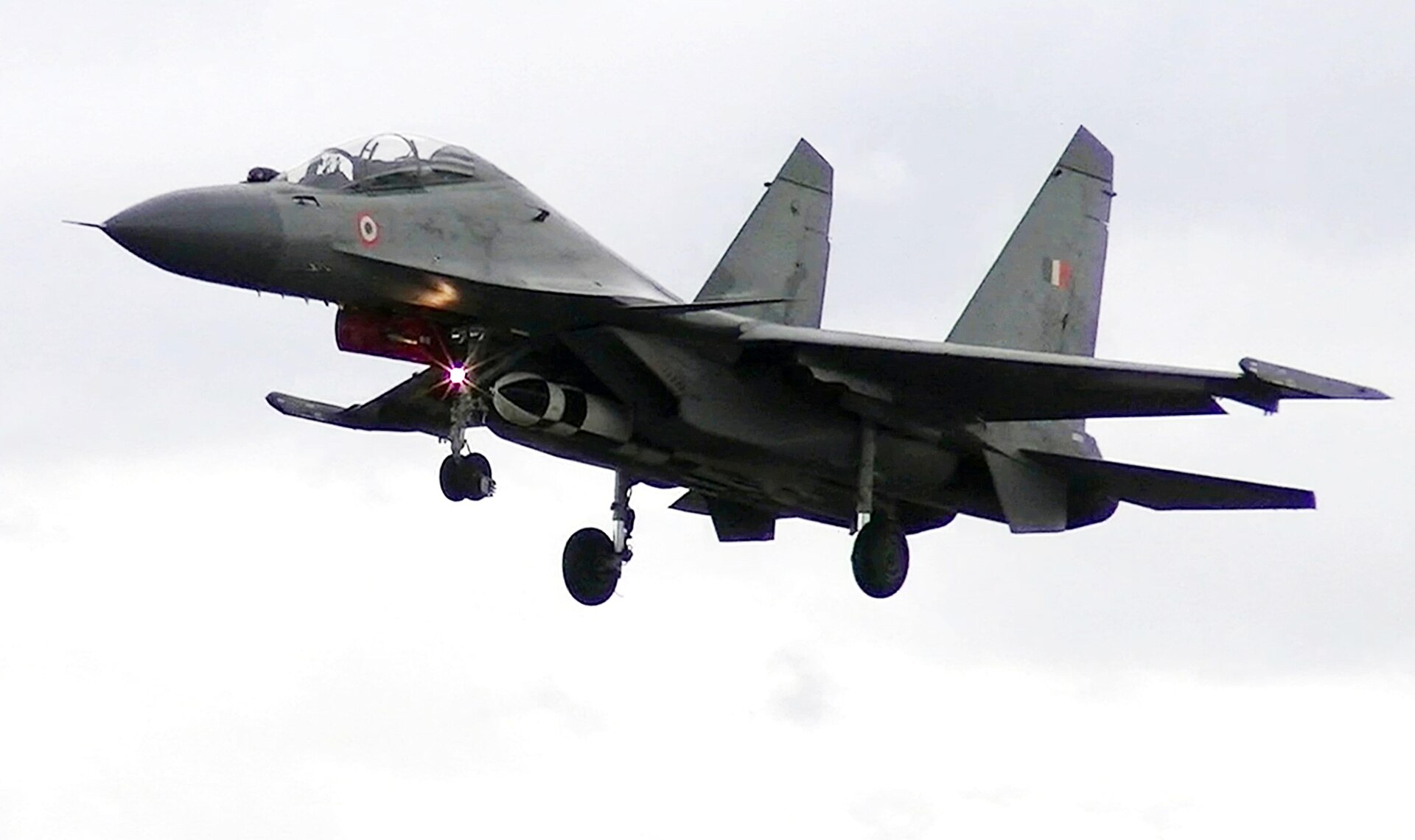
Fitting a three-tonne missile to a fighter was hard. Engineers made the air version lighter, at about 2.5 tonnes, with a smaller booster, and HAL strengthened the Su-30MKI to carry it. The first air launch took place on 22 November 2017, and the first BrahMos-armed Su-30MKI squadron was commissioned in January 2020.
Submarine-launched
BrahMos was first fired from a submerged platform in March 2013. A submarine-launched version is meant for future Indian submarines.
BrahMos-NG (Next Generation)
BrahMos-NG is a smaller, lighter version, about 6 metres long and 1.2–1.5 tonnes, designed to fit lighter fighters like the Tejas Mk2 and to let the Su-30MKI carry several at once. It is expected to have a range similar to the original, around 290 km, and a lower radar signature. BrahMos officials said in 2025 that trials had begun, but as of November 2026 we have not seen an official confirmation of its first flight.
BrahMos-II (hypersonic)
BrahMos-II is a proposed hypersonic missile, in the class of Russia’s Zircon. It remains a long-term concept. For more on that class of weapon, see our explainer on hypersonic missiles.
BrahMos in combat: Operation Sindoor
BrahMos had its first confirmed combat use during Operation Sindoor in May 2025. Prime Minister Modi referred to its role in a speech on 30 May 2025. Reports say Su-30MKIs fired air-launched BrahMos missiles at Pakistani air bases on 10 May, alongside other weapons such as Rafale-launched SCALP missiles. India listed bases including Nur Khan, Rafiqui, Murid and Sargodha among those it struck.
Pakistan has disputed the scale of damage, and independent verification is limited to satellite imagery of some sites. What is clear is that BrahMos was used against defended targets, and Indian officials present this as proof of its value.
Production: the Lucknow facility
In May 2025, BrahMos inaugurated a new integration and testing facility in Lucknow, part of the Uttar Pradesh Defence Industrial Corridor. Rajnath Singh flagged off the first batch of Lucknow-built missiles on 18 October 2025, saying the 200-acre, ₹380 crore site would produce around 100 missile systems a year. The plant is also expected to build BrahMos-NG.
Exports: from the Philippines to Southeast Asia
BrahMos is now the flagship of India’s defence exports, which hit a record ₹38,424 crore in 2025-26 (see our report on India’s record defence exports).
| Country | Status (Nov 2026) | Details |
|---|---|---|
| Philippines | Delivered | About $375 million deal, January 2022; three shore-based anti-ship batteries, deliveries from April 2024 |
| Indonesia | Agreement reported (2026) | Value reported at $200–350 million; not officially confirmed |
| Vietnam | Order confirmed, May 2026 | Defence Secretary confirmed an order; details not released |
| Others | Interest reported | UAE, Saudi Arabia, Egypt, Thailand, Brazil and others, per media reports |
The Defence Secretary has said BrahMos exports could cross $600 million. For Southeast Asian countries facing China in the South China Sea, a fast anti-ship missile from a non-Western, non-Chinese supplier is an attractive option.
Strengths and limitations
| Strengths | Limitations |
|---|---|
| Very high speed (about Mach 2.8) leaves little reaction time | Heavy: about 3 tonnes, roughly twice a Tomahawk |
| Sea-skimming and steep-dive attack modes | Shorter range than large subsonic cruise missiles |
| High accuracy and impact energy | Large size limits how many a fighter can carry |
| Launches from ships, land, air and submarines | Still depends partly on Russian components |
| Combat-proven (2025) | Not hypersonic; modern air defences are improving |
There has also been one serious mishap. On 9 March 2022, a missile was fired accidentally during routine maintenance and crashed in Pakistan near Mian Channu, causing no casualties. India called it a technical malfunction, held an inquiry and later dismissed three Air Force officers.
Common misconceptions
- “BrahMos is hypersonic.” It is supersonic, at about Mach 2.8. Hypersonic means Mach 5 or more.
- “It is fully Indian.” It is an India–Russia joint venture, though the share of Indian-made parts has grown steadily.
- “It carries nuclear weapons.” India has not described BrahMos as a nuclear delivery system.
- “All BrahMos missiles have 800 km range.” The 800 km version is still under trials; export versions are limited to 290 km.
Our take
BrahMos is the rare Indian defence project that has delivered on almost every promise: it works, it has been used in combat, it is being built at scale and it sells abroad. Its biggest strength, raw speed, will stay relevant for years.
The next test is evolution. Watch three things: the first confirmed flight of BrahMos-NG, completion of the 800 km version’s trials, and further export deals in Southeast Asia and the Gulf. Long term, the real question is whether India can build a truly hypersonic successor before rivals’ air defences catch up with Mach 2.8.
Frequently asked questions
What is the range of BrahMos?
The original and export versions have a range of about 290 km. Extended-range versions in Indian service reach about 450–500 km, and an 800 km version is under trials.
Is BrahMos hypersonic?
No. BrahMos is supersonic, flying at about Mach 2.8. A hypersonic version, BrahMos-II, has been proposed but is not in development at an advanced stage.
Which countries have bought BrahMos?
The Philippines is the first export customer, with deliveries since 2024. Agreements with Indonesia and an order from Vietnam have been reported in 2026.
Was BrahMos used in Operation Sindoor?
Yes. Indian officials confirmed BrahMos was used during Operation Sindoor in May 2025, including air-launched strikes on Pakistani air bases, according to reports.
What is BrahMos-NG?
A smaller, lighter version of BrahMos, about 6 metres long and 1.2–1.5 tonnes, designed for fighters like the Tejas and for carrying several missiles on one Su-30MKI.
Who makes BrahMos?
BrahMos Aerospace, a joint venture between India’s DRDO (50.5%) and Russia’s NPO Mashinostroyeniya (49.5%), with production sites including Hyderabad, Thiruvananthapuram and Lucknow.
Sources and further reading
Researched using official statements and published reporting up to 6 November 2026.


Leave a Reply