
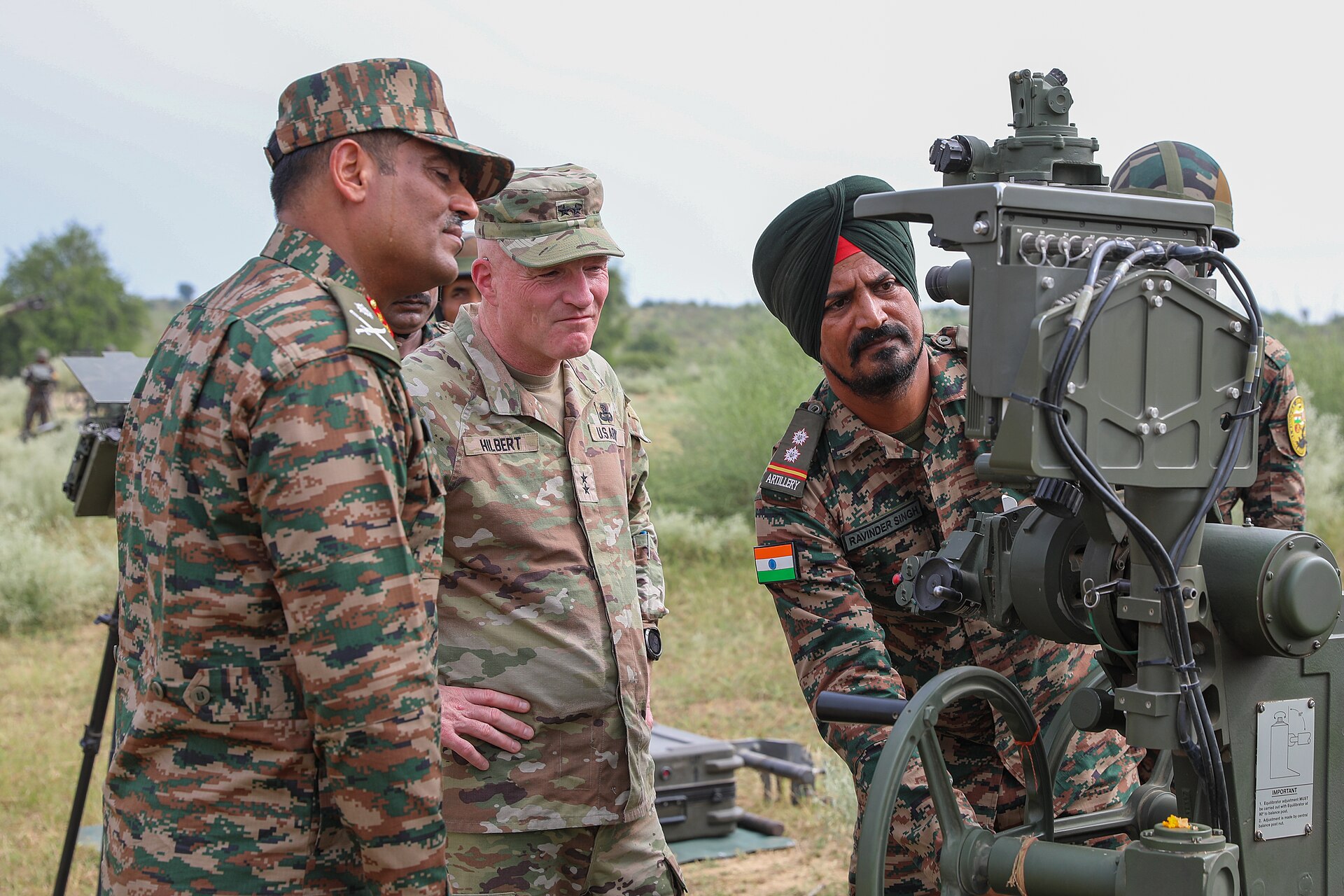
Twenty years ago, India bought almost no American weapons. Today it flies US-made P-8I patrol aircraft, C-17 transports, Apache and Chinook helicopters, and is preparing to build American jet engines at home. In October 2025, the two countries signed a new ten-year defence framework to take the relationship further.
Yet 2025 was also one of the rockiest years in the relationship, with 50 percent US tariffs, disputes over the India–Pakistan ceasefire and a visible US warming towards Pakistan. This guide explains the US–India defence partnership: what it includes, what India actually gets out of it, where it is stuck, and where it is heading.
Quick answer: The US–India defence partnership is a strategic relationship built on four foundational agreements, joint exercises, a growing list of US weapons in Indian service and plans for co-production, such as GE F414 jet engines. A new ten-year framework was signed in October 2025, and a February 2026 trade deal eased tensions after the 2025 tariff dispute. Delivery delays, technology-transfer limits and India’s ties with Russia remain friction points.
In this article
- Why the US and India need each other
- The foundational agreements
- The 2025 ten-year framework
- What India buys from the US
- The jet engine deal: the partnership’s biggest test
- Co-production: Javelin, Stryker and more
- Training together
- 2025: the year of friction
- The 2026 reset
- The Russia question
- What still holds the partnership back
- Common misconceptions
- Our take
- Frequently asked questions
- Sources and further reading
Why the US and India need each other
The partnership rests on a shared worry: China. For the United States, India is the only major power in Asia that is both large enough to balance China and not a formal US ally. For India, the US offers advanced technology, intelligence and a counterweight to Chinese pressure along the Himalayan border and in the Indian Ocean.
But the two are not allies. India values strategic autonomy, buys weapons from Russia and France, and does not want to be drawn into a US–China war. That balance between closeness and independence defines the relationship.
The foundational agreements
| Agreement | Year | What it does |
|---|---|---|
| GSOMIA | 2002 | Protects shared military information |
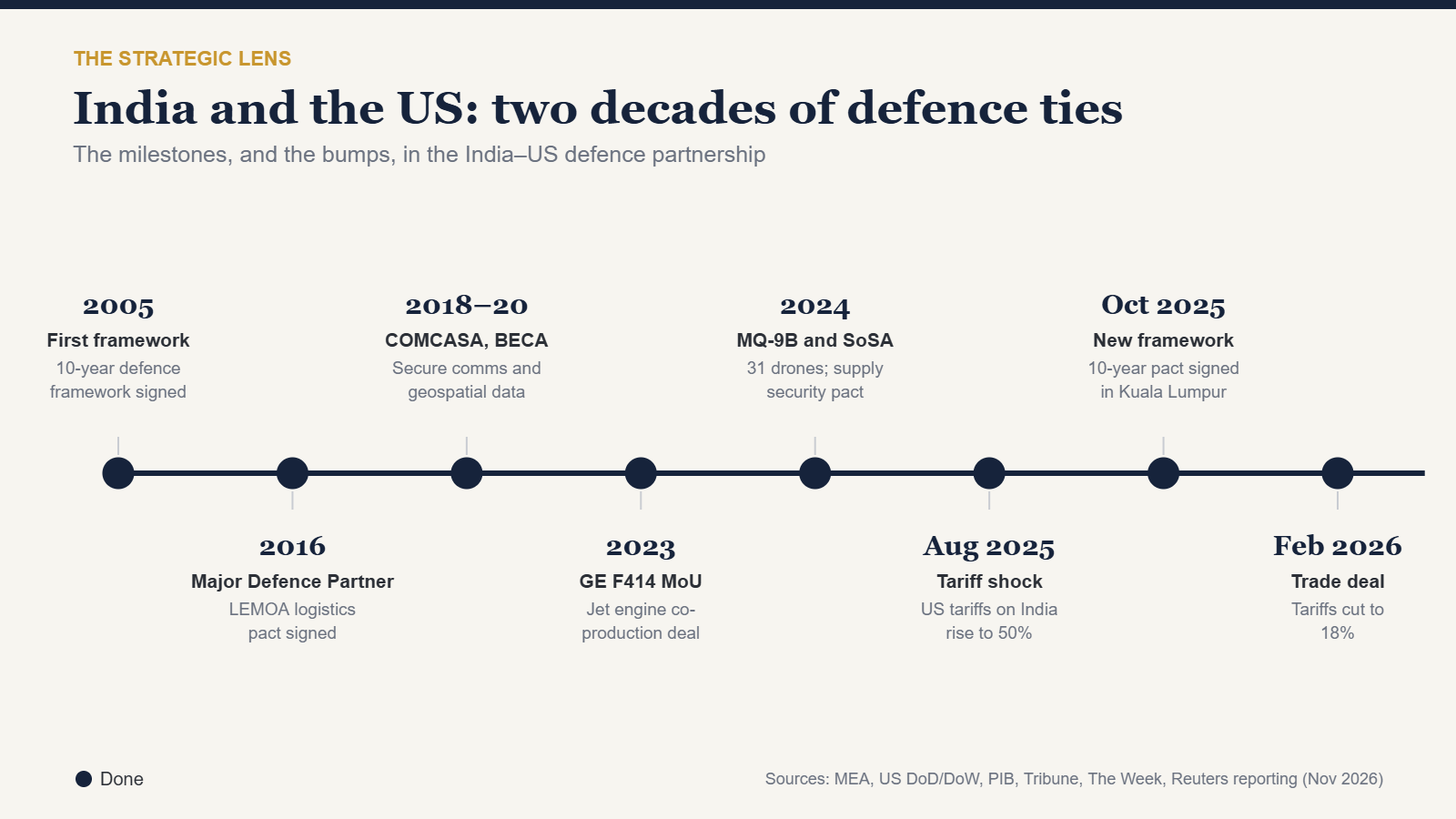
| LEMOA | 2016 | Lets each side use the other’s bases for fuel, supplies and repairs |
| COMCASA | 2018 | Allows secure, encrypted communications on US-made platforms |
| BECA | 2020 | Shares geospatial and targeting data |
| Security of Supply Arrangement | 2024 | Commits both sides to prioritise each other’s defence supply needs |
The US also named India a Major Defence Partner in 2016 and gave it top-tier export licence status (STA-1) in 2018, making it easier to buy sensitive US technology.
The 2025 ten-year framework
On 31 October 2025, Defence Minister Rajnath Singh and US Secretary of War Pete Hegseth signed the Framework for the US–India Major Defence Partnership in Kuala Lumpur, on the sidelines of an ASEAN defence ministers’ meeting. It replaces earlier frameworks from 2005 and 2015.
Hegseth said it would enhance coordination, information sharing and technology cooperation. Rajnath Singh said it would provide policy direction to the entire defence relationship. Like most frameworks, it sets goals rather than specific purchases, so its real value will depend on what follows.
What India buys from the US
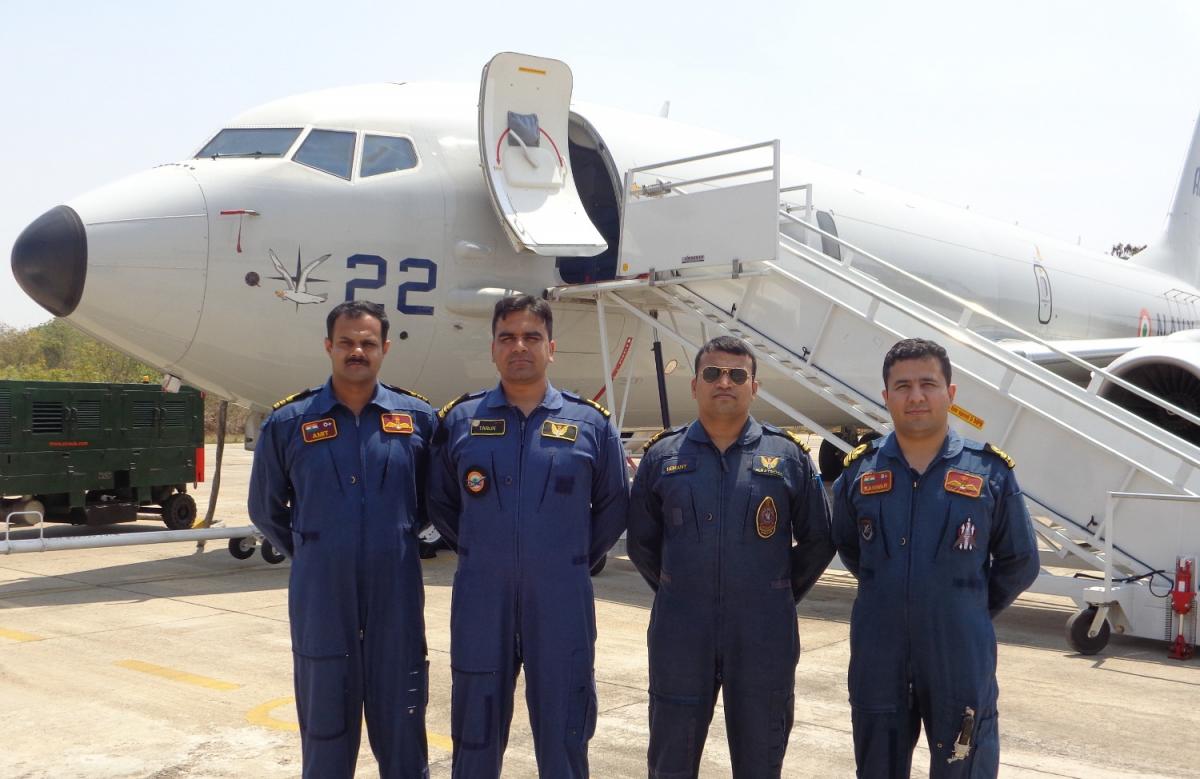
- P-8I Poseidon: 12 maritime patrol aircraft that hunt submarines across the Indian Ocean, with six more discussed in 2025.
- Transport aircraft: C-17 Globemaster and C-130J Super Hercules.
- Helicopters: AH-64E Apache attack helicopters, CH-47 Chinooks and MH-60R naval helicopters.
- Artillery: M777 lightweight howitzers.
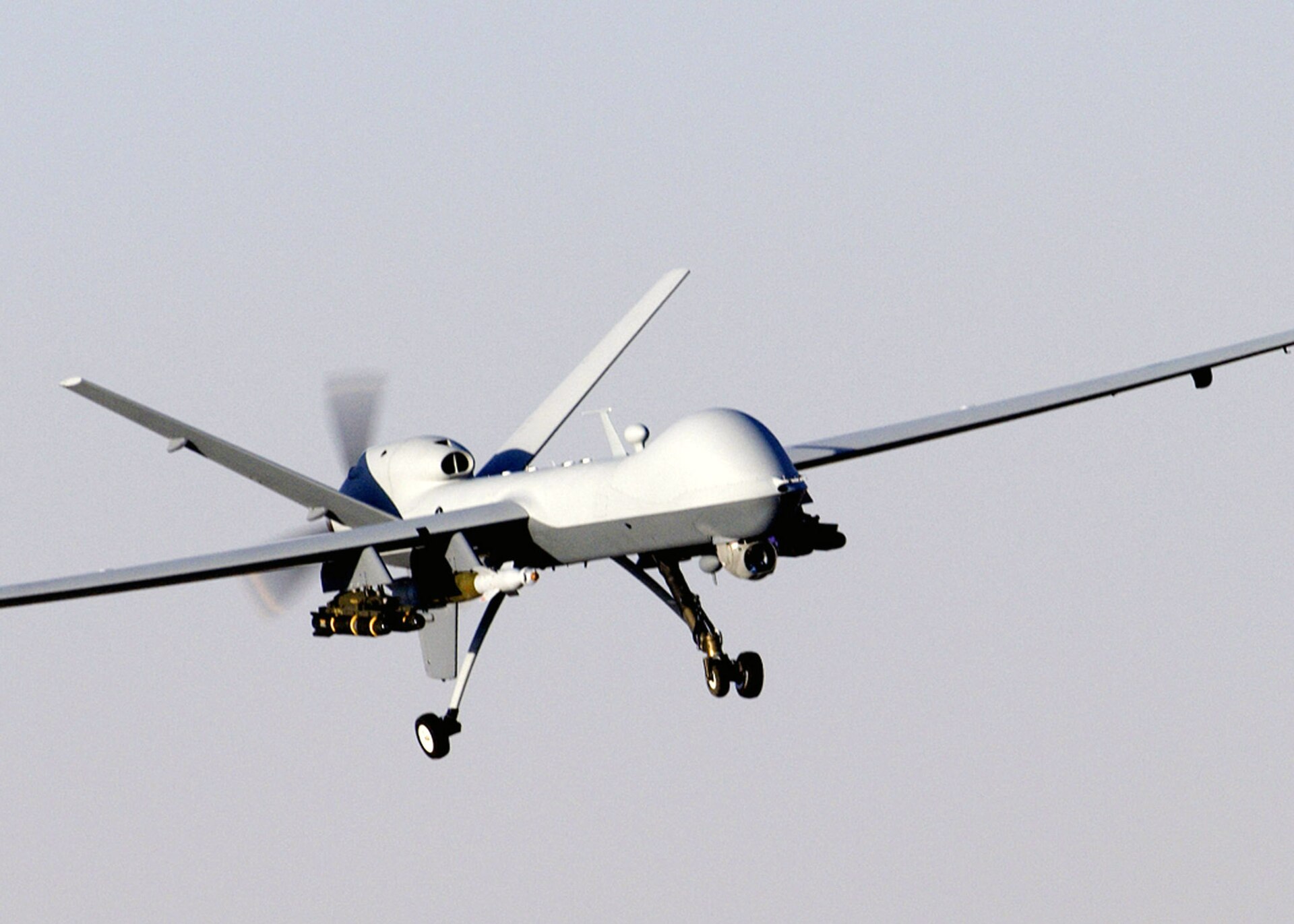
- Drones: 31 MQ-9B armed drones in a deal worth about $3.5 billion signed in late 2024, with plans for local assembly and a maintenance hub.
- Engines: GE F404 engines for the Tejas Mk1A and, in future, F414 engines for the Tejas Mk2.
The jet engine deal: the partnership’s biggest test
No project matters more to India than the GE F414 engine. India has never built a fighter engine, and the F414 will power the Tejas Mk2 and the first AMCA stealth fighters. GE and HAL signed a memorandum to co-produce it in India in June 2023, a deal Washington approved despite the sensitive technology involved.
Progress has been slow. Pricing and technology-transfer terms took years to negotiate. A technical agreement was reportedly reached in April 2026, with the commercial contract targeted for March 2027. Meanwhile, delays in delivering the older F404 engine held up the Tejas Mk1A programme, frustrating the Indian Air Force and souring the mood.
Co-production: Javelin, Stryker and more
When Prime Minister Modi met President Trump in February 2025, the two sides agreed to pursue co-production of Javelin anti-tank missiles and Stryker armoured vehicles in India, along with more P-8Is. As of 2025, both projects were still at an early stage, with complex talks ahead on intellectual property and cost sharing. Initiatives such as INDUS-X (2023) aim to connect Indian and American defence start-ups, and US Navy ships have been repaired at Indian shipyards.
Training together
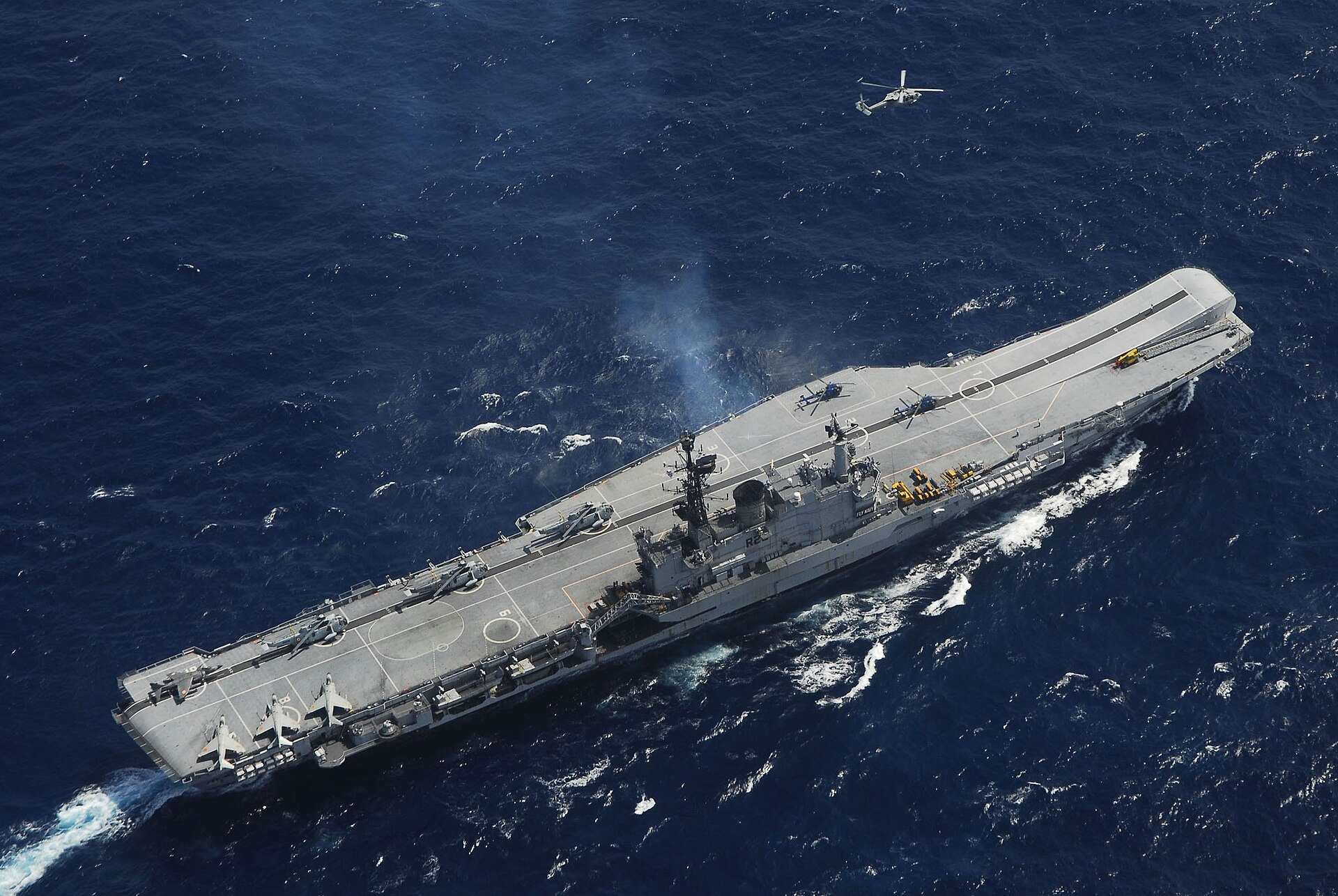
The two militaries now exercise together more than India does with almost any other country: Yudh Abhyas (armies), Malabar (navies, now including Japan and Australia), Cope India (air forces) and Tiger Triumph (tri-service). These build trust and the ability to operate together in a crisis.
2025: the year of friction
- Tariffs: in mid-2025 the US imposed a 25 percent tariff on Indian goods, plus a 25 percent penalty linked to India’s purchases of Russian oil, taking the total to about 50 percent.
- Operation Sindoor: President Trump repeatedly claimed credit for brokering the May 2025 India–Pakistan ceasefire. India rejected this, saying the ceasefire came from direct military talks.
- Pakistan: Washington’s visible warming towards Pakistan in 2025, including a proposed energy deal, caused unease in New Delhi.
- Delays: late deliveries of GE engines and other equipment added to frustration.
Remarkably, defence cooperation continued through all this, culminating in the October 2025 framework. For more on the India–Pakistan dimension, see our India–Pakistan military balance analysis.
The 2026 reset
In February 2026, the two countries announced an interim trade deal. The US cut tariffs on most Indian goods from 50 percent to 18 percent and removed the Russian-oil penalty after India agreed to shift away from Russian oil. India committed to buy about $500 billion of American goods over five years, including energy, aircraft and technology. The Quad foreign ministers met in New Delhi in May 2026, and a leaders’ summit in India is pending.
The Russia question
India still relies heavily on Russian equipment, from Su-30MKI fighters to S-400 air defence systems, explained in our piece on India’s air defence. US law (CAATSA) allows sanctions on countries buying major Russian weapons, but Washington has not imposed them on India. Reducing that dependence over time, without abandoning a long-standing partner, is one of New Delhi’s hardest balancing acts.
What still holds the partnership back
- Technology transfer: India wants to build, not just buy. The US is cautious about sharing its most sensitive technology.
- Delivery delays: American factories, stretched by their own record defence budget, can be slow to deliver.
- Trust: tariff fights and US–Pakistan ties have reminded Indian policymakers that the relationship can be transactional.
- Strategic autonomy: India will not become a formal ally or commit to fighting in a Taiwan war.
- Russia: continued Indian purchases of Russian arms and energy remain a sore point.
Common misconceptions
- “India and the US are allies.” They are close partners, not treaty allies. There is no mutual defence commitment.
- “India mostly buys US weapons now.” US purchases have grown, but Russia and France remain major suppliers, and India increasingly builds its own.
- “The 2025 tariffs ended defence cooperation.” They strained it, but the ten-year framework was signed in October 2025 regardless.
Our take
The US–India defence partnership has proved more resilient than its critics expected. It survived a tariff war, a public dispute over Operation Sindoor and America’s flirtation with Pakistan, because the underlying logic, balancing China, has not changed.
But the partnership will be judged on delivery, not declarations. The single most important milestone is the F414 commercial contract and the start of engine production in India. If that happens on time, it will mark a genuine shift from buyer and seller to co-developers. If it drags on, the ten-year framework will look like words on paper.
Frequently asked questions
What is the US–India 10-year defence framework?
A framework signed on 31 October 2025 in Kuala Lumpur by Rajnath Singh and Pete Hegseth. It sets policy direction for defence cooperation, including coordination, information sharing and technology cooperation, for the next decade.
Is India a US ally?
No. India is a Major Defence Partner of the United States, but there is no treaty alliance or mutual defence commitment.
What weapons has India bought from the US?
Major purchases include P-8I patrol aircraft, C-17 and C-130J transports, Apache, Chinook and MH-60R helicopters, M777 howitzers, MQ-9B drones and GE engines for the Tejas.
What is the GE F414 deal?
An agreement for GE and HAL to co-produce F414 jet engines in India for the Tejas Mk2 and AMCA. A technical pact was reportedly reached in April 2026, with the commercial contract targeted for March 2027.
What are the four foundational agreements?
GSOMIA (2002), LEMOA (2016), COMCASA (2018) and BECA (2020), covering information security, logistics, secure communications and geospatial data.
How did the 2025 tariffs affect India–US defence ties?
They strained relations, with US tariffs on Indian goods reaching about 50 percent. But defence cooperation continued, and a February 2026 trade deal cut tariffs to 18 percent.
Sources and further reading
Researched using official statements and published reporting up to 6 November 2026.
- The Tribune (ANI): India, US sign landmark 10-year defence framework, 31 Oct 2025
- The Week: India–US interim trade deal details, 7 Feb 2026
- The Wire: India–US defence ties hostage to trade deals and tariffs, 4 Aug 2025
- The Tribune: India, US in talks for 10-year framework amid supply delays, 3 Jul 2025
- Wikipedia: India–United States relations


Leave a Reply