
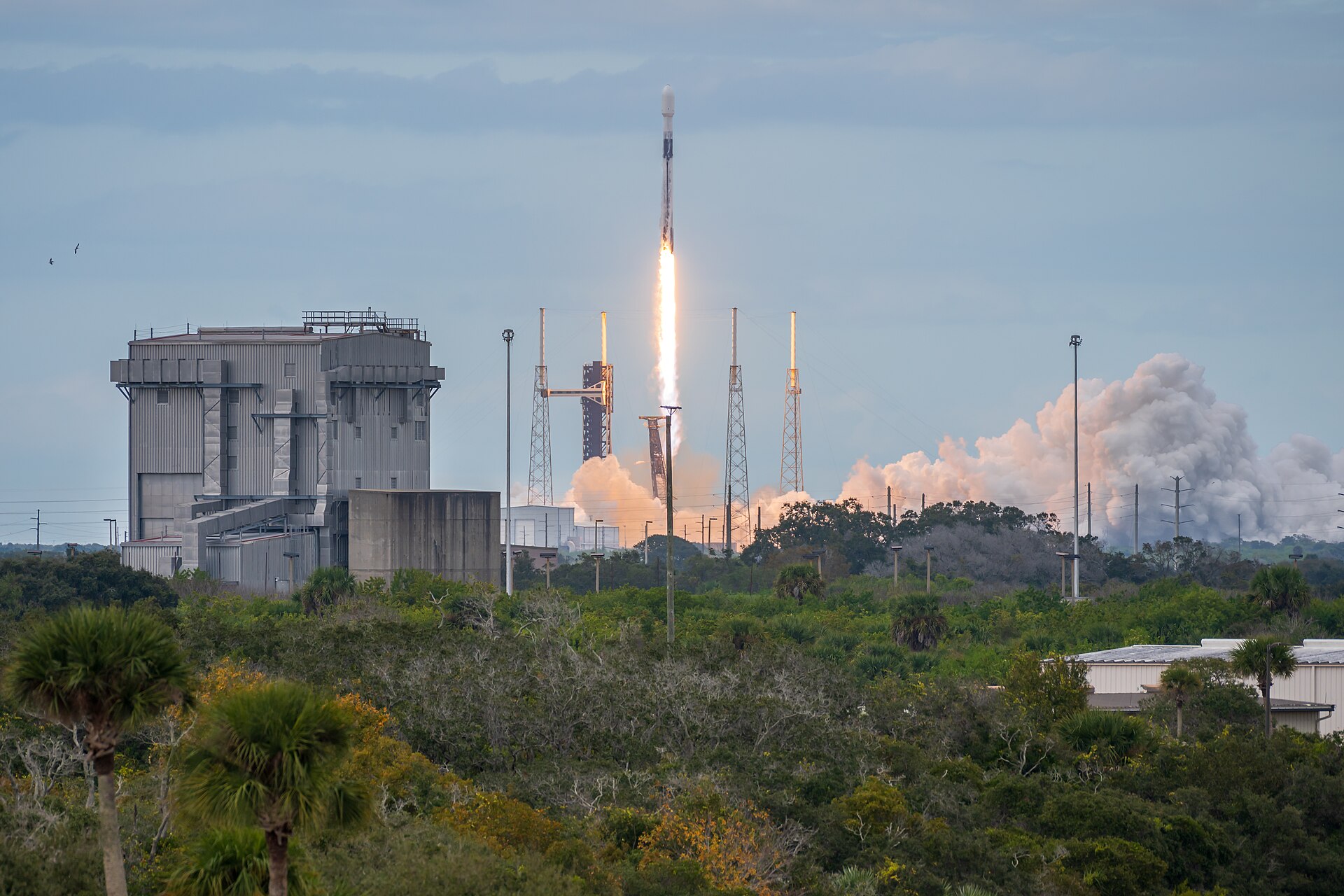
Every time a soldier checks a GPS position, a ship receives a satellite message or a missile launch is spotted seconds after lift-off, a satellite is doing the work. Modern militaries cannot fight without space, which is exactly why rivals are building ways to blind, jam or destroy satellites.
The US Space Force, created in 2019, exists to protect America’s satellites and, increasingly, to fight in space if it has to. In 2026 it is growing faster than any other US service, with a proposed budget more than double last year’s. This guide explains what it does, how space warfare works, and what it means for the rest of the world, including India.
Quick answer: The US Space Force is the sixth branch of the US military, founded on 20 December 2019. It operates GPS, missile-warning and communications satellites, launches national security payloads and is building capabilities to protect, and if necessary attack, satellites. Its FY2027 budget request is $71.3 billion, up from about $32 billion in FY2026, and it is developing space-based interceptors for the Golden Dome missile shield.
US Space Force at a glance
| Founded | 20 December 2019 |
| Part of | Department of the Air Force |
| Personnel | About 10,400 military (FY2026), planned 13,200 in FY2027, plus civilians |
| Members called | Guardians |
| Chief of Space Operations | Gen. Douglas Schiess (2026) |
| FY2026 budget | About $32 billion |
| FY2027 request | $71.3 billion |
| Key systems | GPS, missile warning satellites, military satcom, launch ranges |
| Motto | Semper Supra (“Always Above”) |
In this article
- What is the US Space Force?
- What does the Space Force actually do?
- The money: a budget more than doubling
- Golden Dome and space-based interceptors
- The threat: China and Russia in space
- How a war in space would be fought
- Secret missions: the X-37B
- The commercial revolution
- What it means for India
- Common misconceptions
- Our take
- Frequently asked questions
- Sources and further reading
What is the US Space Force?
The Space Force was created by the National Defense Authorization Act signed on 20 December 2019, making it the first new US military service since the Air Force in 1947. Like the Marine Corps inside the Navy Department, it sits within the Department of the Air Force but is a separate service with its own chief. Its members are called Guardians.
It is small. With about 10,400 military personnel in 2026, it is a fraction of the size of the other services, because most of its work is done by satellites, ground stations and contractors rather than large numbers of troops.
What does the Space Force actually do?
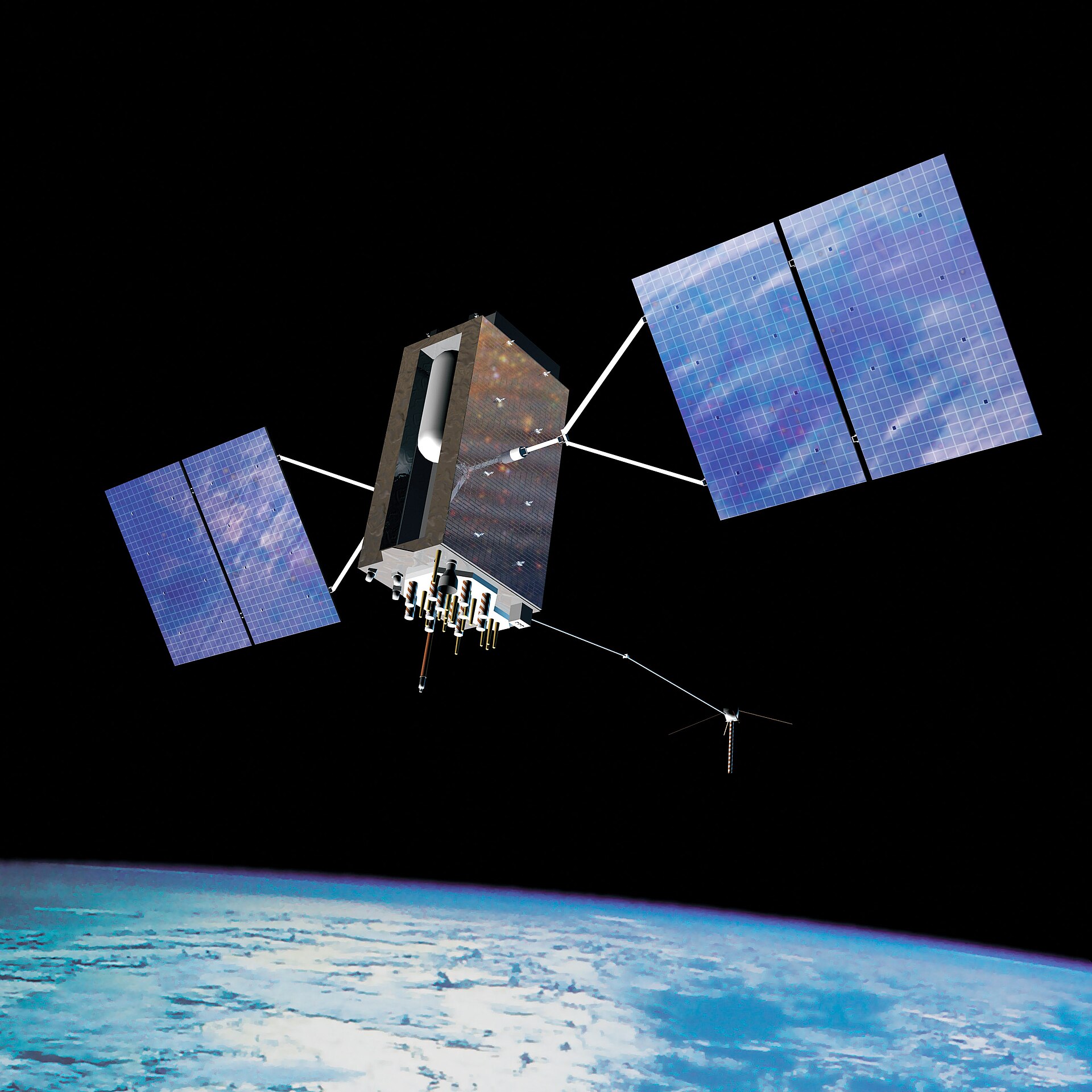
- Navigation: it runs the GPS constellation, used by militaries, aircraft, phones and banks worldwide.
- Missile warning: satellites detect the heat of missile launches anywhere on Earth within seconds.
- Communications: secure military satellite links for forces around the world.
- Launch: it runs America’s main launch ranges and buys national security launches.
- Space domain awareness: tracking satellites and debris to know what every object in orbit is doing.
- Space superiority: protecting US satellites and, if necessary, denying adversaries the use of theirs.
The money: a budget more than doubling
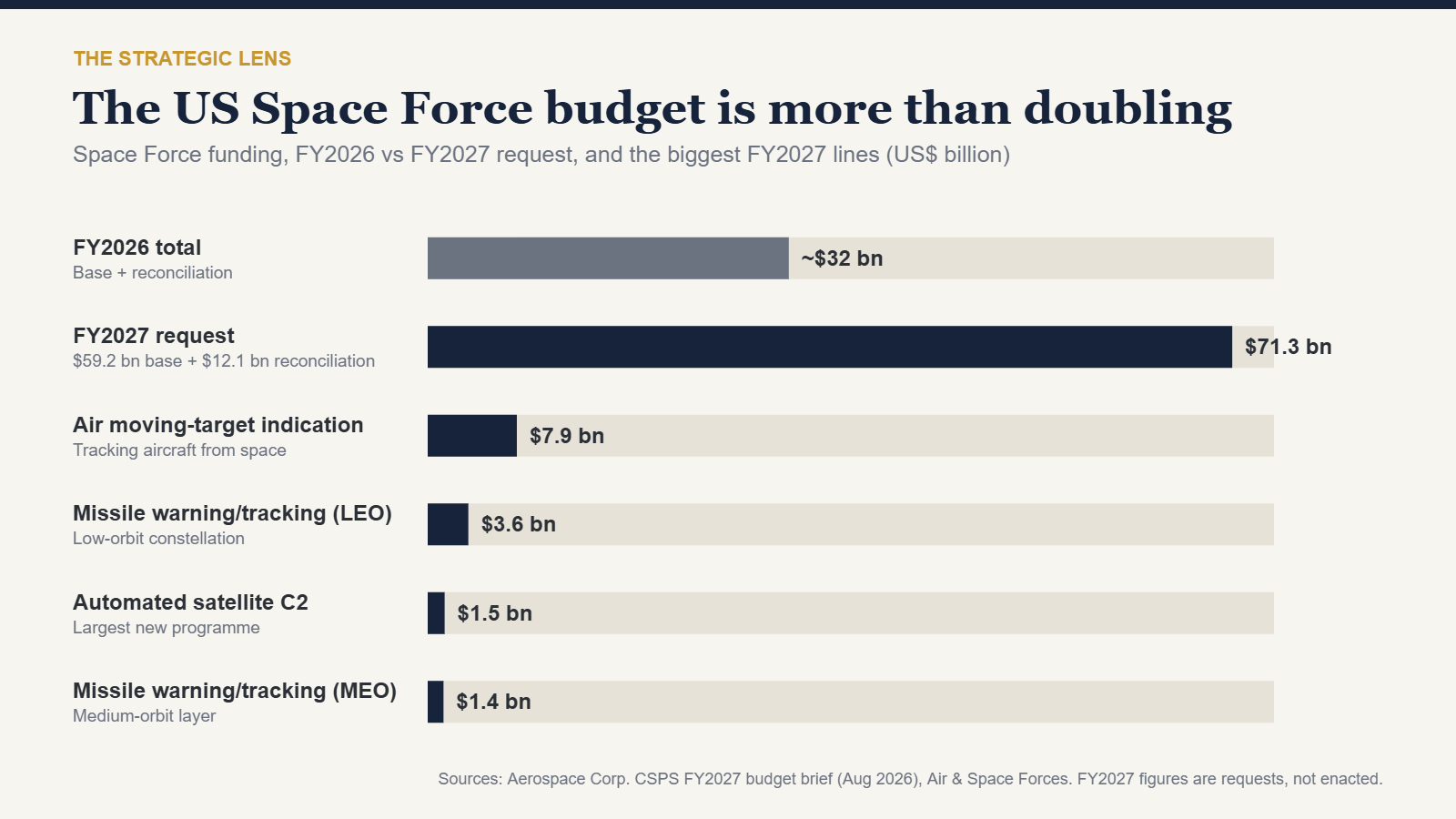
In FY2026, the Space Force received about $32 billion, roughly $26 billion in its regular budget plus about $6 billion from the 2025 reconciliation law. For FY2027, the administration requested $71.3 billion: $59.2 billion in base funding and $12.1 billion through a proposed reconciliation bill. About three-quarters of the increase is for classified programmes, tracking moving targets from space, missile warning and command and control.
- Tracking aircraft and ships from space: $7.9 billion for air moving-target indication, a job traditionally done by radar planes like AWACS. SpaceX won a $4.2 billion contract in May 2026.
- Missile warning and tracking: $3.6 billion for a low-orbit constellation and $1.4 billion for a medium-orbit layer.
- A space data network: a mesh of low-orbit satellites to move data quickly, with a $2.3 billion SpaceX contract.
- More launches: 31 national security launches planned in FY2027, up from 11.
As our explainer on the FY2027 Pentagon budget explains, Congress has not yet passed this money, so the final figure could be lower.
Golden Dome and space-based interceptors
The most ambitious and controversial Space Force project is building space-based interceptors for President Trump’s Golden Dome missile shield. These would be satellites in low orbit able to destroy enemy missiles during boost, mid-course or glide phases of flight.
In April 2026, the Space Force announced 20 agreements worth up to $3.2 billion with 12 companies, including SpaceX, Lockheed Martin, Northrop Grumman, Raytheon, Anduril and several start-ups, aiming for a demonstration by 2028. But Golden Dome’s chief, Gen. Michael Guetlein, told Congress that boost-phase interceptors might be too expensive for the planned $185 billion programme and may not make the final design. Some physicists argue that a full constellation would need many thousands of satellites.
The threat: China and Russia in space
- China has built one of the world’s largest military satellite fleets, used for surveillance, navigation and targeting. Its 2007 test that destroyed an old weather satellite created the largest debris cloud in history. A US Defense Intelligence Agency report in October 2026 said China is developing more on-orbit weapons.
- Russia destroyed one of its own satellites in a 2021 test, endangering astronauts on the International Space Station. In 2024, US officials publicly raised concerns about Russian work on a nuclear anti-satellite capability.
- Jamming and cyber: the most common attacks are not explosions but jamming GPS and communications, as seen widely in the war in Ukraine.
How a war in space would be fought
Space warfare is less like science fiction and more like a quiet struggle over information. It could include:
- Jamming and spoofing GPS and satellite communications.
- Cyberattacks on satellites and ground stations.
- Blinding imaging satellites with lasers.
- Co-orbital satellites that manoeuvre close to others to inspect, interfere with or disable them.
- Direct-ascent missiles that destroy satellites, creating debris that endangers everyone.
Because debris can make whole orbits unusable, most experts expect nations to prefer reversible attacks, such as jamming, over destroying satellites outright. A December 2025 executive order, “Ensuring American Space Superiority”, made protecting US freedom of action in space a formal priority.
Secret missions: the X-37B
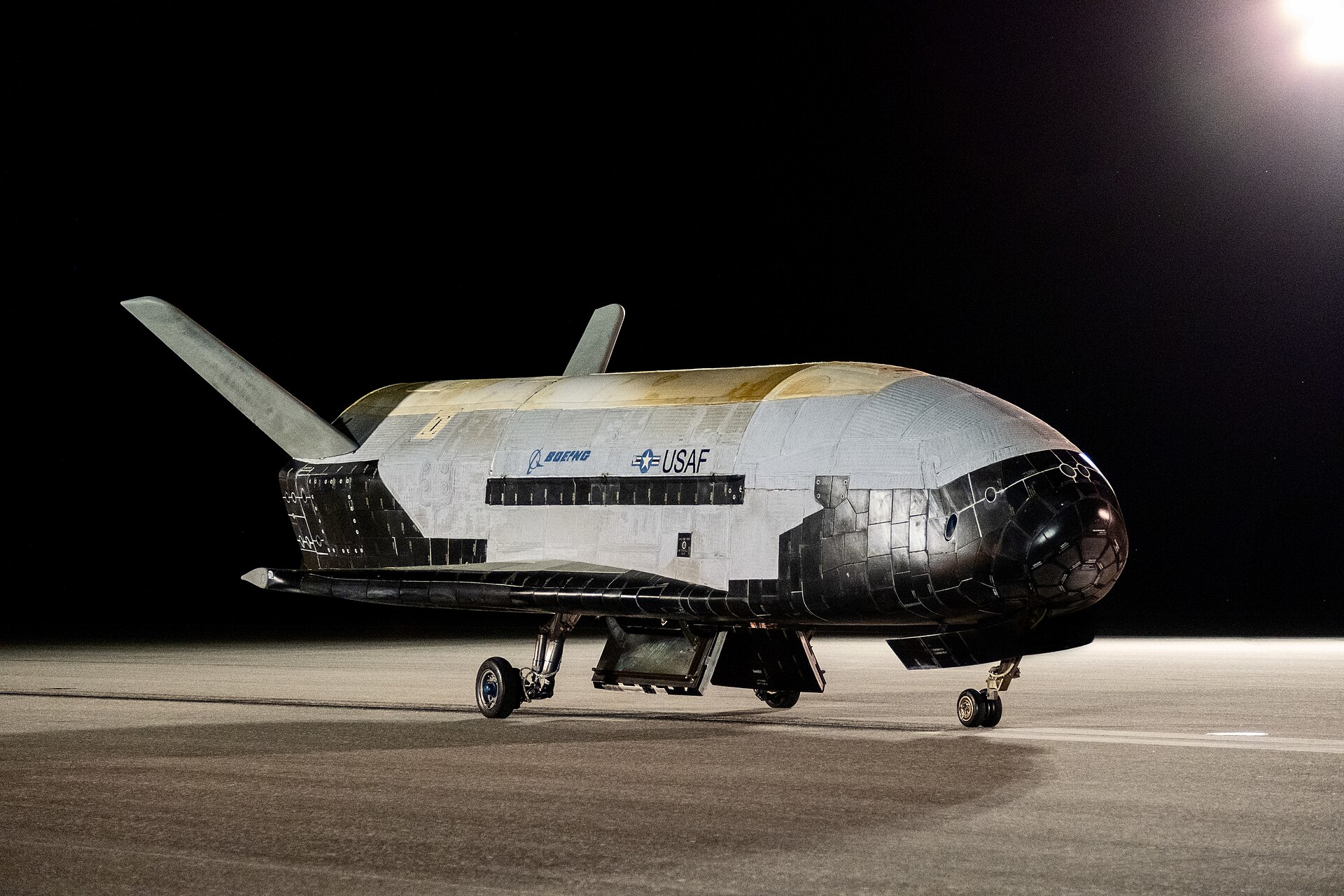
The X-37B is a small, uncrewed spaceplane that has flown several long, secret missions, some lasting more than two years. It tests technologies and experiments in orbit before landing on a runway like a miniature space shuttle. Its exact payloads are classified, which fuels speculation, but officially it is a testbed.
The commercial revolution
The Space Force increasingly relies on private companies. SpaceX launches most national security missions and has won billions in satellite contracts, while start-ups are building inspection satellites and interceptors. ULA’s Vulcan rocket, a key national security launcher, has been grounded since an anomaly in February 2026 and is scheduled to return to flight in mid-November. This dependence on a few companies is both a strength and a risk.
What it means for India
- India’s own path: India tested an anti-satellite missile in 2019 (Mission Shakti), created a Defence Space Agency the same year and approved a large constellation of military surveillance satellites in 2024.
- Partnership: space is a growing area of US–India cooperation, as discussed in our US–India defence partnership explainer.
- Lessons: India’s 2025 conflict with Pakistan showed how much modern forces depend on satellite surveillance, communications and navigation, and how China supports Pakistan in this domain.
Common misconceptions
- “The Space Force has astronauts and spaceships.” Almost all of its work is done from the ground, operating satellites. NASA, not the Space Force, runs human spaceflight.
- “Space weapons are banned.” The 1967 Outer Space Treaty bans nuclear weapons and weapons of mass destruction in orbit, not all military activity in space.
- “It is just a rebranded Air Force unit.” It grew out of Air Force Space Command, but it is now a separate service with its own budget, culture and doctrine.
Our take
Space has quietly become the foundation of modern warfare, and the Space Force’s growth reflects that. The FY2027 request, if approved, would make it a major force in its own right, with the US moving from simply using space to preparing to fight for it.
Watch three things: whether Congress funds the huge budget increase, whether space-based interceptors survive Golden Dome’s cost debate, and how China and Russia respond. The biggest risk is not a dramatic space battle but a slow slide into an arms race that leaves orbit crowded, contested and dangerous for everyone.
Frequently asked questions
When was the US Space Force created?
On 20 December 2019, when the National Defense Authorization Act for fiscal 2020 was signed into law. It is the sixth branch of the US armed forces.
What does the US Space Force do?
It operates GPS, missile-warning and military communications satellites, runs national security launches, tracks objects in orbit and protects US space systems from attack.
How big is the Space Force budget?
About $32 billion in FY2026. The FY2027 request is $71.3 billion, though Congress has not yet approved it.
How many people serve in the Space Force?
About 10,400 military personnel were authorised in FY2026, with plans to add 2,800 Guardians and 2,000 civilians in FY2027.
What are space-based interceptors?
Satellites designed to destroy enemy missiles in flight. The Space Force is developing them for the Golden Dome missile shield, with a demonstration targeted by 2028.
Does India have a space force?
India has a Defence Space Agency, created in 2019, and tested an anti-satellite missile in Mission Shakti that year. It does not have a separate space service like the US.
Sources and further reading
Researched using official statements and published reporting up to 6 November 2026.


Leave a Reply