
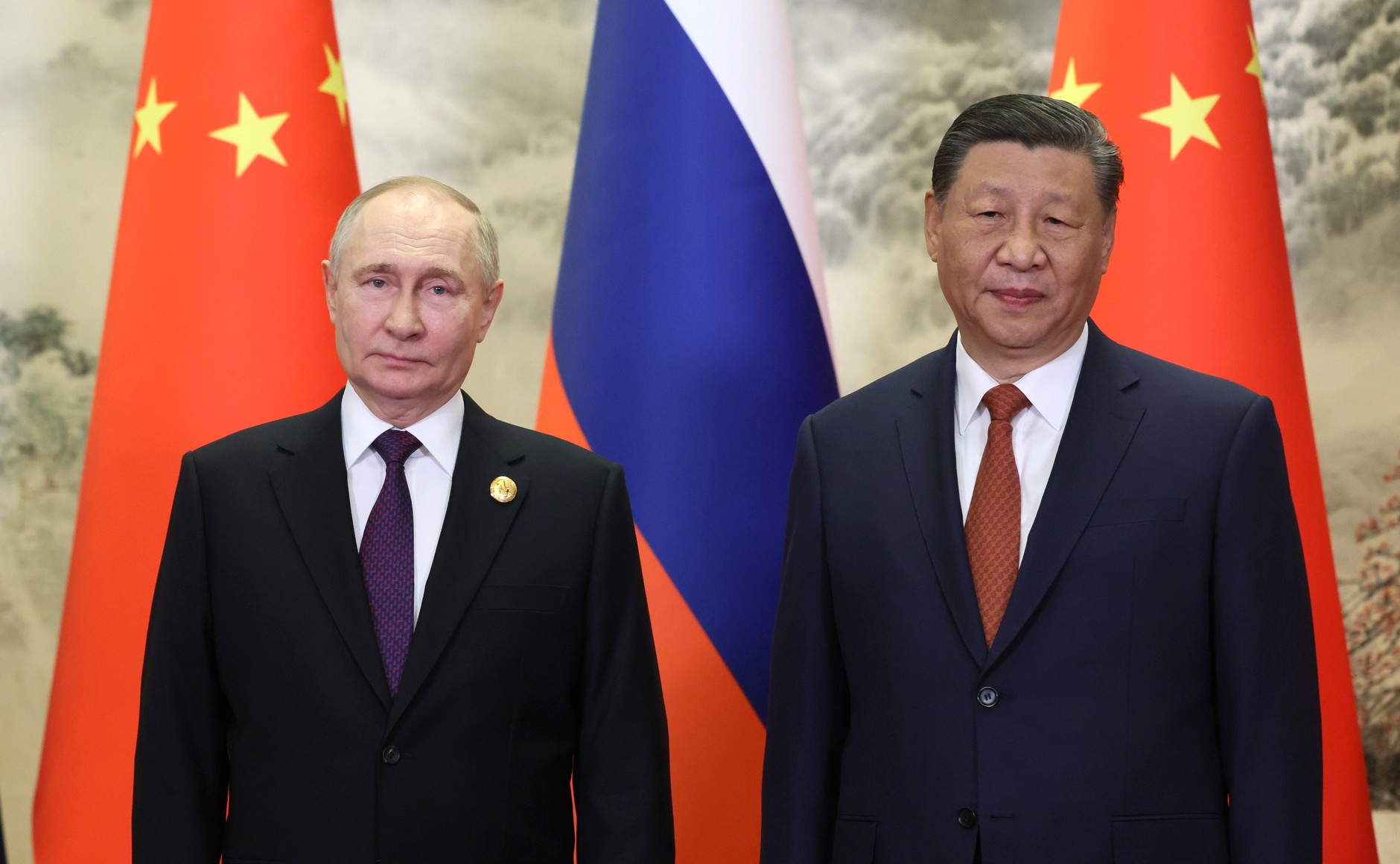
Days before Russian tanks rolled into Ukraine in February 2022, Xi Jinping and Vladimir Putin declared that their friendship had “no limits”. Four years later, Chinese factories supply the machine tools and electronics that keep Russia’s war industry running, Russian and Chinese bombers fly joint patrols near Japan and Alaska, and their navies exercise together across three oceans.
But is this an alliance? And what does it mean for the US, Europe and India? This guide explains the Russia–China military partnership: what holds it together, how far it really goes, where its limits are, and why New Delhi is watching nervously.
Quick answer: Russia and China have a close strategic partnership but no formal military alliance. Since their 2022 “no limits” declaration, they have expanded joint bomber patrols, naval drills and trade, which hit a record $245 billion in 2024. China has become Russia’s main supplier of dual-use technology for its war effort. Their forces are not integrated, and mutual distrust remains, but their alignment against the US is deepening.
In this article
- What kind of partnership is it?
- China and the war in Ukraine
- Military cooperation: what they actually do together
- From buyer and seller to role reversal
- Trade and energy: the economic glue
- The limits of the partnership
- How Washington sees it
- What it means for India
- Common misconceptions
- Our take
- Frequently asked questions
- Sources and further reading
What kind of partnership is it?
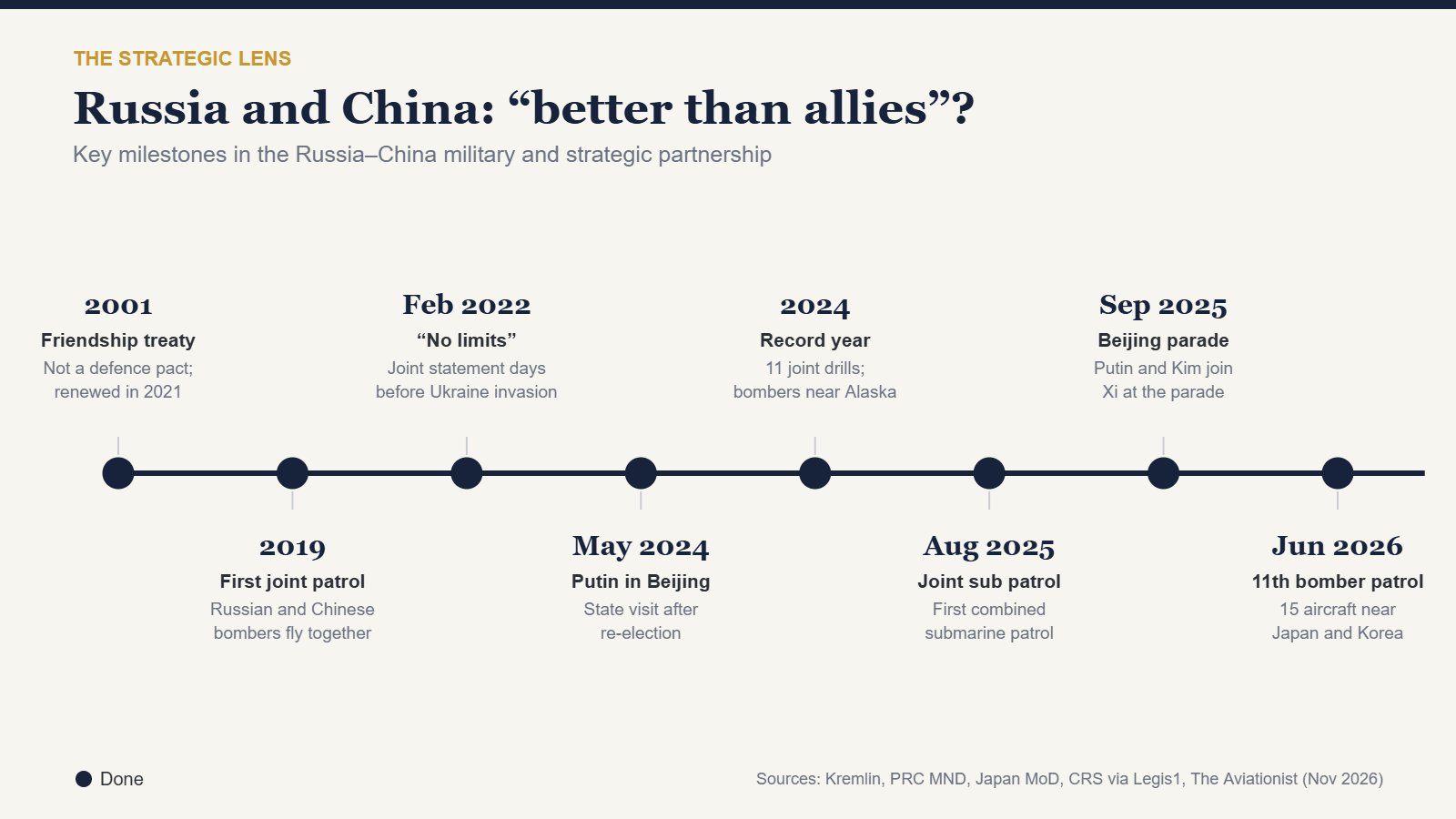
Russia and China signed a Treaty of Good-Neighbourliness and Friendly Cooperation in 2001, renewed in 2021. It is not a mutual defence pact: neither is obliged to fight for the other. In 2019 they upgraded ties to a “comprehensive strategic partnership of coordination for a new era”, and the February 2022 joint statement went further, opposing NATO expansion and the AUKUS pact and describing ties as superior to Cold War alliances.
Chinese officials like to say the two are “not allies, but better than allies”. In practice that means close political coordination against the United States, growing military contact, and deep economic interdependence, without the formal commitments of NATO.
China and the war in Ukraine
China has not sent weapons openly, but it has given Russia crucial support. It abstained on UN resolutions condemning the invasion, opposed Western sanctions and bought record amounts of Russian energy. Western governments and researchers say China is now the main source of the dual-use goods Russia needs. The Jamestown Foundation estimated in 2026 that around 90 percent of Russia’s machine-tool imports came from China, and a 2026 Kiel Institute report said China supplies more than 60 percent of critical military-related components, directly or through intermediaries. China says it maintains strict export controls.
Military cooperation: what they actually do together
- Joint bomber patrols: since 2019, Russian and Chinese strategic bombers have flown joint patrols, usually once or twice a year. In July 2024, Chinese H-6 bombers entered the Alaska air defence zone alongside Russian aircraft for the first time.
- The 11th patrol: on 27 June 2026, at least 15 aircraft, including Russian Tu-95s and Chinese H-6s and J-16s, flew over the Sea of Japan, East China Sea and western Pacific, according to Japan’s defence ministry.
- Naval drills: the two navies hold regular joint exercises, sometimes with Iran, and in August 2025 conducted their first combined submarine patrol.
- Big exercises: Chinese troops took part in Russia’s Vostok exercises in 2018 and 2022, and a Chinese contingent joined Russia’s Ocean-2024 naval exercise.
According to US Congressional Research Service data cited by Legis1, the two held 11 combined exercises and patrols in 2024, the most on record.
From buyer and seller to role reversal
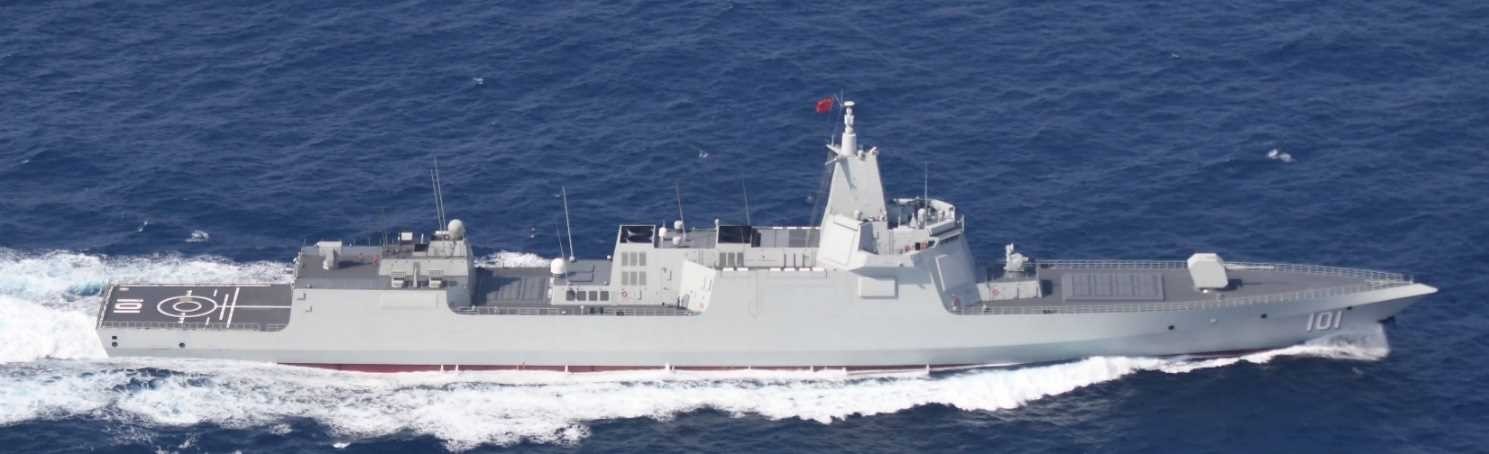
In the 1990s and early 2000s, China bought almost all its imported weapons from Russia: Su-27 fighters, destroyers, submarines and S-300 air defences. In 2015 it bought S-400s and Su-35s. But China copied Russian designs and built up its own industry, and its imports from Russia have fallen sharply.
Today the flow has partly reversed. China supplies Russia with electronics, machine tools, drone parts and other components, while Russia offers China energy, raw materials and, reportedly, some military expertise, such as submarine and missile-warning technology. China is the senior partner.
Trade and energy: the economic glue
| Indicator | Figure |
|---|---|
| Total trade (2024) | Record $245 billion |
| Total trade (2025) | About $234 billion |
| China’s share of Russia’s imports (2024) | About 57% |
| Trade settled in roubles or yuan | More than 90% (end-2023) |
| Gas pipeline | Power of Siberia; Power of Siberia 2 still being negotiated |
The relationship is lopsided. Russia depends on China as its biggest market and supplier; China values Russia mainly as a source of cheap energy and a strategic partner. Some Chinese banks have been cautious about sanctioned Russian transactions, showing that Beijing will not risk its access to Western markets for Moscow.
The limits of the partnership
- No alliance: there is no mutual defence commitment, and neither has backed the other’s territorial claims fully. China does not recognise Russia’s annexation of Crimea; Russia stays neutral on the South China Sea.
- No integration: their forces are not interoperable, and exercises are often scripted, according to US analysts.
- Distrust: leaked Russian documents have shown concern about Chinese military superiority and espionage.
- Competition: they compete for influence in Central Asia and the Arctic.
- Asymmetry: Russia worries about becoming China’s junior partner.
How Washington sees it
US intelligence agencies call China–Russia cooperation the combination with the greatest potential to threaten US interests over the long term. The top US commander in the Pacific, Admiral Samuel Paparo, told Congress in April 2026 that Russia is expanding its Indo-Pacific footprint even as the Ukraine war strains its capacity. The prospect of a two-theatre crisis, in Europe and Asia at once, drives much of the Pentagon’s planning, as our explainer on the FY2027 Pentagon budget shows.
What it means for India
- The supply risk: India still relies heavily on Russian weapons. A Russia dependent on China might be slower, or less willing, to supply India in a crisis with China.
- Technology leakage: India worries that technology it shares with Russia, or Russian systems it buys, could be exposed to China.
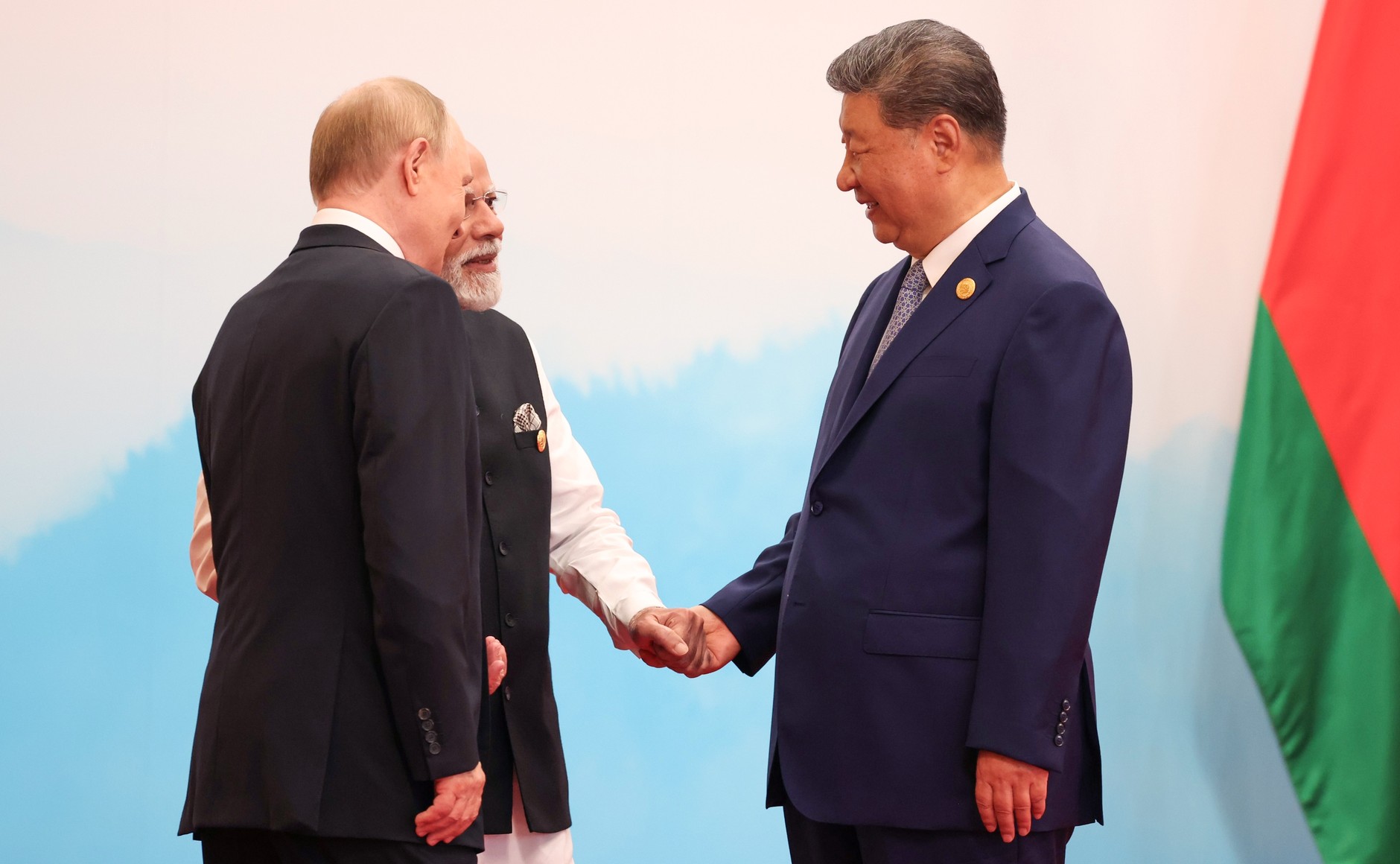
- Diplomatic balance: India keeps up ties with Moscow partly to stop Russia drifting entirely into China’s camp. Our guide to India–Russia relations covers this balancing act.
- Pakistan: China is Pakistan’s main arms supplier, and closer Russia–China ties add to India’s concerns about a China–Pakistan axis.
Common misconceptions
- “Russia and China are military allies.” They are close partners, not treaty allies. Neither is obliged to defend the other.
- “China is arming Russia with weapons.” There is little evidence of large-scale Chinese weapons deliveries. The support is mainly dual-use components, machine tools and electronics.
- “The partnership is equal.” China is now by far the stronger partner economically and technologically.
Our take
The Russia–China partnership is not an alliance, but it does not need to be. Each gives the other what it most needs: China gets cheap energy and a partner in challenging the US; Russia gets an economic lifeline and the components to keep fighting in Ukraine. That makes it durable, even if it is unequal and riddled with suspicion.
Watch for three things: whether joint military activity near Japan, Taiwan and Alaska keeps growing; whether China crosses the line into supplying finished weapons; and whether Russia becomes so dependent that it starts tilting its foreign policy, including towards India, to suit Beijing. For India, the last of these matters most.
Frequently asked questions
Are Russia and China allies?
Not formally. They have a 2001 friendship treaty and a “comprehensive strategic partnership”, but no mutual defence commitment. Chinese officials describe them as “not allies, but better than allies”.
What does “no limits” partnership mean?
It refers to the joint statement Xi and Putin issued on 4 February 2022, declaring their partnership had no limits and opposing NATO expansion. In practice, both still act in their own interests.
Does China supply weapons to Russia?
There is little evidence of large-scale weapons deliveries, but China supplies most of the dual-use goods, such as machine tools and electronics, that Russia’s defence industry depends on.
How much do Russia and China trade?
Trade reached a record $245 billion in 2024 and about $234 billion in 2025, with most of it settled in roubles or yuan.
Do Russia and China hold joint military exercises?
Yes. They conduct joint bomber patrols, naval drills and land exercises. The 11th joint strategic air patrol took place on 27 June 2026 near Japan and South Korea.
Why does the Russia–China partnership worry India?
India relies on Russian weapons and fears that a Russia dependent on China may be less reliable in a crisis with China, and that sensitive technology could leak to Beijing.
Sources and further reading
Researched using official statements and published reporting up to 6 November 2026.


Leave a Reply