
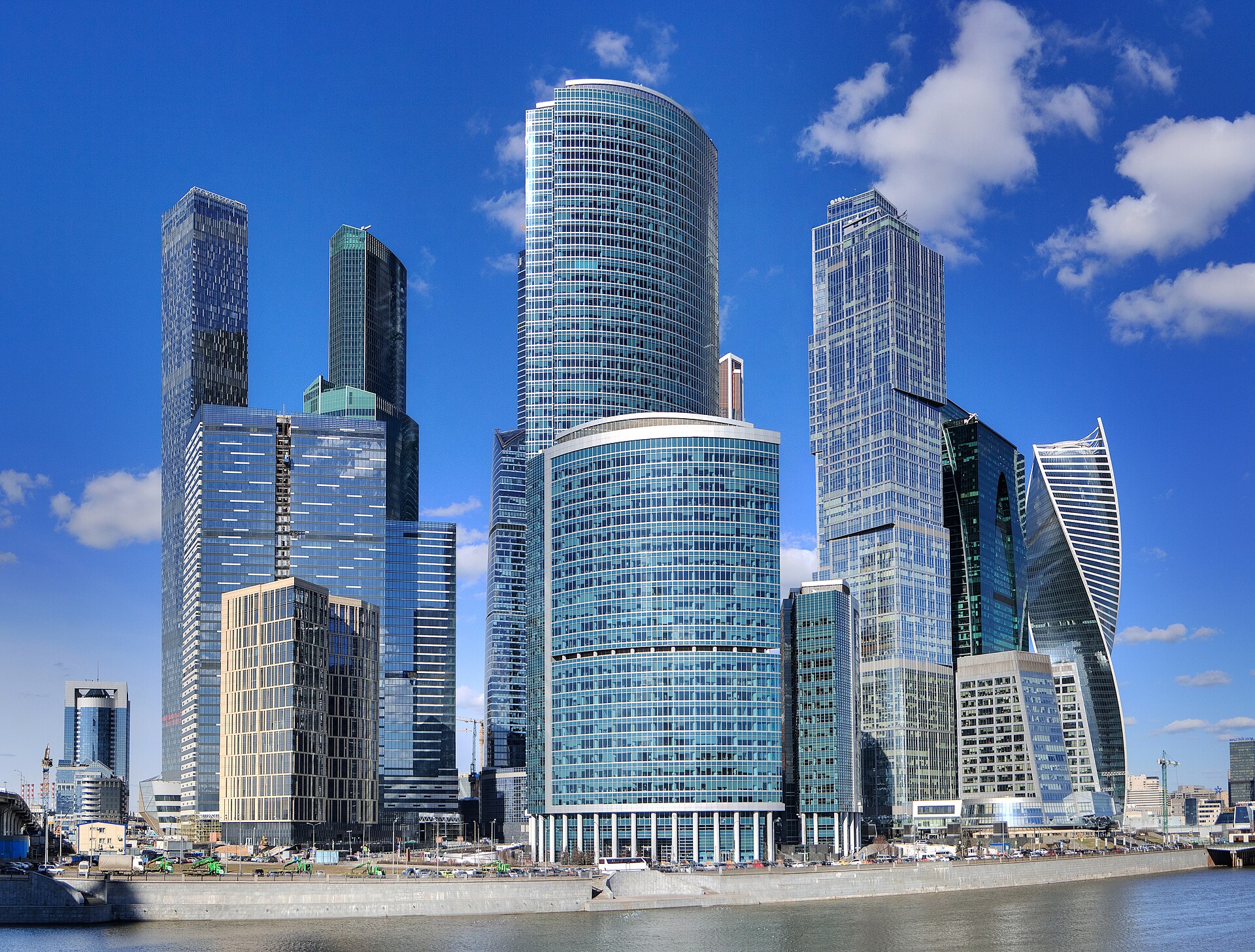
When Western governments imposed sweeping sanctions in 2022, many predicted Russia’s economy would collapse within months. It did not. Instead, massive war spending fuelled two years of growth above 4 percent, while oil exports were rerouted to India and China. Then, in 2025, the boom ran out of steam.
By 2026 Russia faces near-zero growth, higher taxes, shrinking reserves and a war that still consumes a huge share of its budget. This guide explains Russia’s war economy: how it works, how sanctions have hit it, where the strains are, and whether economic pressure can end the war.
Quick answer: Russia spent about 16 trillion roubles, roughly 7.5% of GDP, on its military in 2025, according to SIPRI. War spending drove growth above 4% in 2023–24, but growth slowed to about 1% in 2025, and the official 2026 forecast was cut to 0.4%. Russia has raised VAT, drawn down its reserve fund and faces tougher oil sanctions. Analysts see a constrained, stagnating economy, not an imminent collapse.
Russia’s war economy at a glance
| Military spending (2025) | About 16 trillion roubles, ~7.5% of GDP (SIPRI, all military items) |
| Military spending (2026 plan) | About 14.9 trillion roubles, ~6.3% of GDP |
| GDP growth | Over 4% (2023, 2024); about 1% (2025); 0.4% forecast (2026) |
| Peak interest rate | 21% (2024) |
| VAT | Raised from 20% to 22% in January 2026 |
| Reserve fund (liquid) | About 1.8% of GDP, down from 6.5% before the invasion |
| Oil and gas share of revenue | About 23% (2025), down from 27% (2024) |
| Key sanctions | US sanctions on Rosneft and Lukoil (Oct 2025), oil price cap, export controls |
In this article
How much is Russia spending on the war?
Russia’s official “national defence” budget for 2026 was drafted at about 12.9 trillion roubles, then trimmed in the final law. But that is only part of the picture. SIPRI, which adds hidden and classified items, estimates total military spending at almost 16 trillion roubles in 2025, about 7.5 percent of GDP and 38 percent of all planned government spending. Defence Minister Andrei Belousov put Defence Ministry spending at 7.3 percent of GDP in 2025.
For 2026, SIPRI calculates planned military spending of about 14.9 trillion roubles, or 6.3 percent of GDP, a planned real-terms cut of about 13 percent. SIPRI expects the budget to be amended upwards again, as it has been every year since the invasion.
The war boom: 2023–24
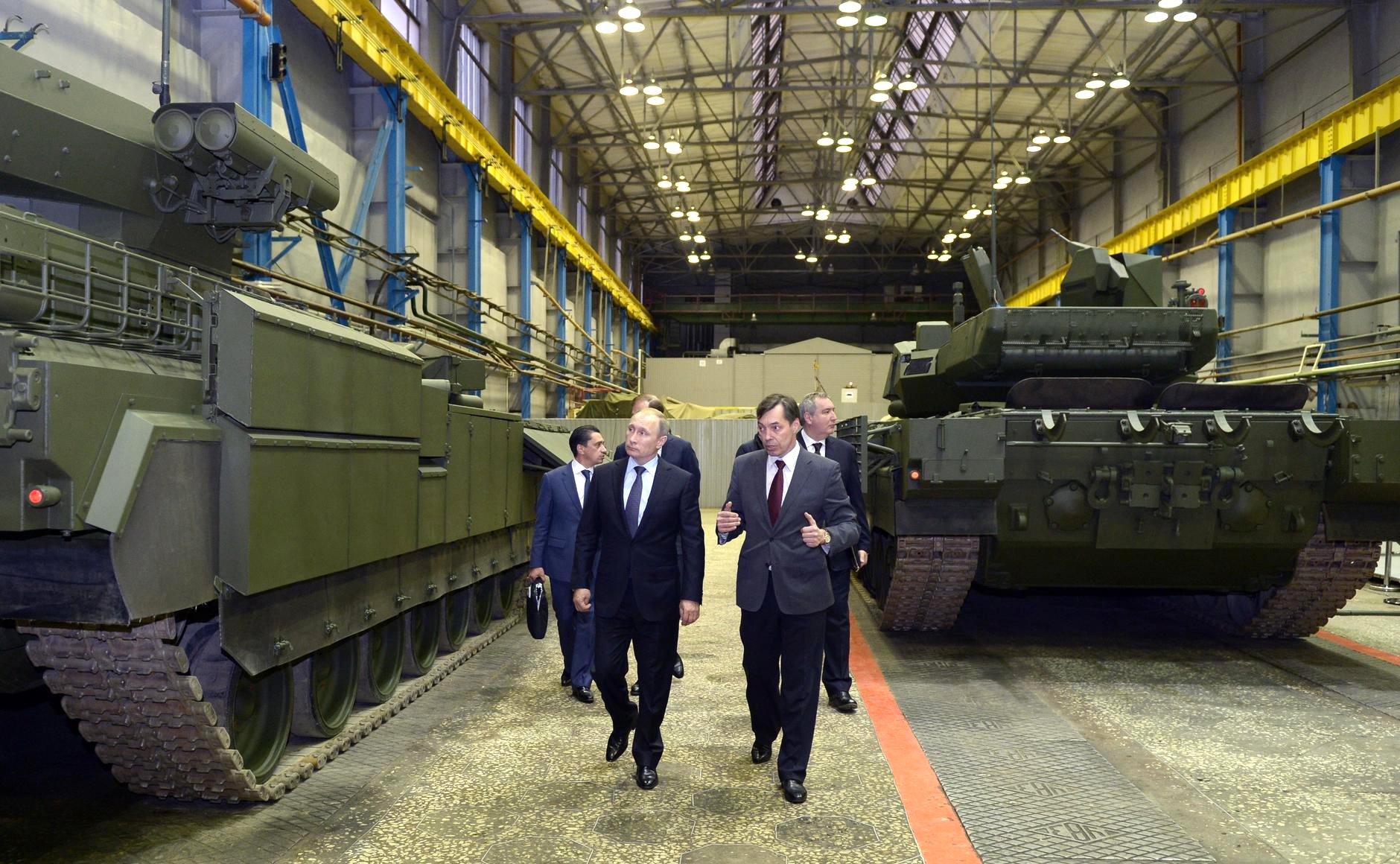
War spending acted like a giant stimulus. Factories making shells, tanks, drones and uniforms hired aggressively and paid more. Generous sign-up bonuses for soldiers and payments to families of the dead pumped money into poorer regions. Unemployment fell to a record low of about 2.2 percent. Growth topped 4 percent in both 2023 and 2024.
But the boom was lopsided. It produced weapons rather than goods people could buy, while labour shortages pushed up wages and prices. Inflation reached 9.5 percent in 2024, and the central bank raised its key interest rate to a punishing 21 percent.
The slowdown: 2025–26
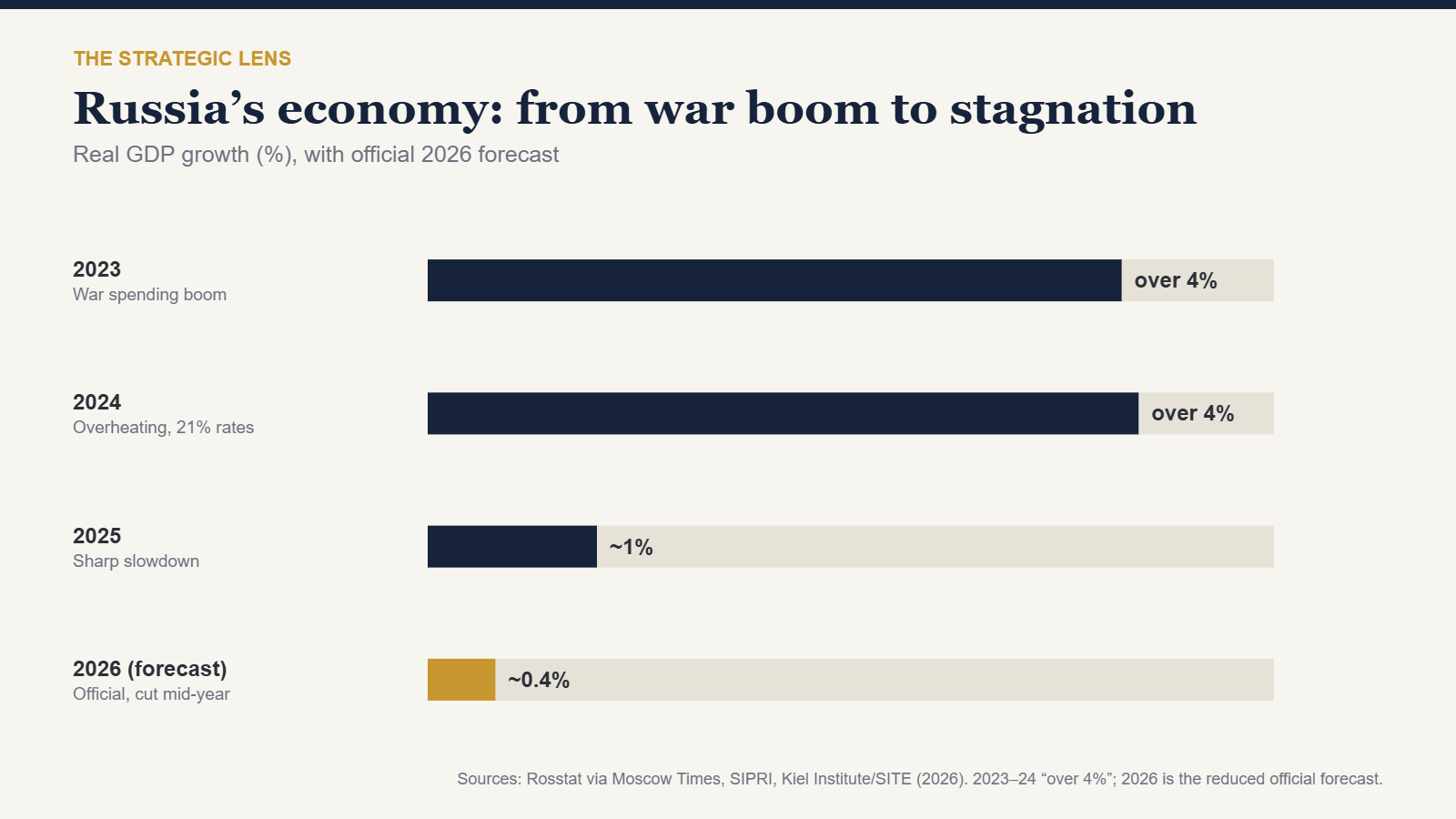
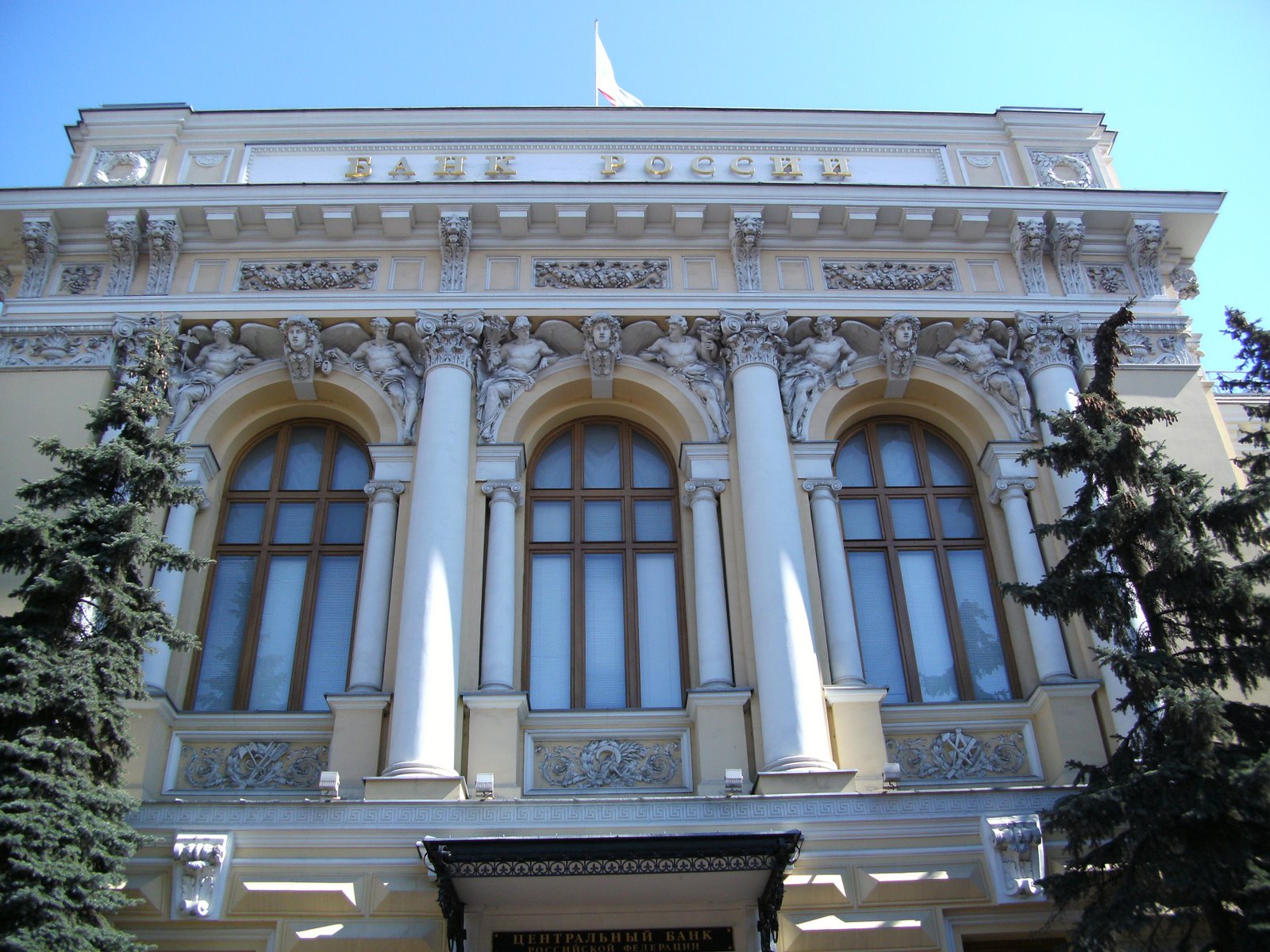
In 2025, growth slowed to about 1 percent as high interest rates choked civilian investment and the war economy hit capacity limits. The central bank began cutting rates in June 2025, from 21 percent to 20, then 18, 17 and about 16 percent, but the damage was done. The economy contracted by 0.3 percent in the first quarter of 2026, and the government cut its official 2026 growth forecast to 0.4 percent.
Who pays for the war?
- Taxpayers: VAT rose from 20 to 22 percent on 1 January 2026, and many more small businesses now have to pay it. New levies on electronics were also planned.
- The reserve fund: the liquid part of the National Wealth Fund, Russia’s rainy-day savings, has fallen from about 6.5 percent of GDP before the invasion to about 1.8 percent by 2026.
- Borrowing: the federal deficit was about 2.6 percent of GDP in 2025, and almost 4 percent including regional budgets. In early 2026, it exceeded the government’s full-year target within the first quarter.
- Civilian spending: money for health, education and infrastructure has been squeezed to protect defence.
Oil, gas and sanctions
Energy exports remain the backbone of Russia’s budget, but their weight is falling: oil and gas provided about 23 percent of federal revenue in 2025, down from 27 percent in 2024. After Europe stopped most purchases, Russia rerouted crude to India and China at a discount, often using an ageing “shadow fleet” of tankers to avoid the Western price cap.
Sanctions tightened in October 2025, when the US sanctioned Rosneft and Lukoil, Russia’s two largest oil producers, prompting many buyers to pause purchases. India agreed in a February 2026 trade deal with the US to shift away from Russian oil, explained in our guide to India–Russia relations. Ironically, the 2026 war involving Iran pushed oil prices up and gave Russia temporary relief, as our Iran war explainer discusses.
The China lifeline
China has become Russia’s indispensable economic partner, accounting for about 35 percent of its foreign trade and, according to a 2026 Kiel Institute report, more than 60 percent of critical military-related components. Without Chinese machine tools and electronics, Russia’s defence industry would struggle. Read more in our Russia–China partnership explainer.
The human cost
The war economy runs on people as well as money. Russia relies on large cash bonuses to recruit soldiers, and regional budgets are straining under sign-up and compensation payments. By the end of 2025, Russian deaths in the war reportedly exceeded 150,000, with the real total almost certainly higher, according to figures cited by SIPRI. Labour shortages across the economy have intensified as men go to the front, emigrate or move into defence factories.
Can Russia keep fighting?
Most economists now describe Russia as being in a constrained, stagnating phase rather than facing collapse. The Kiel Institute and SITE called it “a more constrained phase rather than facing an immediate collapse”. The Moscow Times’ analysis expected stagnation in 2026, with any meaningful recovery unlikely before 2027.
In other words, Russia can probably afford to keep fighting at roughly the current level for some time, but at a growing cost to living standards and long-term growth. Economic pain alone is unlikely to end the war quickly; it is more likely to shape how long Russia can sustain it and on what terms it negotiates. Our explainer on the Ukraine ceasefire talks looks at where negotiations stand.
How Russia compares
| Indicator | Russia | NATO Europe trend |
|---|---|---|
| Military spending share of GDP | ~6–7.5% | Rising towards NATO’s 3.5% core target |
| Growth (2025) | ~1% | Low but positive in most economies |
| Main financing | Taxes, reserves, energy exports | Borrowing and budget shifts |
Europe, meanwhile, is rearming fast, as our piece on Europe’s rearmament boom shows, and its combined economy dwarfs Russia’s. That long-term imbalance is one reason Moscow leans so heavily on nuclear threats, covered in our guide to Russia’s nuclear weapons.
Common misconceptions
- “Sanctions have failed.” They did not cause collapse, but they have raised costs, cut energy revenue, forced Russia to sell oil at discounts and made it dependent on China.
- “Russia’s economy is booming.” It boomed in 2023–24 on war spending. By 2025–26 it had slowed to near zero growth.
- “Russia will run out of money soon.” Reserves are falling, but Russia can still raise taxes and borrow domestically. Analysts expect strain, not sudden bankruptcy.
Our take
Russia’s war economy is a story of short-term resilience and long-term damage. Moscow has kept the war funded by raising taxes, spending reserves and leaning on China and discounted oil sales. But growth has stalled, the reserve cushion is thin and the country is trading its economic future for battlefield endurance.
Watch three things in 2027: whether the defence budget is amended upward again, how oil revenue holds up under tighter sanctions, and whether the National Wealth Fund’s liquid reserves keep shrinking. Those numbers will say more about how long Russia can fight than any official speech.
Frequently asked questions
How much does Russia spend on its military?
SIPRI estimates Russia spent almost 16 trillion roubles, about 7.5% of GDP, on its military in 2025. Planned 2026 spending is about 14.9 trillion roubles, or 6.3% of GDP.
Is Russia’s economy in recession?
Growth slowed to about 1% in 2025, the economy shrank 0.3% in the first quarter of 2026, and the official 2026 growth forecast was cut to 0.4%.
Have sanctions worked against Russia?
Sanctions have not collapsed the economy, but they have reduced energy revenue, forced discounted oil sales, cut access to Western technology and increased dependence on China.
Why did Russia raise VAT?
To help fund the war and a growing budget deficit. VAT rose from 20% to 22% on 1 January 2026.
How long can Russia afford the war?
Analysts expect Russia can sustain the war for some time at a rising economic cost, with stagnation rather than immediate collapse.
Who buys Russian oil now?
Mainly China and India, though India agreed in a February 2026 trade deal with the US to shift away from Russian oil.
Sources and further reading
Researched using official statements and published reporting up to 6 November 2026.


Leave a Reply