
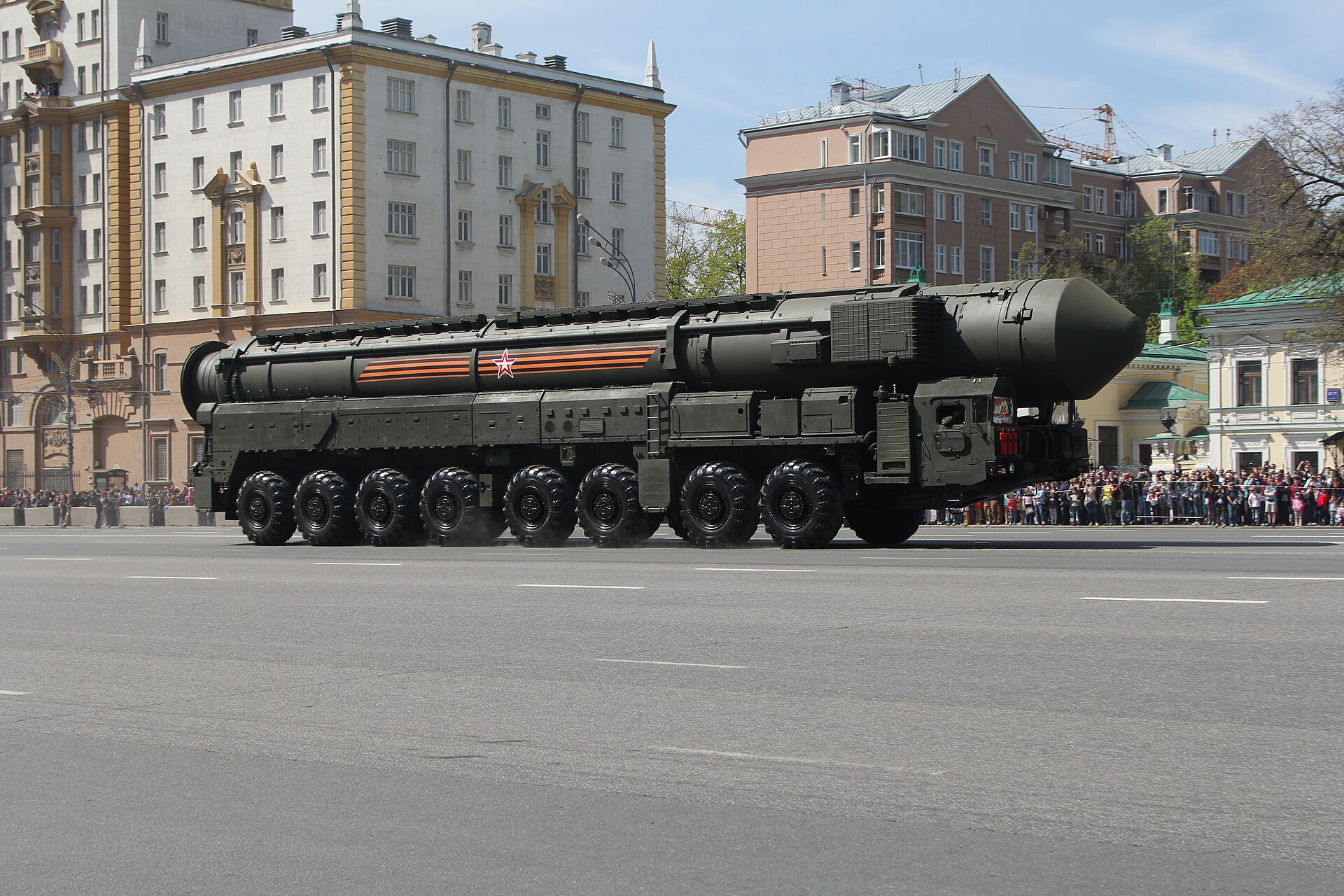
Russia has the world’s largest nuclear arsenal, and since invading Ukraine it has talked about it more openly than at any time since the Cold War. It rewrote its nuclear doctrine in 2024, used a new nuclear-capable missile in combat, moved weapons into Belarus, and in late 2025 announced tests of two exotic weapons it calls unstoppable.
This guide cuts through the rhetoric to explain Russia’s nuclear weapons: how many it has, what its doctrine says, what Oreshnik, Burevestnik and Poseidon really are, and whether the risk of nuclear use is rising.
Quick answer: Russia has an estimated 5,400–5,500 nuclear warheads, about 1,700–1,800 of them deployed on strategic missiles and bombers. Its 2024 doctrine lowered the threshold for nuclear use. New systems include the Oreshnik missile, used against Ukraine three times since 2024, and the nuclear-powered Burevestnik cruise missile and Poseidon torpedo, both reportedly tested in October 2025. Russia uses these weapons mainly as tools of intimidation.
Russia’s nuclear forces at a glance
| Total warheads | About 5,400–5,500 (FAS / Bulletin estimates) |
| Deployed strategic | About 1,700–1,800 |
| Tactical warheads | About 1,500 |
| Land leg | Yars, Sarmat (in development), Avangard ICBMs |
| Sea leg | Borei and Delta-class submarines with Bulava and Sineva missiles |
| Air leg | Tu-160 and Tu-95 bombers |
| Doctrine | Revised 19 November 2024, lowering the threshold |
| New systems | Oreshnik, Burevestnik, Poseidon, Sarmat |
In this article
- How big is Russia’s nuclear arsenal?
- The nuclear triad
- The 2024 doctrine: a lower threshold
- Oreshnik: the missile Russia actually used
- Burevestnik: the nuclear-powered cruise missile
- Poseidon: the “doomsday” torpedo
- Sarmat and Avangard
- Nuclear weapons in Belarus
- Arms control is collapsing
- Is the risk of nuclear use rising?
- What it means for India
- Common misconceptions
- Our take
- Frequently asked questions
- Sources and further reading
How big is Russia’s nuclear arsenal?
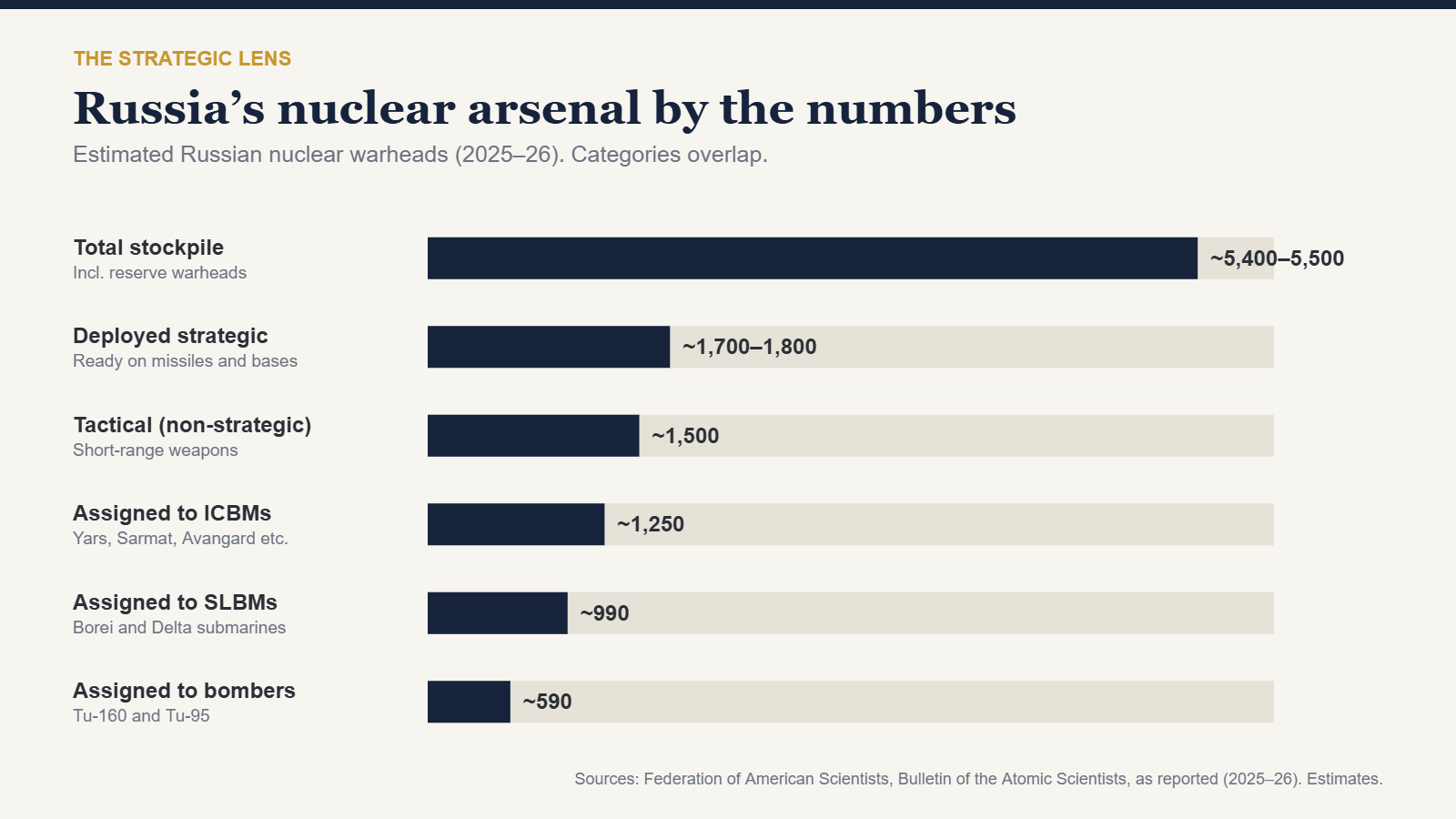
Neither Russia nor anyone else publishes exact figures, so analysts rely on estimates. The Federation of American Scientists estimated in 2025 that Russia had about 5,459 warheads in its stockpile, slightly more than the United States, with about 1,700 deployed strategic warheads on each side. A 2026 estimate cited by the Bulletin of the Atomic Scientists put the figure at about 5,420, with around 1,800 deployed.
Roughly 1,250 warheads are assigned to land-based missiles, about 990 to submarine-launched missiles and about 590 to bombers. On top of that, Russia has around 1,500 shorter-range “tactical” nuclear weapons, a category not covered by any treaty.
The nuclear triad
- Land: the Strategic Rocket Forces operate about 330 intercontinental missiles, mainly road-mobile and silo-based Yars, plus a few Avangard hypersonic glide vehicles. The heavy Sarmat ICBM is meant to replace the Soviet-era Satan missile.
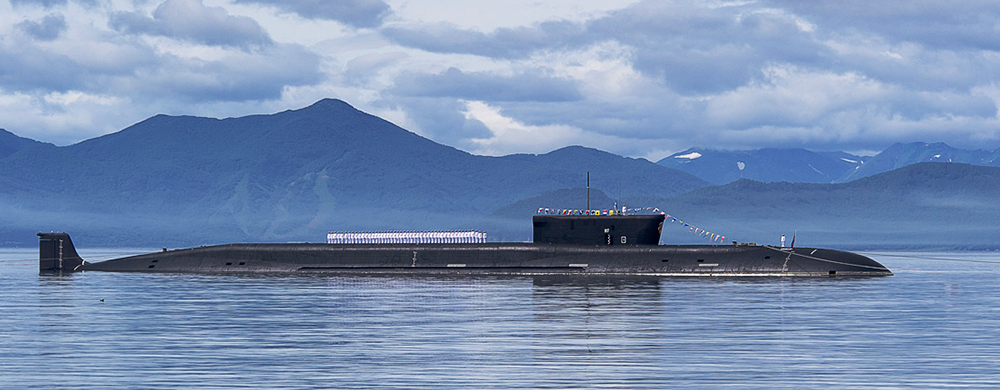
- Sea: about 13 ballistic missile submarines, including eight modern Borei-class boats carrying Bulava missiles.
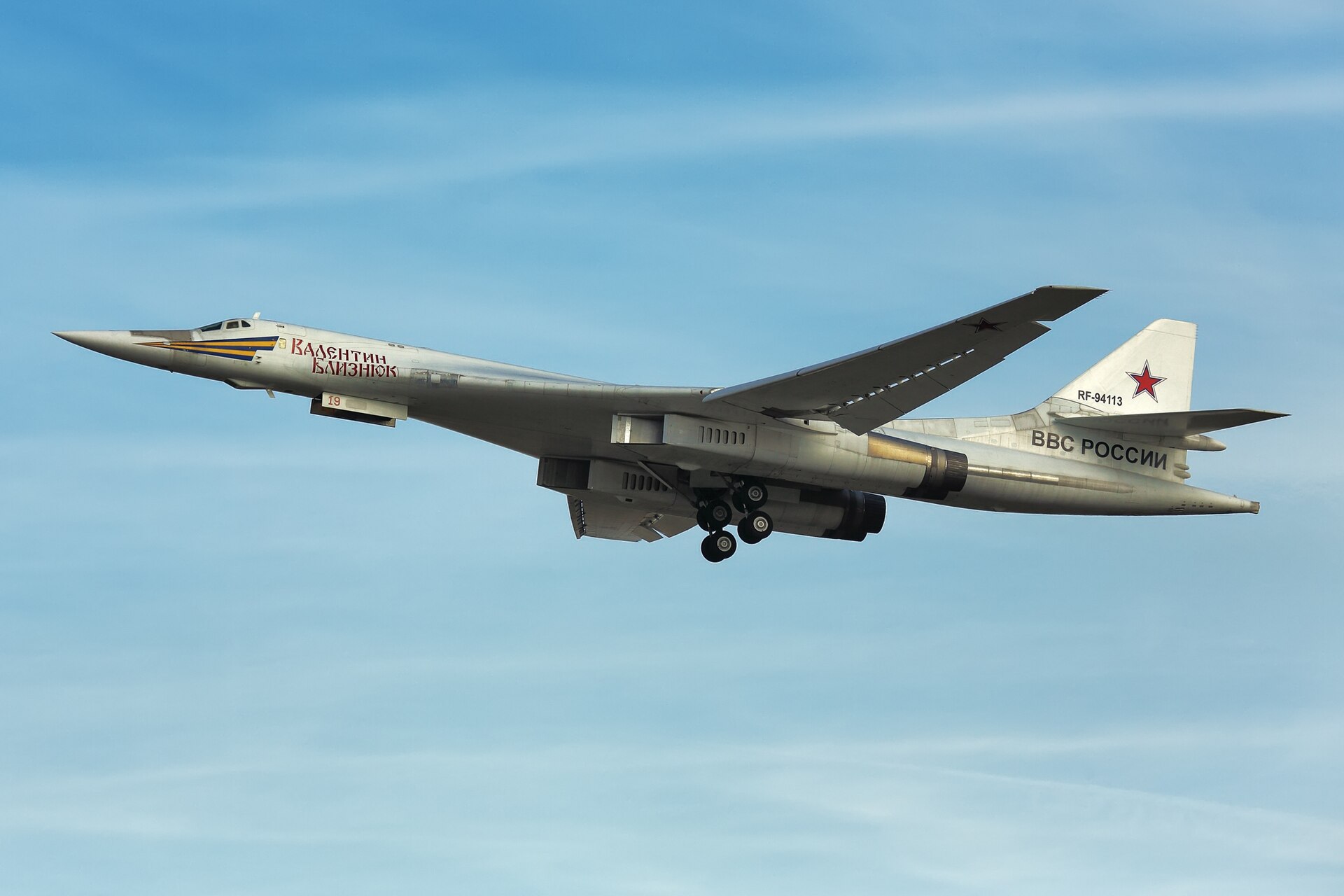
- Air: about 67 Tu-160 and Tu-95 strategic bombers carrying nuclear cruise missiles and bombs.
The bomber force took a hit in June 2025, when Ukraine’s Operation Spiderweb used drones smuggled into Russia to strike strategic bombers at several air bases, destroying or damaging a number of them.
The 2024 doctrine: a lower threshold
On 19 November 2024, Putin approved an updated nuclear doctrine, just after the US allowed Ukraine to fire American missiles into Russia. The main changes:
- An attack by a non-nuclear country that is backed by a nuclear power can be treated as a joint attack by both, a clear signal aimed at Ukraine and NATO.
- Russia reserves the right to use nuclear weapons in response to a massive air or missile attack crossing its border, including by drones.
- Belarus is explicitly covered by Russia’s nuclear umbrella.
Analysts generally read the changes as a way to deter Western support for Ukraine, describing a shift from defensive deterrence towards nuclear intimidation. Russia’s earlier doctrine already allowed nuclear use if the very existence of the state was threatened by conventional attack.
Oreshnik: the missile Russia actually used
Oreshnik is a new intermediate-range ballistic missile, thought to be derived from the RS-26 Rubezh, that carries multiple warheads travelling at hypersonic speeds. Some reports give its range as about 5,500 km.
- 21 November 2024: first used against a missile factory in Dnipro, Ukraine. Ukrainian officials said its warheads carried no explosives and damage was limited.
- August 2025: Putin said it had entered serial production and service.
- December 2025: Belarus said Oreshnik had arrived and been placed on combat duty.
- 8 January 2026: used against an aviation repair plant in Lviv, near the Polish border.
- 24 May 2026: two fired during a massive overnight attack; one hit near Bila Tserkva.
Experts note that its accuracy suits a nuclear payload better than a conventional one, which is why many see its conventional use as a message to Europe rather than a battlefield necessity.
Burevestnik: the nuclear-powered cruise missile
Burevestnik is a cruise missile powered by a small nuclear reactor, giving it, in theory, almost unlimited range. On 26 October 2025, Russia’s chief of general staff told Putin it had been tested, flying for about 15 hours and 14,000 km, according to the Russian military. Western analysts cannot verify these figures. The programme has a troubled history: a 2019 accident linked to it killed several Russian nuclear specialists. Critics also warn that a missile spewing radiation as it flies poses risks to Russia itself.
Poseidon: the “doomsday” torpedo
Poseidon is a nuclear-powered, nuclear-armed underwater drone designed to cross oceans and detonate near an enemy coast. Putin announced on 29 October 2025 that it had been tested, including activation of its nuclear propulsion. The Pentagon has estimated its warhead at between 2 and 100 megatons. Only special submarines such as the Belgorod can carry it. Analysts see it as a retaliatory weapon designed to bypass missile defences like America’s Golden Dome.
Sarmat and Avangard
The Sarmat is a super-heavy liquid-fuelled ICBM designed to carry up to 10 large or 15 smaller warheads. It has suffered repeated delays and reported test failures, including what satellite imagery suggested was a silo explosion in 2024. Avangard is a hypersonic glide vehicle mounted on older ICBMs, which Putin has called invulnerable to missile defence. Our explainer on hypersonic missiles explains how such weapons work.
Nuclear weapons in Belarus
In 2023, Russia began moving tactical nuclear weapons into Belarus, the first deployment of Russian nukes outside its territory since the Soviet collapse. Belarusian leader Alexander Lukashenko has claimed Belarus hosts “dozens” of warheads; independent confirmation is limited. Together with Oreshnik deployments, this pushes Russian nuclear forces closer to NATO’s eastern flank.
Arms control is collapsing
Russia suspended participation in New START, the last US–Russia nuclear treaty, in 2023, and the treaty expired in February 2026. In September 2025 Putin offered to keep observing its limits for a year if the US did the same. Russia also withdrew its ratification of the Comprehensive Test Ban Treaty in 2023, and in November 2025, after President Trump said the US would resume testing, Moscow ordered preparations for possible nuclear tests of its own. Our explainer on life after New START covers what that means.
Is the risk of nuclear use rising?
Russia has repeatedly threatened nuclear use since 2022 without following through. Most analysts believe its nuclear signalling is mainly designed to deter Western support for Ukraine and to frighten European publics. But lower thresholds, new weapons near NATO, and the end of arms control all reduce the margin for error. The danger is less a deliberate decision than a miscalculation in a crisis.
What it means for India
- Global arms control: the collapse of US–Russia limits makes a wider arms race, including by China, more likely. India’s own deterrent is explained in our Agni and nuclear triad guide.
- Russia–China: closer Russia–China cooperation on missile defence and early warning would affect India’s strategic environment.
- Partnership: India values Russia as a partner but has consistently opposed the use or threat of nuclear weapons in Ukraine.
Common misconceptions
- “Russia’s new weapons make missile defence pointless.” They complicate it, but most are few in number, some are unproven, and deterrence still rests mainly on ordinary ICBMs and submarines.
- “Oreshnik is a nuclear strike.” It is nuclear-capable, but in Ukraine it has carried conventional or inert warheads.
- “Russia has far more nukes than the US.” Total stockpiles are similar. Russia has more tactical weapons.
Our take
Russia’s nuclear arsenal is less a sign of growing strength than of growing reliance on fear. With its conventional forces tied down in Ukraine and its economy straining, Moscow leans on nuclear threats, exotic weapons and doctrine changes to keep the West cautious.
That strategy has partly worked, slowing some Western decisions on Ukraine. But it carries real risks. Watch for three things: whether Russia conducts an actual nuclear test, whether Oreshnik deployments expand, and whether any new US–Russia arms control talks begin. Each will tell us whether the world is heading back towards restraint or into an unconstrained arms race.
Frequently asked questions
How many nuclear weapons does Russia have?
Estimates put Russia’s stockpile at about 5,400–5,500 warheads, with roughly 1,700–1,800 deployed on strategic missiles and bombers and about 1,500 tactical weapons.
What changed in Russia’s 2024 nuclear doctrine?
The November 2024 doctrine says an attack by a non-nuclear country backed by a nuclear power can be treated as a joint attack, allows nuclear response to a massive air or missile attack, and extends Russia’s umbrella to Belarus.
What is the Oreshnik missile?
A new Russian intermediate-range ballistic missile with multiple warheads. It was first used against Dnipro in November 2024 and again in 2026, and has been deployed in Belarus.
What are Burevestnik and Poseidon?
Burevestnik is a nuclear-powered cruise missile; Poseidon is a nuclear-powered, nuclear-armed underwater drone. Russia announced tests of both in October 2025.
Has New START expired?
Yes. New START expired in February 2026. Russia had already suspended its participation in 2023.
Does Russia have nuclear weapons in Belarus?
Russia began moving tactical nuclear weapons to Belarus in 2023 and has deployed the Oreshnik missile there. Independent verification of warhead numbers is limited.
Sources and further reading
Researched using official statements and published reporting up to 6 November 2026.


Leave a Reply