
When the United States and Israel launched strikes on Iran on 28 February 2026, killing Supreme Leader Ali Khamenei in the opening wave, many people expected Moscow and Beijing to step in. Both are Iran’s most important partners. Both condemned the attack in strong language. Neither sent a single warship, fighter jet or soldier to defend it.
That was not a failure of nerve. It was the predictable result of how the Russia–China–Iran relationship actually works. Here is why the two powers stayed out of the fighting, what they did instead, and what it tells us about the so-called anti-Western axis.
In this article
- Key takeaways
- There was no alliance to trigger
- Russia: no spare capacity, and an oil windfall
- China: stability, oil and the Strait of Hormuz
- What Moscow and Beijing did instead
- Russia and China did not see the war the same way
- The bigger lesson: partnerships, not alliances
- Where the war stands now
- Frequently asked questions
- Sources and further reading
Key takeaways
- No treaty obliged them. The January 2025 Russia–Iran treaty has no mutual-defence clause, and China’s 2021 deal with Iran covers trade and investment, not security.
- Russia could not, and did not need to. It is still tied down in Ukraine, and the war pushed oil prices and Russian revenue sharply higher.
- China’s priority was Hormuz, not Iran. About half of China’s imported crude passes through the strait, much of it from the Gulf states Iran was attacking.
- They helped in every way short of war: condemnations, UN vetoes, mediation, oil purchases and, according to US and Western officials, intelligence and military components. Moscow and Beijing deny supplying weapons.
There was no alliance to trigger
Iran has no mutual-defence treaty with either Russia or China. The Comprehensive Strategic Partnership Treaty signed by Vladimir Putin and Masoud Pezeshkian in Moscow on 17 January 2025 deliberately left out a NATO-style clause under which an attack on one is treated as an attack on both. Its security language goes no further than a pledge that neither side will help an aggressor that attacks the other. Iranian officials said openly at the time that the pact would not include a mutual-defence commitment.
China’s 25-year cooperation agreement with Iran, signed in March 2021, is an economic framework covering energy, infrastructure and trade. Beijing’s only formal defence treaty is its 1961 pact with North Korea, and its foreign policy is built on a stated principle of partnership rather than alliance.
So when the strikes began, neither capital was breaking a promise by staying out. There was no promise to break.
Russia: no spare capacity, and an oil windfall
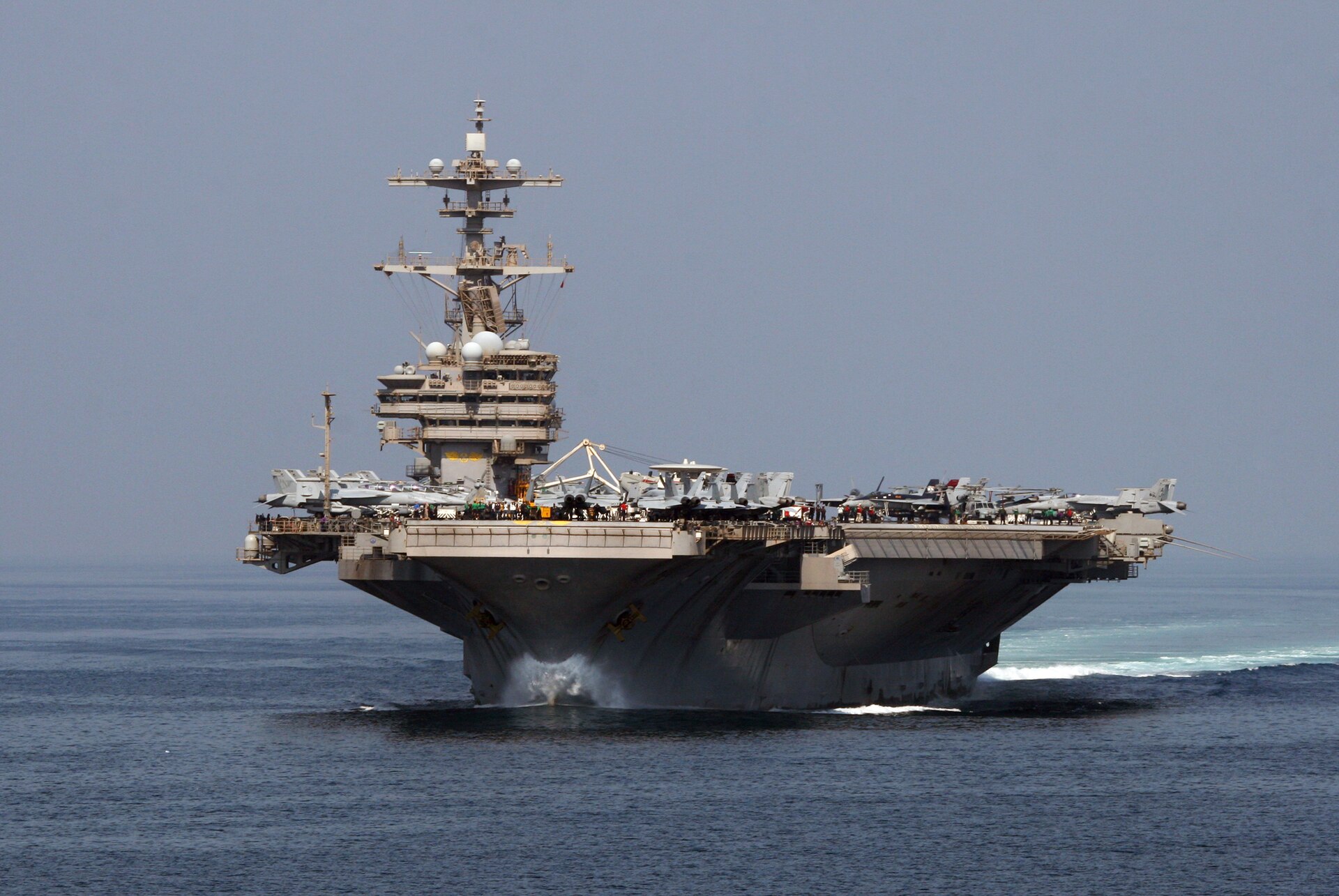
Russia is still fighting a large, costly war in Ukraine, the same war in which it relied on Iranian-designed attack drones. It has neither the naval nor the air power to contest the US Navy in the Gulf, thousands of kilometres from its bases. A direct clash with the United States would also carry a real risk of nuclear escalation, which no Russian leader would accept on behalf of a partner that is not an ally.
The war also paid Moscow. With traffic through the Strait of Hormuz disrupted, Brent crude rose from an average of about $71 a barrel in February to around $100 after the fighting began. Reuters calculated that Russia’s oil extraction tax receipts roughly doubled, from 327 billion roubles in March to around 700 billion roubles (about $9 billion) in April. On 6 March the US Treasury even granted India a 30-day waiver to buy Russian oil stranded at sea. Fighting America over Iran would have thrown that windfall away.
China: stability, oil and the Strait of Hormuz
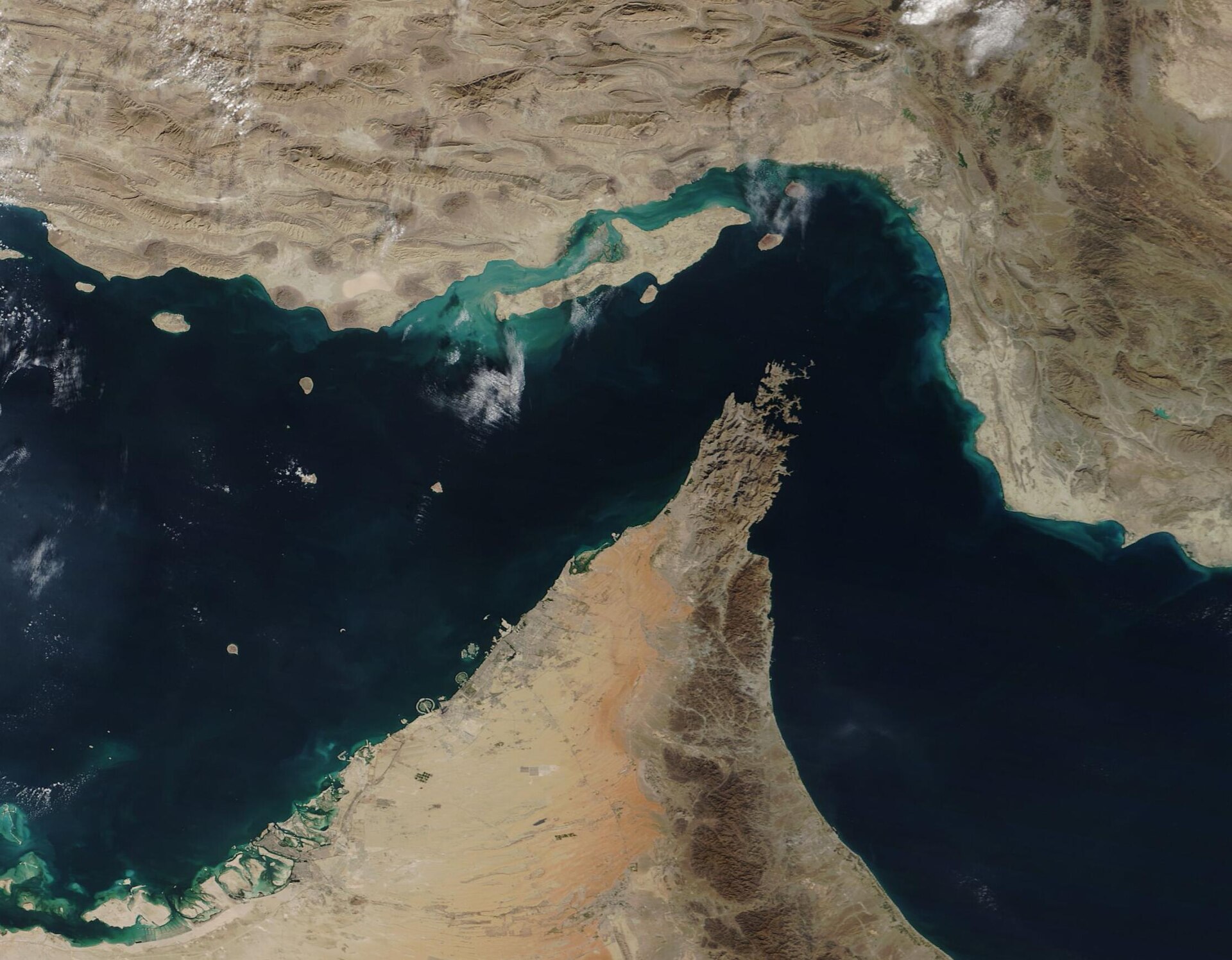
For Beijing the calculation was mainly economic. China buys around 90% of Iran’s sanctioned oil exports, so Iran matters as a discounted supplier. But China’s exposure to the wider Gulf is far larger. According to CSIS ChinaPower, about half of China’s foreign crude imports passed through the Strait of Hormuz in 2025, roughly 5.4 million barrels a day in the first quarter alone, more than India, South Korea and Japan combined. Much of that oil comes from Saudi Arabia, Iraq, the UAE and Qatar, the same Gulf states that came under Iranian fire.
China’s investment ties point the same way. It accounted for about 17% of foreign direct investment into the Gulf Cooperation Council economies in 2024, and the Middle East was the top regional destination for Chinese investment and construction deals in 2025. Its trade with the United States remains far larger than its trade with Iran. Joining a war against the US would have endangered all of that for a partner that delivers a small share of China’s overall interests.
Beijing’s priority was therefore getting the strait open again. It drew on strategic oil reserves estimated at around 1.4 billion barrels and rerouted cargoes through the Red Sea, rather than trying to change the military outcome.
What Moscow and Beijing did instead
Staying out of the fighting did not mean doing nothing. Both powers backed Iran in ways that stopped short of putting their own forces at risk.
Diplomatic cover
On 28 February Russia’s foreign ministry called the strikes a “deliberate, premeditated, and unprovoked act of armed aggression.” China’s foreign ministry said they had no UN Security Council authorisation and violated international law, and condemned Khamenei’s killing as a grave violation of Iran’s sovereignty. The two countries jointly requested emergency Security Council meetings.
- Both abstained on Resolution 2817, which condemned Iran’s attacks on Gulf states, rather than vetoing it.
- On 7 April they vetoed a Bahrain-sponsored draft on escorting ships through the Strait of Hormuz, arguing it ignored the root causes of the conflict.
- In September they vetoed a US-backed attempt to renew UN monitoring of Iran’s nuclear programme, as reported by The New York Times.
Mediation
China and Pakistan put forward a five-point plan on 31 March calling for a ceasefire and normal navigation through Hormuz. Pakistan then brokered a two-week ceasefire agreed on 7 April and in effect from 8 April, with China helping persuade Tehran to accept it. Direct US–Iran talks in Islamabad on 11–12 April ended without agreement.
Grey-zone support: reported, and denied
US and Western officials have accused both countries of helping Iran behind the scenes. These claims come mainly from anonymous officials quoted in Western media, and both Moscow and Beijing reject them.
- Intelligence: CNN and The Washington Post reported in early March, citing US officials, that Russia shared information on the positions of US warships and aircraft.
- Missiles and drones: a Western intelligence assessment reported by Bloomberg in June said Russia helped rebuild Iran’s missile stockpile during the ceasefire to about three-quarters of its pre-war level. US and European officials told AP that Russia was sending upgraded drones.
- Satellite imagery: on 8 May the US sanctioned Chinese firms including Chang Guang Satellite Technology and The Earth Eye for allegedly providing Iran with geospatial intelligence.
- Components and air defence: US media have reported Chinese shipments of drone and missile parts and plans to supply shoulder-fired air-defence missiles. China denies arming Iran, and President Trump said Xi Jinping told him the same.
An economic lifeline
China kept buying Iranian crude throughout the war, although volumes fell sharply. Kpler data cited by The National shows Chinese imports of Iranian oil averaged about 530,000 barrels a day in July and August, 48% below pre-war levels. When Washington sanctioned Chinese refiners, China’s commerce ministry told companies not to comply with the US measures.
Russia and China did not see the war the same way
It is easy to treat Moscow and Beijing as one bloc, but their messaging differed. Russia framed the war as US–Israeli aggression aimed at regime change and leaned harder on Iran’s right to enrich uranium. China spoke of restraint by “all parties” and was careful to respect the sovereignty of the Gulf states, whose oil and investment matter more to it than Iran’s. Statements tracked by the Washington Institute show the two coordinating at the UN while each framed the war in its own way.
The bigger lesson: partnerships, not alliances
Russia, China and Iran share a grievance against American power. They do not share a commitment to fight for one another. Their relationship is transactional: each helps the others when it is cheap and useful to do so, and stops where the cost becomes a direct war with the United States.
This is the same logic that kept NATO troops out of Ukraine. Nuclear-armed great powers avoid fighting each other directly. They back partners with weapons, intelligence, money and diplomatic cover, and they keep their own soldiers at home. Readers interested in the naval balance behind this calculation can see our analysis of the US Navy vs China shipbuilding race and the Pentagon’s 2027 budget.
Where the war stands now
As of early November 2026 the war is not over. The April ceasefire was repeatedly violated and broke down in July after attacks on commercial shipping in the Gulf. Qatar and Pakistan are now mediating talks on an interim deal, while Iran has set conditions that include lifting the US blockade of its ports. On 2 November US forces carried out what officials described as limited, defensive strikes near Hormuz after, according to US officials, Iranian forces fired on a US aircraft. Russia and China remain where they have been since February: loud in the Security Council, active in the oil market and absent from the battlefield.
Frequently asked questions
Does Russia have a defence treaty with Iran?
No. The Russia–Iran Comprehensive Strategic Partnership Treaty signed on 17 January 2025 contains no mutual-defence clause. Each side only pledges not to help an aggressor that attacks the other.
Is China an ally of Iran?
No. China and Iran signed a 25-year cooperation agreement in 2021, but it is an economic framework. China follows a policy of non-alliance and has no defence obligation to Iran.
Did Russia or China send weapons to Iran during the 2026 war?
US and Western officials, quoted in media reports, say Russia supplied intelligence, drones and help rebuilding Iran’s missile stockpile, and that Chinese firms provided satellite imagery and military components. Russia and China deny supplying weapons, and none of these claims has been independently confirmed.
Why does China care so much about the Strait of Hormuz?
Around half of China’s imported crude oil passed through the strait in 2025, much of it from Saudi Arabia, Iraq, the UAE and Qatar. A long closure hurts China’s economy far more than the loss of Iran as a partner.
How did Russia benefit from the Iran war?
Higher oil prices sharply increased Russia’s export revenue and tax receipts, and the disruption to Gulf supply made buyers more willing to take Russian crude.
Sources and further reading
Researched using official statements and published reporting up to 7 November 2026. Claims of covert military support are attributed to their sources and remain unconfirmed.
- Washington Institute: Tracking Chinese and Russian statements on the Iran war
- CSIS ChinaPower: How is the Iran war impacting China’s economy?
- The National: China’s Iranian oil imports nearly halve since war, 26 Aug 2026
- Military.com: Russia condemns US-Israel strikes on Iran, 28 Feb 2026
- Meduza: Russia and Iran sign strategic partnership pledging non-assistance to aggressors, 17 Jan 2025
- Dawn: Russia, Iran harden military and trade ties in new pact
- Wikipedia: Russia in the 2026 Iran war (with cited reporting from CNN, Washington Post, Bloomberg, AP and Reuters)
- Wikipedia: China in the 2026 Iran war (with cited reporting from Reuters, FT, CNN and WSJ)
- Wikipedia: 2026 Iran war ceasefire
- CBS News: Iran war live updates, 2–3 Nov 2026


Leave a Reply