
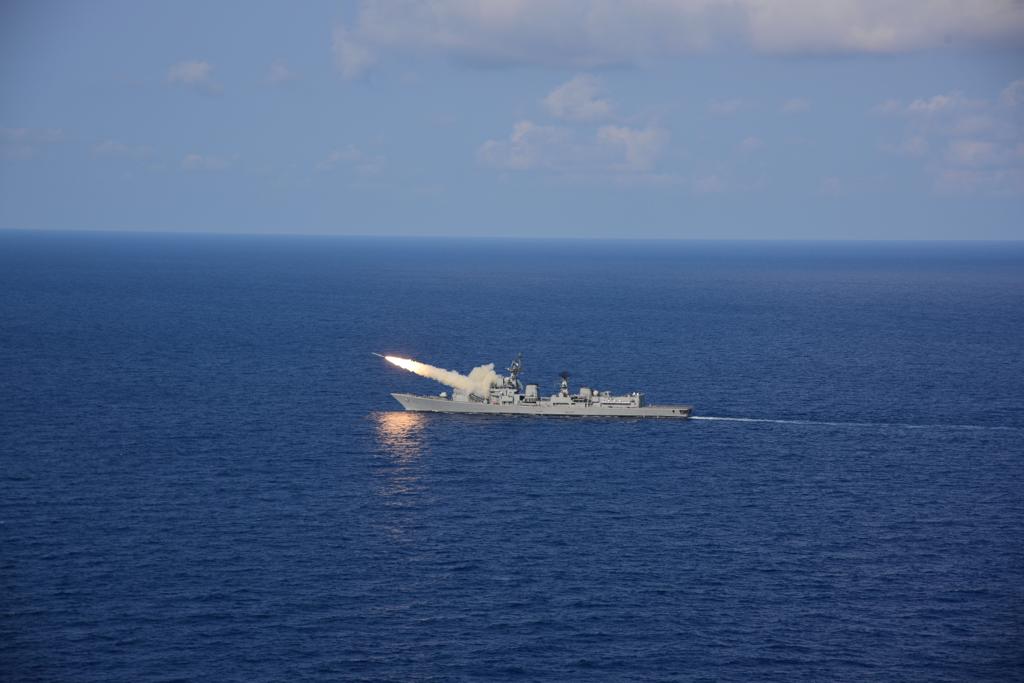
In April 2024, an Indian Air Force C-17 transport landed in the Philippines with an unusual cargo: the first battery of BrahMos supersonic cruise missiles ever delivered to a foreign country. For India it was a milestone in its push to become an arms exporter. For the Philippines it was the first time it could threaten a large warship from the shore.
This article explains BrahMos in the Philippines: the deal, what has been delivered, where the missiles are, what they can and cannot do against China, and what comes next.
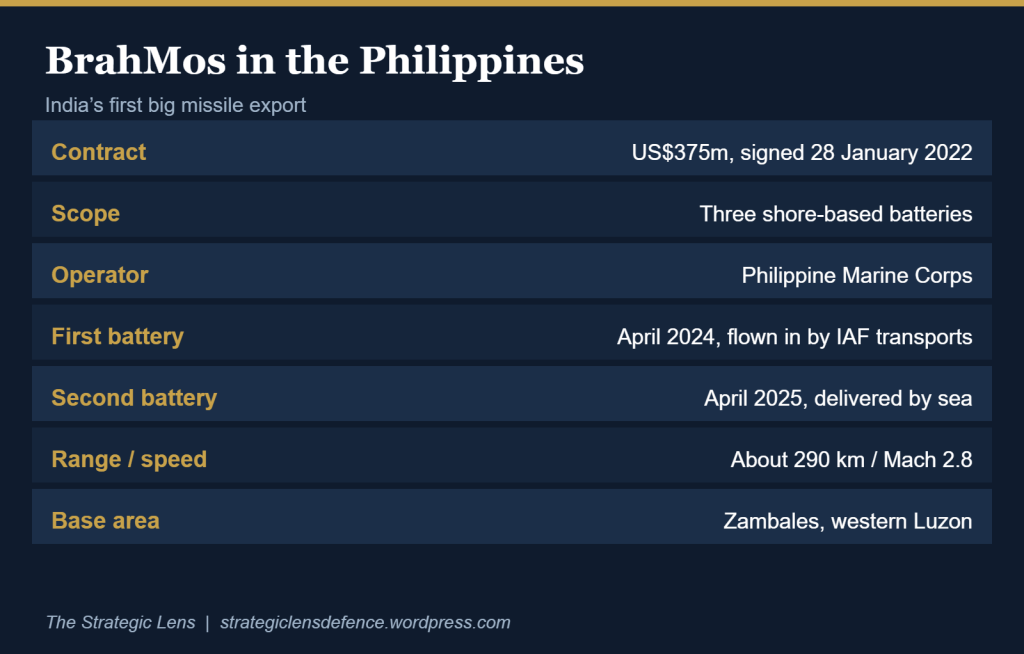
Quick answer: The Philippines signed a US$375 million contract with BrahMos Aerospace in January 2022 for three shore-based anti-ship missile batteries, operated by the Philippine Marine Corps. The first battery arrived by air in April 2024 and the second by sea in April 2025. With a range of about 290 km and a speed of Mach 2.8, the missiles can cover key approaches off western Luzon, including the waters near Scarborough Shoal.
In this article
What is BrahMos?
BrahMos is a supersonic cruise missile developed jointly by India’s DRDO and Russia’s NPO Mashinostroyeniya, named after the Brahmaputra and Moskva rivers. It flies at nearly three times the speed of sound and can skim just above the sea surface, giving a target warship very little time to react. India uses versions launched from ships, submarines, aircraft and land. Our full BrahMos explainer covers its variants and record in Operation Sindoor.
The Philippines bought the export version, limited to about 290 km to comply with the Missile Technology Control Regime, which restricts exports of missiles with a range above 300 km.
The 2022 deal
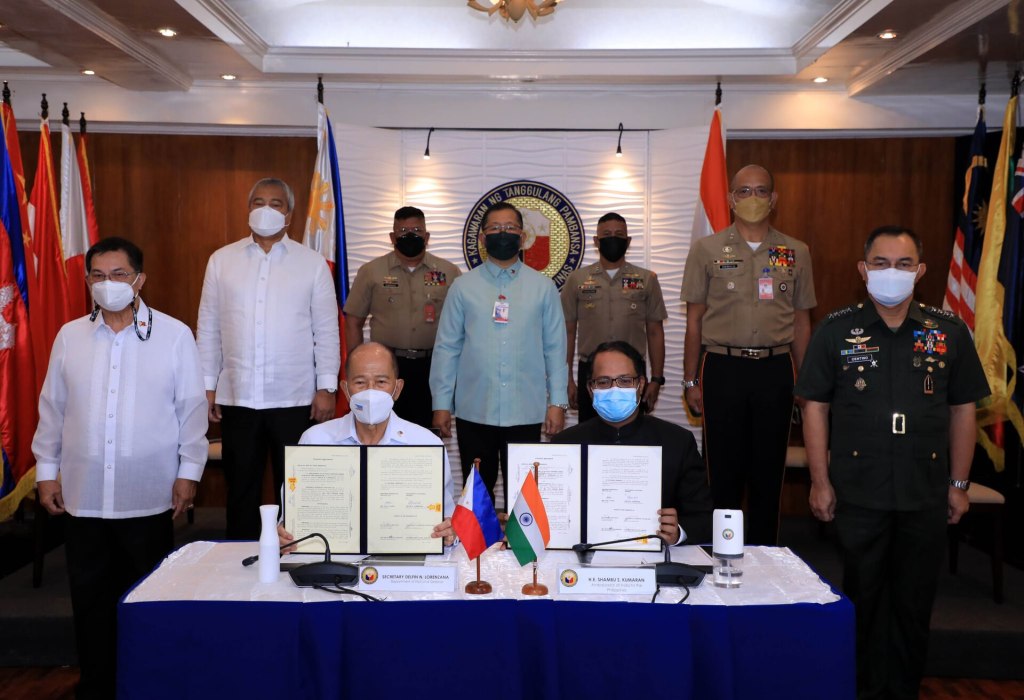
The Philippine Department of National Defense issued a notice of award at the end of 2021, and the contract, worth US$374.96 million, was signed on 28 January 2022. It covers three batteries for the Shore-Based Anti-Ship Missile System Acquisition Project, including mobile launchers, fire-control radars, command posts and support vehicles, plus training and logistics.
The operator is the Philippine Marine Corps, through a Shore-Based Anti-Ship Missile Battalion activated in April 2022 under the Coastal Defense Regiment. Its first 21 operators completed training in India in February 2023.
Deliveries so far
| Batch | Date | How |
|---|---|---|
| First battery | April 2024 | Flown in by Indian Air Force C-17 and Il-76 transports |
| Second battery | April 2025 | Shipped by sea |
| Third battery | Expected after 2025 | Final delivery had been in preparation; full completion not yet officially confirmed |
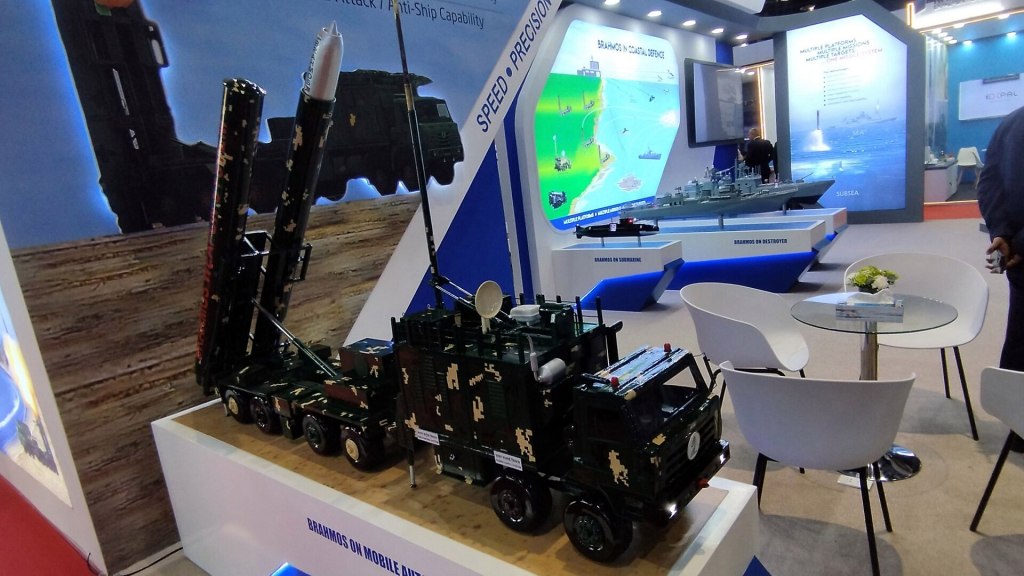
When the second batch arrived, Defense Secretary Gilberto Teodoro said the military would do what was needed to ensure the systems “are used properly”. Each battery includes mobile launchers mounted on trucks, which can move between firing positions to avoid being targeted.
Where are the missiles?
The Philippine government does not publish exact locations, which is sensible for mobile missiles. Reports and photos indicate the first battery was based in Zambales province on the west coast of Luzon, and a dedicated missile storage and maintenance facility has been built at a naval station there. From Zambales, Scarborough Shoal lies roughly 220–250 km away, within the missile’s range.
In a crisis, the launchers could be moved, including to the northern islands facing the Luzon Strait or to Palawan, which faces the Spratly Islands. During the 2026 Balikatan exercise with the United States, BrahMos took part in a simulated “constructive environment”, without a live launch.
What can BrahMos do against China?
- Sea denial. It can threaten Chinese navy and coast guard ships approaching Luzon’s west coast and key straits.
- Speed. At Mach 2.8, a missile fired from 290 km reaches its target in about five to six minutes, much harder to intercept than slower subsonic missiles.
- Mobility. Truck-mounted launchers can hide and move, complicating Chinese targeting.
- Deterrence by denial. It raises the price of any amphibious move against Philippine territory.
The limits
Three batteries are a start, not a wall. Each battery has only a few launchers, so the total number of missiles ready to fire is small. Missiles need targeting data from radars, drones or aircraft, which the Philippines is still building up. And China’s navy and coast guard deliberately keep confrontations in the grey zone, where firing a missile would be a huge escalation. BrahMos deters war; it does not stop water cannon.
Will the Philippines buy more?
Probably. Philippine military leaders have repeatedly spoken of wanting more batteries, including for the Philippine Army’s own shore-based anti-ship missile project, with figures of up to nine more batteries mentioned in reports. The navy also needs modern anti-ship missiles for its new frigates. Funding is the main obstacle, as we explain in our Re-Horizon 3 explainer.
Other Southeast Asian countries are watching. Indonesia and Vietnam have both been reported to be in talks for BrahMos, which would make it one of Asia’s most widely used anti-ship missiles.
Why it matters for India
The Philippine deal was BrahMos’s first export, and it proved that India could sell, deliver and support a high-end weapon abroad. It has helped push India’s defence exports to record levels.
It also built a strategic relationship. In August 2025, during President Marcos’s state visit to India, the two countries upgraded ties to a strategic partnership, and their navies held their first joint sail in the South China Sea. For India, a stronger Philippines adds pressure on China far from India’s own borders and supports freedom of navigation in a sea through which a large share of India’s East Asian trade passes.
How China sees it
Beijing generally objects to its neighbours acquiring long-range strike weapons and to growing military ties between the Philippines and outside powers. But China has been relatively muted about BrahMos specifically compared with its sharp reaction to US Typhon missiles. Analysts suggest Beijing does not want to push India and the Philippines closer, especially while trying to stabilise its relationship with New Delhi along the LAC.
Our take
BrahMos in the Philippines is a small number of missiles with a large strategic message. It shows that Southeast Asian states can build real deterrence without relying only on the United States, and that India is now a serious security partner in the region. The deal’s full value will come only if Manila buys more batteries and the sensors to use them well.
Frequently asked questions
How many BrahMos missiles does the Philippines have?
The Philippines ordered three batteries. The exact number of missiles has not been made public.
How much did the Philippines pay for BrahMos?
About US$375 million (US$374.96 million) under a contract signed on 28 January 2022.
Who operates BrahMos in the Philippines?
The Philippine Marine Corps, through its Shore-Based Anti-Ship Missile Battalion under the Coastal Defense Regiment.
Can Philippine BrahMos missiles reach Scarborough Shoal?
Yes. The export version has a range of about 290 km, and Scarborough Shoal is about 220–250 km from the Zambales coast.
When were the BrahMos missiles delivered to the Philippines?
The first battery arrived in April 2024 by air and the second in April 2025 by sea.
Which other countries want BrahMos?
Indonesia and Vietnam have been reported to be in talks, among others.
Sources and further reading
Researched using official statements and published reporting up to 6 November 2026.
- Naval Technology: India sends second BrahMos missile battery to the Philippines, April 2025
- South China Morning Post: Will the Philippines’ second BrahMos system deter Beijing?, 2025
- IDRW: Philippine Marine Corps BrahMos storage facility and second batch
- IDRW: India gears up for final BrahMos delivery to the Philippines, December 2025
- GMA News: PH, US open Balikatan 2026 drills, April 2026
- BrahMos (reference overview)


Leave a Reply