
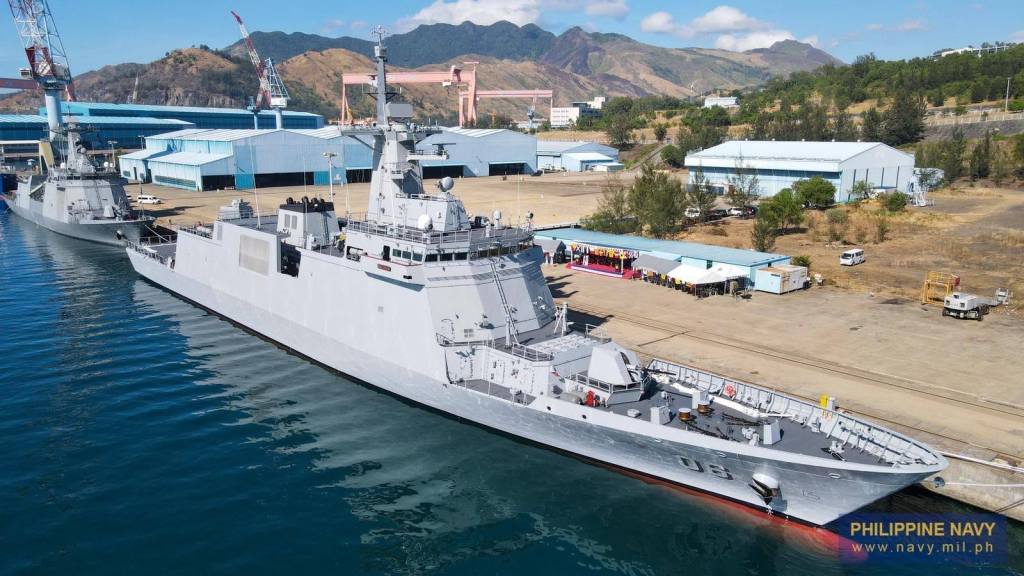
For most of its modern history, the Armed Forces of the Philippines (AFP) was built to fight insurgents in the jungle, not a superpower at sea. Until 2005 its air force flew 1960s-era F-5 jets, and for the decade after it had no fighters at all. Its navy relied on second-hand ships, some older than the Second World War.
That is changing quickly. Under a plan called Re-Horizon 3, Manila intends to spend about 2 trillion pesos over the next decade to build a military that can defend its islands and waters against China. This article explains the Philippines’ military modernisation: where it came from, what it is buying, how it will be paid for, and whether it can work.
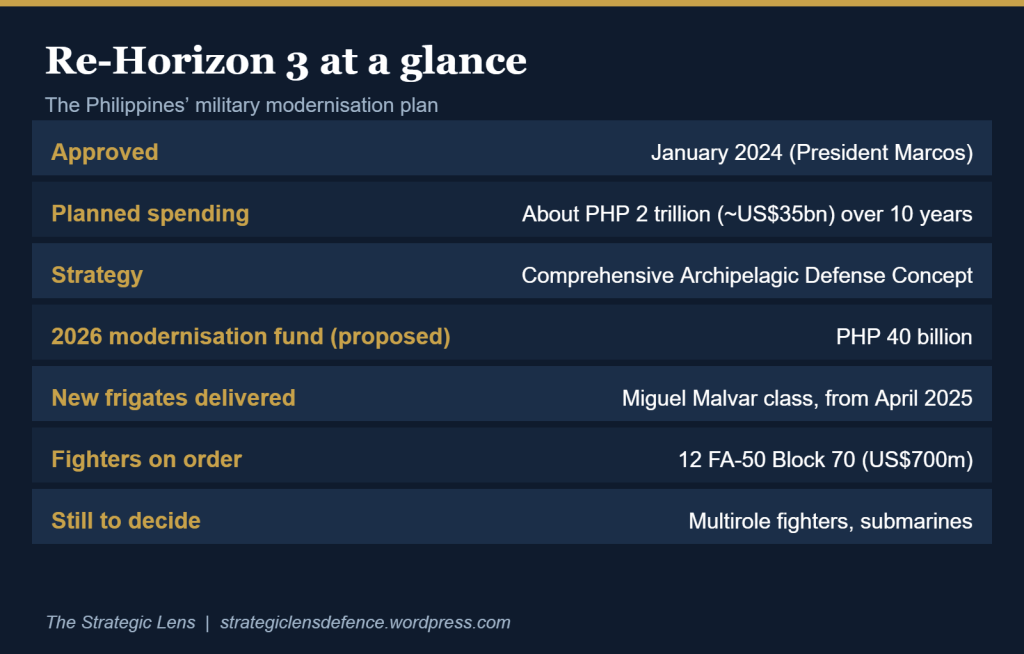
Quick answer: Re-Horizon 3, approved by President Ferdinand Marcos Jr. in January 2024, shifts the AFP from internal security to external defence under a new Comprehensive Archipelagic Defense Concept. It plans up to about US$35 billion of spending over ten years on frigates, corvettes, patrol ships, coastal missiles, fighters, radars and possibly submarines. Money is the biggest constraint: annual modernisation funding is only around 35–40 billion pesos, so much will depend on the economy, loans and foreign help.
In this article
- A short history of AFP modernisation
- What is Re-Horizon 3?
- The Comprehensive Archipelagic Defense Concept
- The navy: frigates, corvettes and patrol ships
- The air force: fighters, transports and radars
- Coastal missiles: BrahMos and beyond
- How will it be paid for?
- The challenges
- The India connection
- Our take
- Frequently asked questions
- Sources and further reading
A short history of AFP modernisation
The first AFP Modernization Act (Republic Act 7898) was signed by President Fidel Ramos in February 1995, with 50 billion pesos earmarked for the first five years. Then the 1997 Asian financial crisis hit. Funding dried up, and the programme effectively died; it formally expired in 2010.
In December 2012, President Benigno Aquino III signed the Revised AFP Modernization Act (Republic Act 10349), extending the programme for 15 years in three “Horizons”:
| Phase | Years | Highlights |
|---|---|---|
| Horizon 1 | 2013–2017 | 12 FA-50PH light fighters from South Korea, ordered in 2014 for about US$420 million |
| Horizon 2 | 2018–2022 | Two Jose Rizal-class frigates from Hyundai Heavy Industries, BrahMos missiles, Black Hawk helicopters |
| Horizon 3 (revised) | 2023–2028 and beyond | Re-Horizon 3: a larger, externally focused plan approved in January 2024 |
Each horizon delivered less than planned, but the direction has been consistent: away from counter-insurgency and towards defending territory.
What is Re-Horizon 3?
After China’s pressure in the South China Sea grew sharply in 2023, the Marcos government decided the original Horizon 3 list was not enough. In January 2024 it approved a revised plan, commonly called Re-Horizon 3, worth about 2 trillion pesos (roughly US$35 billion) over the next decade.
The aim is not to match China, which is impossible. As the air force chief put it in 2025, the Philippines cannot be on par with China “even 10 to 20 years from now”. Instead, the goal is credible deterrence: making any Chinese move to seize Philippine territory costly and risky enough that Beijing thinks twice.
The Comprehensive Archipelagic Defense Concept
Re-Horizon 3 serves a new strategy, the Comprehensive Archipelagic Defense Concept (CADC), adopted by the Department of National Defense under Secretary Gilberto Teodoro. It says the AFP must be able to protect the whole archipelago and its exclusive economic zone, not just the main islands, across land, sea, air, space and cyberspace.
In practice, CADC means more ships and aircraft to watch Philippine waters, coastal missiles to deny approaches, and forces able to operate from the northern islands near Taiwan to Palawan near the Spratlys. In August 2025 the AFP said the proposed 2026 modernisation budget would “accelerate the implementation” of CADC.
The navy: frigates, corvettes and patrol ships
The Philippine Navy is getting its biggest upgrade in decades, almost entirely from South Korea’s Hyundai Heavy Industries (HHI):
- Jose Rizal-class frigates: BRP Jose Rizal and BRP Antonio Luna, commissioned in 2020 and 2021, the navy’s first modern missile-armed warships.
- Miguel Malvar-class frigates: two larger ships ordered in December 2021. BRP Miguel Malvar was delivered in April 2025 and BRP Diego Silang was launched in March 2025.
- Offshore patrol vessels: six Rajah Sulayman-class OPVs ordered in June 2022, with deliveries expected from 2026 to 2028.
- Fast attack craft: nine Israeli Shaldag Mk V boats, some armed with Spike-NLOS missiles.
- Submarines: a long-held ambition. Several designs, including the French Scorpène, have been studied, but no contract has been signed.
The air force: fighters, transports and radars
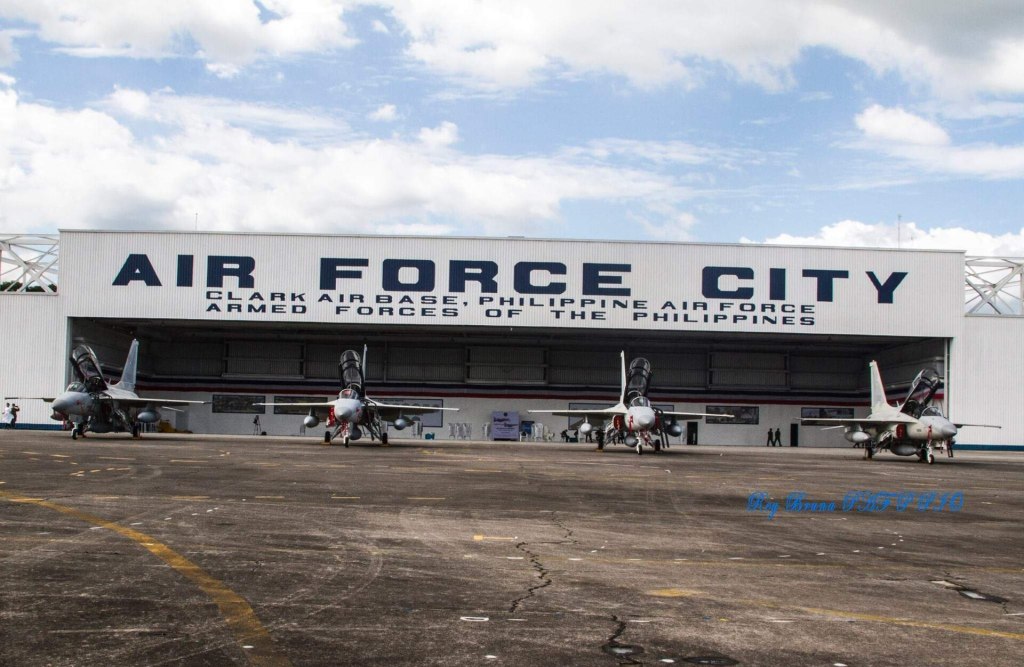
- FA-50 Block 70: 12 more FA-50s ordered in June 2025 for about US$700 million, with deliveries planned by 2030, which will double the light fighter fleet to around 24.
- Multirole fighters: the big unanswered question. In July 2026 Teodoro said Manila was looking at about five suppliers, with a budget of 60–100 billion pesos. We cover this in the Philippine fighter jet decision.
- Helicopters and transports: dozens of Polish-built S-70i Black Hawks, three C-130J-30 transports and other aircraft are on order or being delivered.
- Radars: Japan has supplied air surveillance radars, helping the air force see further over the West Philippine Sea.
Coastal missiles: BrahMos and beyond
The single most important new capability is coastal anti-ship missiles. In January 2022 the Philippines signed a US$375 million deal with India for three batteries of the BrahMos supersonic cruise missile, operated by the Philippine Marine Corps. The Philippine Army wants more. We explain the deal in detail in BrahMos in the Philippines. US systems like NMESIS and Typhon, deployed during exercises, add to this growing “missile wall”, as we describe in our US–Philippines alliance explainer.
How will it be paid for?
This is the plan’s weakest point. The proposed 2026 national budget set aside 40 billion pesos for AFP modernisation, up 5 billion from the 35 billion guaranteed in 2025. At that rate, spending 2 trillion pesos in ten years is impossible from the regular budget alone.
- Multi-year contracts spread payments over several budgets.
- Foreign loans and credit from partner governments, which the defence department has been exploring.
- Foreign military financing from the United States and official security assistance from Japan.
- Local industry: the Self-Reliant Defense Posture Revitalization Act, signed in October 2024, aims to build up domestic defence production over time.
Analysts at GlobalData note that executing Re-Horizon 3 “hinges on the performance of the Philippine economy”.
The challenges
- Funding gaps. The programme has faced repeated delays due to budget constraints since 1995.
- Absorption. A small force must recruit and train crews for new frigates, missiles and jets at the same time.
- Maintenance. Modern equipment needs spare parts and skilled technicians that the AFP has historically lacked.
- Politics. A future president could change priorities, as happened under Rodrigo Duterte.
The India connection
India has become one of the Philippines’ important defence partners. Beyond BrahMos, the two navies exercise together, and Indian shipyards and defence firms are pitching for more Philippine contracts. For India, a stronger Philippines helps keep the South China Sea open and supports its own record defence exports. For Manila, India offers capable weapons without the political strings of a formal alliance.
Our take
Re-Horizon 3 is the right strategy for a medium power facing a giant: deny, do not dominate. The frigates and BrahMos batteries show it is not just a paper plan. But the money does not yet add up, and the biggest decisions, multirole fighters and submarines, keep slipping. The Philippines’ real force multiplier will remain its alliances, especially with the US and Japan.
Frequently asked questions
What is Re-Horizon 3?
A revised military modernisation plan approved by President Marcos in January 2024, worth about 2 trillion pesos (around US$35 billion) over ten years, focused on external defence.
What is the Comprehensive Archipelagic Defense Concept?
The Philippines’ defence strategy that requires the AFP to protect the whole archipelago and its exclusive economic zone across all domains.
How much is the Philippines spending on military modernisation in 2026?
The proposed 2026 budget allocated 40 billion pesos to the AFP Modernization Program, up from 35 billion in 2025.
Does the Philippines have fighter jets?
Yes, a small fleet of South Korean FA-50PH light fighters, with 12 more advanced FA-50 Block 70s on order. It is still choosing a multirole fighter.
Is the Philippines buying submarines?
It wants submarines and has studied several designs, but no contract has been signed.
What weapons has the Philippines bought from India?
Three batteries of BrahMos supersonic anti-ship cruise missiles, under a US$375 million contract signed in January 2022.
Sources and further reading
Researched using official statements and published reporting up to 6 November 2026.
- Asia-Pacific Defence Reporter: Re-Horizon 3 to spur Philippine defence spending, March 2024
- Manila Bulletin: AFP modernization gets P40B in 2026 national budget, August 2025
- International Crisis Group: The Philippines’ military modernisation effort, 2025
- Philippine News Agency: Additional FA-50 jets a big boost to air defence, July 2025
- AFP Modernization Act (reference overview)


Leave a Reply