
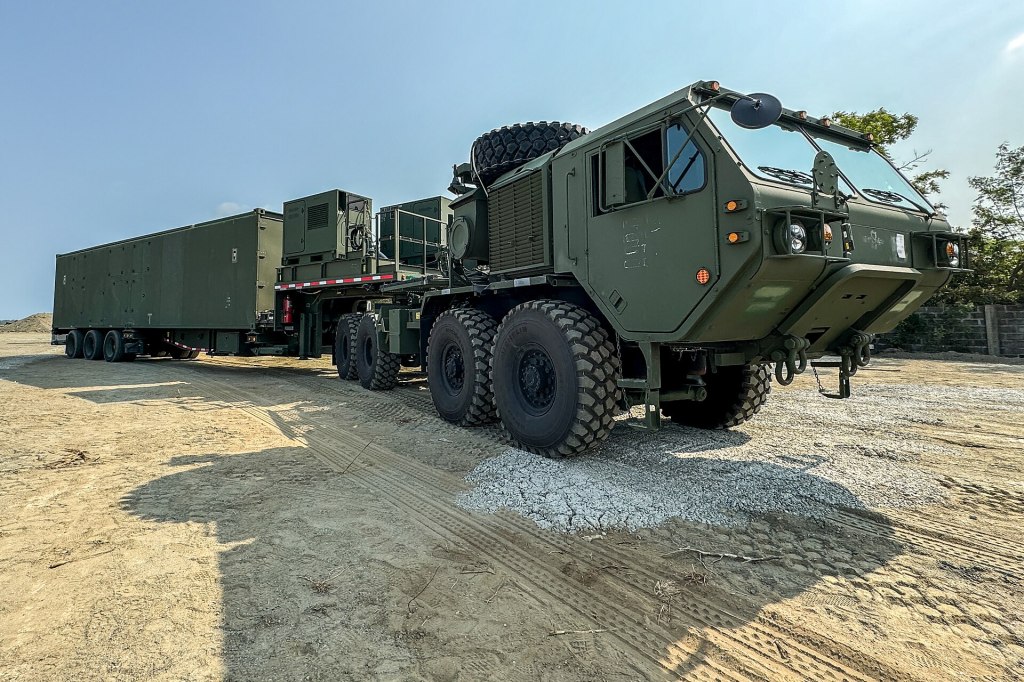
In 1992 the last US troops left Subic Bay, ending almost a century of American bases in the Philippines. Three decades later, US Marines are flying anti-ship missile launchers into islands within sight of Taiwan, and a US Army missile system capable of reaching mainland China has been parked in northern Luzon for more than two years.
This article explains the US–Philippines alliance in 2026: the 1951 treaty, the EDCA sites, the Typhon and NMESIS missile deployments, the Balikatan exercises, and why China is so alarmed.
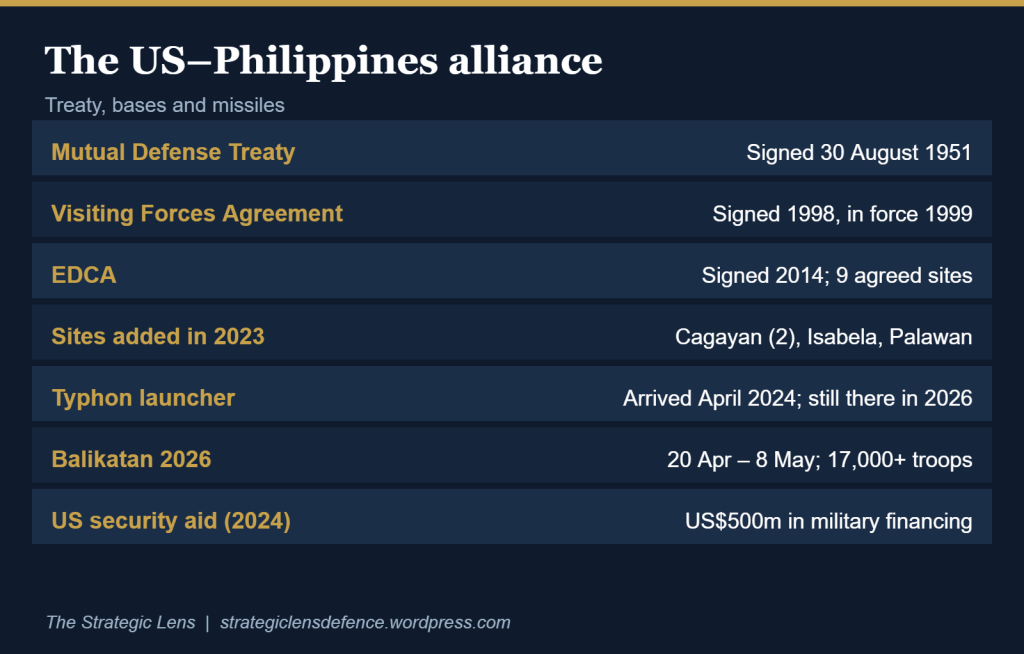
Quick answer: The US and the Philippines are bound by the 1951 Mutual Defense Treaty. Under the 2014 Enhanced Defense Cooperation Agreement (EDCA), US forces can rotate through nine Philippine military sites, four of them added in 2023 close to Taiwan and the Spratlys. Since 2024 the US has deployed the Typhon missile launcher and NMESIS anti-ship missiles to the Philippines, turning the northern islands into a frontline in any Taiwan crisis. Balikatan 2026 involved more than 17,000 troops from the Philippines, the US and partners.
In this article
The 1951 Mutual Defense Treaty
The Mutual Defense Treaty was signed on 30 August 1951 and is the oldest US treaty alliance in Asia. Each country pledges to act to meet the common danger if the other is attacked in the Pacific area. US officials have repeatedly said that this includes armed attacks on Philippine armed forces, public vessels and aircraft, including the coast guard, anywhere in the South China Sea.
The treaty does not automatically mean war; each side acts “in accordance with its constitutional processes”. But it is the backbone of everything else in the relationship.
From Subic to EDCA
For decades the US ran two of its largest overseas bases in the Philippines: Subic Bay naval base and Clark Air Base. In 1991 the Philippine Senate narrowly rejected a new lease, and the bases closed in 1992. The 1998 Visiting Forces Agreement then allowed US troops to return temporarily for exercises, which is how the annual Balikatan (“shoulder to shoulder”) drills began.
The Enhanced Defense Cooperation Agreement, signed on 28 April 2014, went further. It lets US forces rotate through, preposition equipment at and build facilities on agreed Philippine military sites. The Philippines keeps ownership, and the US cannot build permanent bases or store nuclear weapons there. The Philippine Supreme Court upheld EDCA in 2016.
The nine EDCA sites
| Site | Province | Added |
|---|---|---|
| Antonio Bautista Air Base | Palawan | 2016 |
| Basa Air Base | Pampanga | 2016 |
| Benito Ebuen Air Base | Cebu | 2016 |
| Fort Magsaysay | Nueva Ecija | 2016 |
| Lumbia Airport | Cagayan de Oro, Misamis Oriental | 2016 |
| Naval Base Camilo Osias | Santa Ana, Cagayan | 2023 |
| Lal-lo Airport | Lal-lo, Cagayan | 2023 |
| Camp Melchor Dela Cruz | Gamu, Isabela | 2023 |
| Balabac Island | Palawan | 2023 |
The geography of the 2023 additions says everything. Three are in the far north of Luzon, facing Taiwan across the Luzon Strait. The fourth, Balabac, sits at the southern tip of Palawan near the Spratly Islands. Local governors in Cagayan and Isabela complained they were not consulted, but the national government went ahead.
Typhon: the missile China wants gone
In April 2024, during the Salaknib exercise, the US Army flew a Typhon launcher, formally called the Mid-Range Capability, into northern Luzon. It was the first time the system had been deployed outside the United States. Typhon uses the Navy’s Mark 41 vertical launch system to fire SM-6 missiles, which can hit ships and aircraft, and Tomahawk cruise missiles, which can strike land targets well over 1,500 km away. From Luzon, that puts parts of the Chinese mainland within reach.
It was meant to be a temporary exercise deployment. It never left. In April 2026, the commander of the US I Marine Expeditionary Force, Lt Gen Christian Wortman, confirmed that “the Typhon system remains in the Philippines”. Manila has described it as a training asset and has said it could consider sending it back if China stopped its aggressive behaviour in the South China Sea.
NMESIS and the Batanes islands
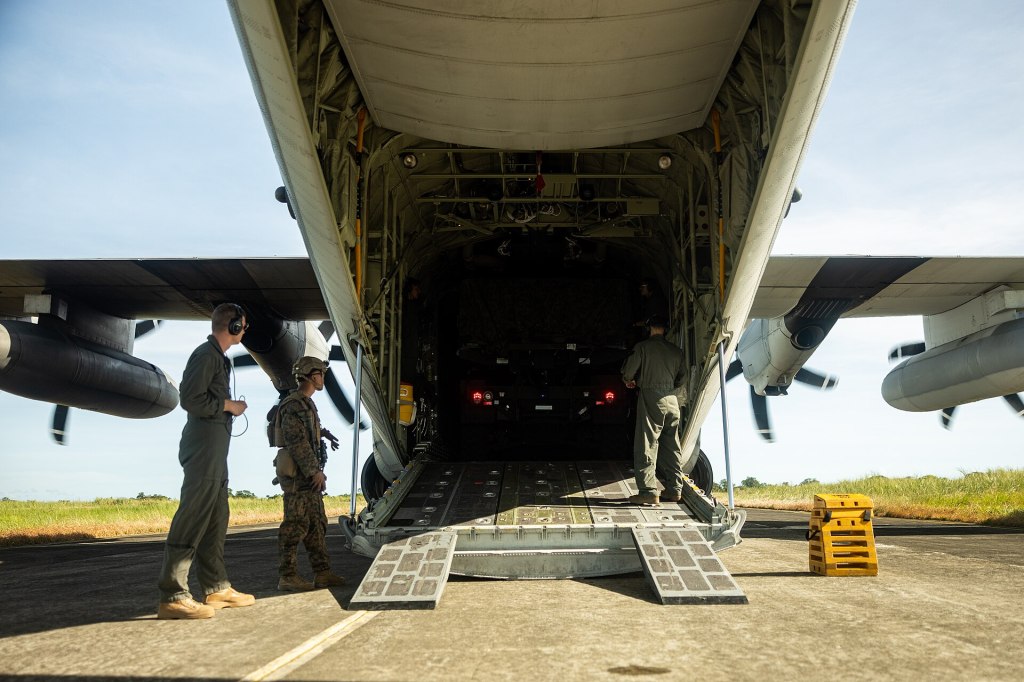
NMESIS (Navy Marine Expeditionary Ship Interdiction System) is a robotic truck carrying two Naval Strike Missiles, with a range of up to about 185 km. It is the signature weapon of the 3rd Marine Littoral Regiment, a new type of Marine unit designed to spread out across islands and threaten enemy ships.
In 2025 the Marines flew NMESIS into the Batanes island group, the northernmost part of the Philippines, for the first time. In 2026 they went further. During Balikatan, launchers were staged at Cagayan North International Airport in Lal-lo, then airlifted to Basco in Batanes, which is closer to Taiwan than it is to Luzon. Marines practised maritime strike drills on Itbayat, about 155 km from Taiwan, and set up systems across three islands. They then pulled out within about 72 hours, practising the “shoot and scoot” tactics they would need in a real war.
NMESIS has not yet fired a live missile in the Philippines. In a May 2026 live-fire event near Laoag, it was a Japanese Type 88 coastal missile that fired at a target ship under US command and control, a striking sign of how closely the allies now work together.
Balikatan 2026
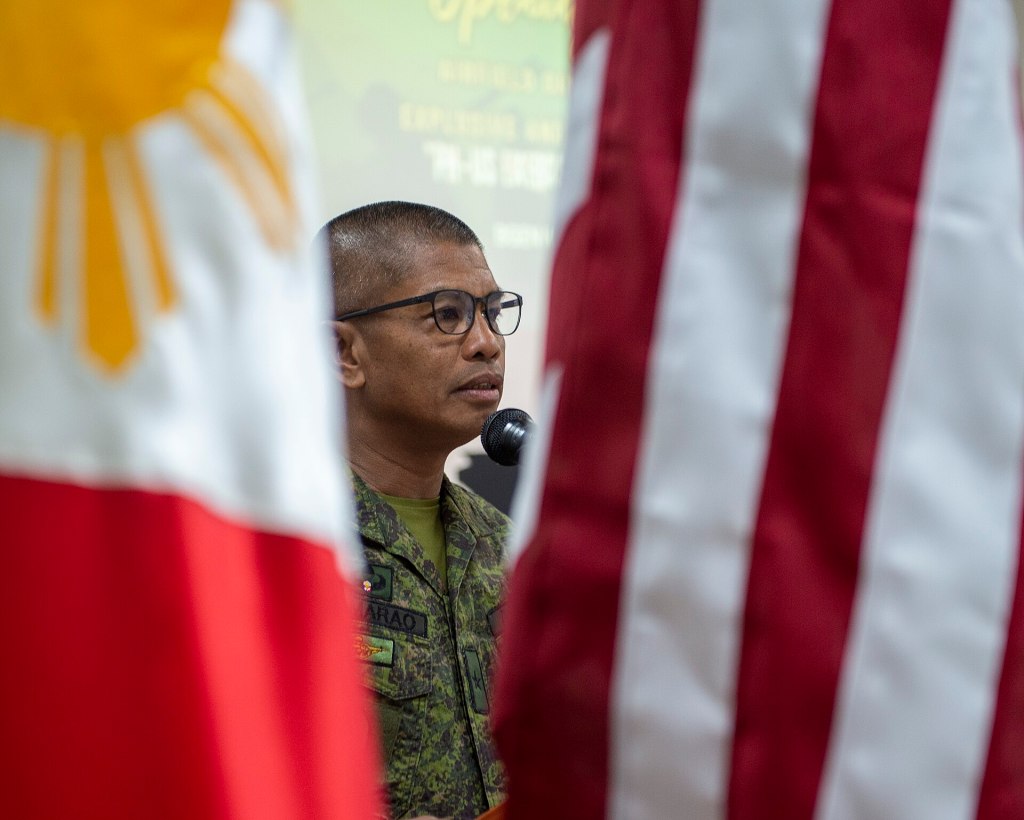
Balikatan 41-2026 ran from 20 April to 8 May 2026. More than 17,000 troops took part, about 10,000 of them American, alongside forces from Australia, Canada, France, Japan and New Zealand, with at least 18 more countries observing. Exercises ran from Luzon to Mindanao and covered air and missile defence, maritime security, live fire and humanitarian assistance.
AFP chief Gen. Romeo Brawner Jr. described the exercise as showing readiness to “defend together”. Philippine BrahMos batteries joined in a simulated role. We explain those in BrahMos in the Philippines.
Why the alliance has revived
- China’s pressure at sea. Repeated clashes at Second Thomas Shoal and Scarborough Shoal convinced Manila it needed US backing. See our South China Sea explainer.
- Taiwan. The Philippines’ northern islands control the Luzon Strait, a key route for Chinese ships and submarines heading into the Pacific. Any Taiwan war would involve this area. See the 2027 Taiwan window.
- A change of president. Ferdinand Marcos Jr. reversed Rodrigo Duterte’s tilt towards Beijing.
- US money. In 2024 Washington announced US$500 million in foreign military financing for the Philippines, alongside EDCA construction funding.
China’s reaction
Beijing has repeatedly demanded the withdrawal of Typhon, saying it destabilises the region and fuels an arms race. Chinese officials portray EDCA and Balikatan as the US turning the Philippines into a forward base against China. China has also stepped up its own military activity around Taiwan and the Luzon Strait.
The risks for Manila
The alliance brings protection, but also danger. Hosting US missiles near Taiwan makes the northern Philippines a likely target in any US–China war, whether or not Manila wants to fight. Critics in the Philippines also worry about sovereignty and about being pulled into a conflict over Taiwan. Officials argue the opposite: that visible US support is what deters China from going further. Manila is also diversifying with other partners, as we explain in the Philippines’ Japan and Australia partnerships.
Our take
The US–Philippines alliance has gone from dormant to frontline in less than a decade. Typhon and NMESIS are small in number but large in meaning: they put US firepower on the doorstep of the Taiwan Strait and the South China Sea. That strengthens deterrence and raises the stakes. For Manila, the challenge is to make sure the alliance protects Philippine interests first, not just American war plans.
Frequently asked questions
What is the US–Philippines Mutual Defense Treaty?
A 1951 treaty in which the US and the Philippines pledge to act to meet the common danger if either is attacked in the Pacific area.
What is EDCA?
The 2014 Enhanced Defense Cooperation Agreement, which lets US forces rotate through and build facilities at nine agreed Philippine military sites without establishing permanent bases.
Is the Typhon missile system still in the Philippines?
Yes. It arrived in April 2024, and a senior US Marine commander confirmed in April 2026 that it remains in the country.
What is NMESIS?
A US Marine Corps anti-ship missile launcher carrying Naval Strike Missiles with a range of up to about 185 km. It has been deployed to the Batanes Islands near Taiwan during exercises.
How big was Balikatan 2026?
More than 17,000 troops took part from 20 April to 8 May 2026, including about 10,000 Americans and forces from Australia, Canada, France, Japan and New Zealand.
Does the US have military bases in the Philippines?
Not permanent US bases. US forces rotate through Philippine bases under EDCA; the Philippines retains ownership.
Sources and further reading
Researched using official statements and published reporting up to 6 November 2026.
- Naval News: US anti-ship missiles in the Philippines for Balikatan 2026, April 2026
- Naval News: The Philippines meets its NMESIS in Balikatan, June 2026
- GMA News: PH, US open Balikatan 2026 drills, 20 April 2026
- Army Recognition: US Marines airlift NMESIS near Taiwan, June 2026
- Enhanced Defense Cooperation Agreement (reference overview)


Leave a Reply