
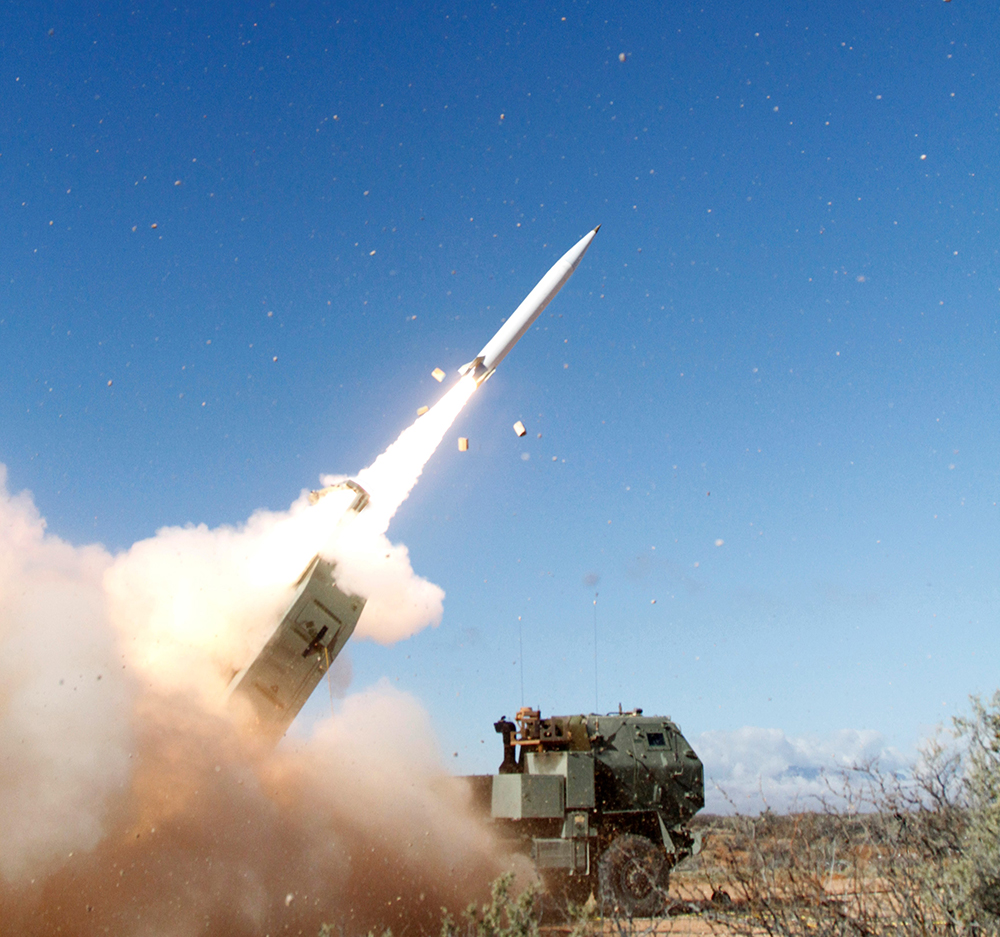
For most of its history, Australia’s military was built to defend the continent and fight alongside allies far away. Long-range strike, the ability to hit targets hundreds or thousands of kilometres from Australian shores, was not a priority. Missiles were bought off the shelf from the US and Europe, in small numbers.
That changed with the 2023 Defence Strategic Review, which put long-range strike and a home-grown missile industry at the top of Australia’s priorities. This article explains Australia’s long-range missiles: the Guided Weapons and Explosive Ordnance (GWEO) enterprise, the PrSM, HIMARS, Tomahawk and Naval Strike Missile, Australia’s first missile factory, and why it all matters.
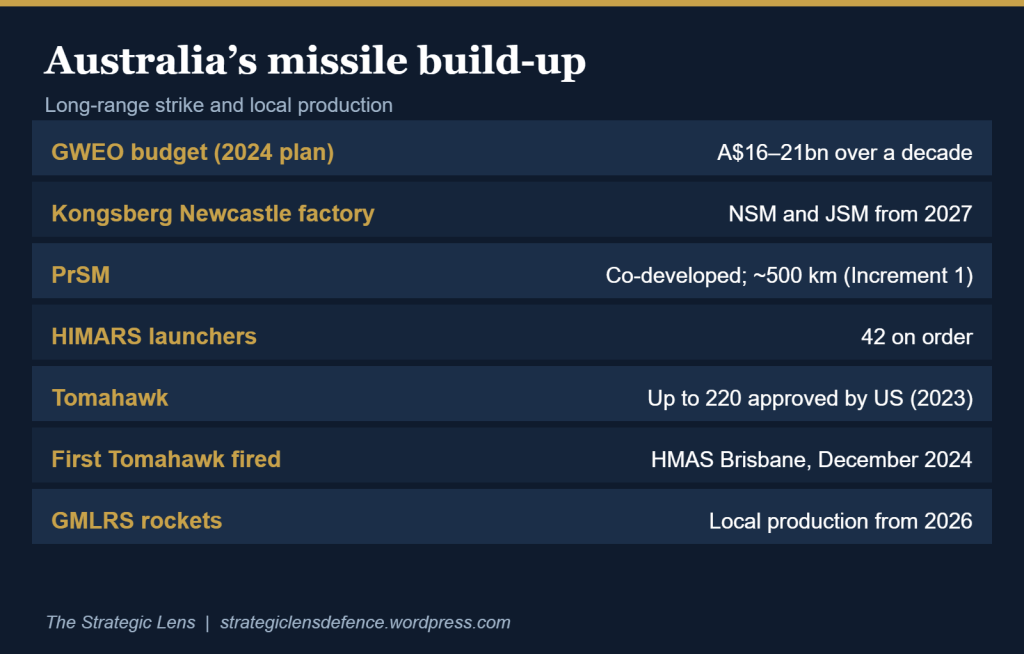
Quick answer: Australia is spending A$16–21 billion over a decade on guided weapons, with more planned in the 2026 investment plan. It is buying 42 HIMARS launchers, co-developing the 500 km-plus Precision Strike Missile, arming its destroyers and future submarines with Tomahawk cruise missiles, and replacing Harpoon with the Naval Strike Missile. Kongsberg is building Australia’s first missile factory at Newcastle, due to start producing NSM and JSM missiles in 2027.
In this article
- Why Australia wants long-range strike
- The GWEO enterprise
- The Army: HIMARS and PrSM
- The Navy: Tomahawk and Naval Strike Missile
- The Air Force: JSM, LRASM and hypersonics
- Australia’s first missile factory
- The missiles compared
- The challenges
- What India can learn
- Our take
- Frequently asked questions
- Sources and further reading
Why Australia wants long-range strike
The 2023 Defence Strategic Review concluded that Australia could no longer count on a ten-year warning before a major conflict. Its answer was a strategy of “deterrence by denial”: being able to hold an adversary’s ships, aircraft and bases at risk far from Australia, so that attacking or coercing it becomes too costly.
There was also a lesson from Ukraine: wars use up missiles far faster than peacetime stockpiles assume, and supply chains on the other side of the world can be cut. Hence the second goal: making missiles in Australia.
The GWEO enterprise
The Guided Weapons and Explosive Ordnance (GWEO) enterprise, led by Air Marshal Leon Phillips, is Australia’s programme to buy, stockpile, maintain and eventually manufacture missiles and munitions. The 2024 Integrated Investment Program set aside A$16–21 billion over ten years. Reporting on the 2026 plan cites up to A$36 billion over the decade for longer-range munitions, though the two figures cover different scopes and periods.
The approach is gradual: first assemble foreign-designed weapons, then make key components, then build complete missiles. The Australian Strategic Policy Institute has described it as a “crawl-walk-run” plan and warned that it “risks moving too slowly in a deteriorating strategic environment”.
The Army: HIMARS and PrSM
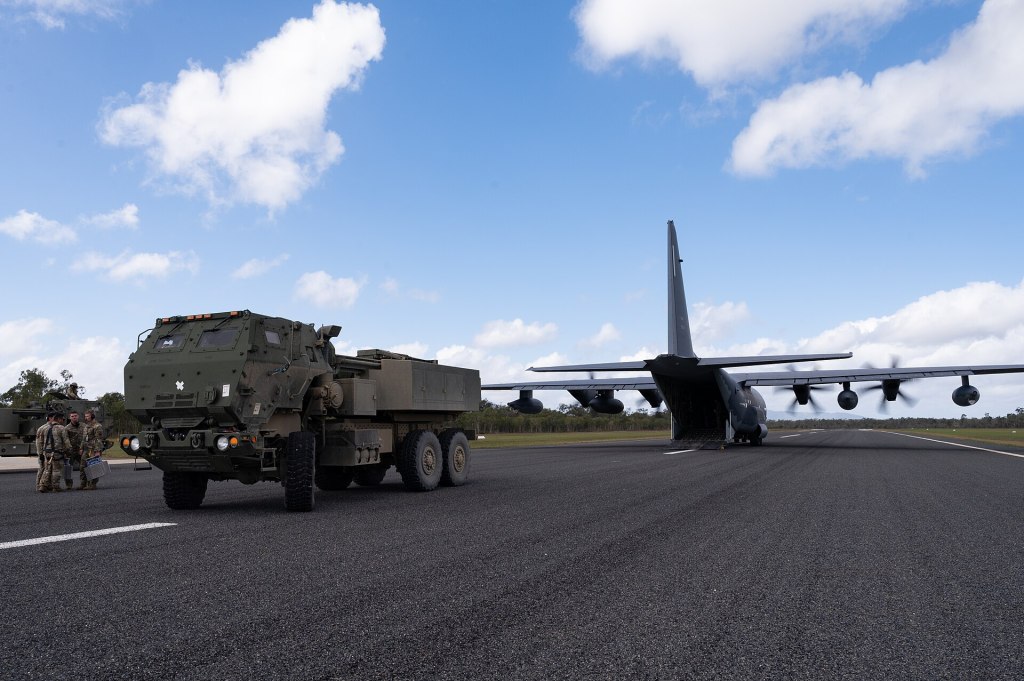
The Australian Army is turning itself into a long-range strike force. It is acquiring 42 M142 HIMARS truck-mounted launchers, which can fire GMLRS guided rockets (about 70–80 km) and much longer-range missiles.
The most important of those is the Precision Strike Missile (PrSM). Australia joined the programme as a partner in 2021, contributing US$54 million, committed to future versions in 2024, and in June 2025 signed an agreement with the US covering production, sustainment and development, including manufacturing in Australia, with A$310 million over ten years. Increment 1 has a range of about 500 km; later versions aim at 1,000 km and the ability to hit moving ships. Australia test-fired a PrSM during Exercise Talisman Sabre in July 2025.
HIMARS launchers loaded with PrSM, placed in northern Australia or flown to partner countries, could threaten ships approaching through the archipelagos to Australia’s north. The US Army and Marines are doing something similar in the Philippines, as we describe in our US–Philippines alliance explainer.
The Navy: Tomahawk and Naval Strike Missile
In 2023 the US approved the sale of up to 220 Tomahawk cruise missiles to Australia. With a range of more than 1,500 km, Tomahawk gives the Navy a true long-range land-attack weapon. In December 2024, the destroyer HMAS Brisbane became the first Australian ship to fire a Tomahawk. The missiles will also arm Australia’s future Virginia-class submarines.
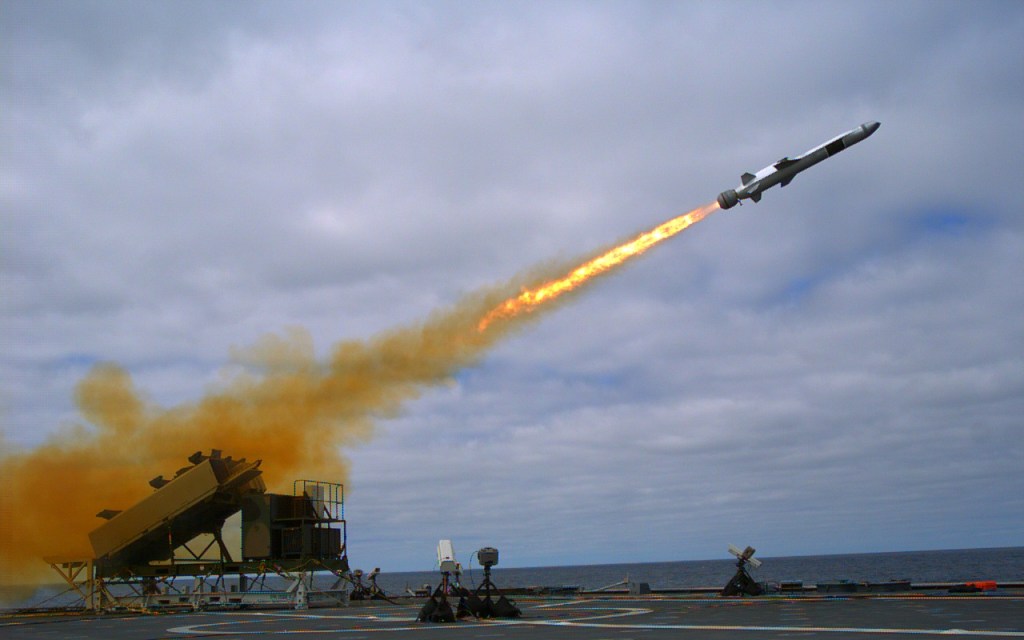
For anti-ship warfare, the Navy is replacing its ageing Harpoon missiles with Kongsberg’s Naval Strike Missile (NSM), a stealthy sea-skimming missile with a range of more than 185 km. HMAS Sydney fired the Navy’s first NSM during a sinking exercise at RIMPAC 2024. The NSM will arm Hobart-class destroyers, the remaining Anzac frigates and the new Mogami-class frigates.
The Air Force: JSM, LRASM and hypersonics
- Joint Strike Missile (JSM): an air-launched relative of the NSM that fits inside the F-35A’s weapons bay. It can also be carried by F/A-18F Super Hornets.
- JASSM-ER and LRASM: long-range stealthy cruise missiles from Lockheed Martin for land and ship attack.
- Hypersonics: through AUKUS and earlier cooperation, Australia is working with the US on hypersonic weapons, with ASPI noting plans for local production of a hypersonic missile in the 2030s.
Australia’s first missile factory
On 28 March 2025, the Australian Government signed a contract with Kongsberg Defence Australia to build Australia’s first guided weapons factory, near Newcastle Airport in New South Wales, next to RAAF Base Williamtown. Based on current plans, it will be the first plant outside Norway to make and maintain both the NSM and JSM.
- Construction was due for completion around mid-2026.
- Missile production is scheduled to start in 2027, with full-rate production by the end of 2028.
- More than 500 jobs are expected in the Hunter region.
- In May 2026 Australia joined a “Strike Missile Family” memorandum with Norway and ten other NSM/JSM users, and committed up to A$850 million for local manufacturing and maintenance of the missiles and key components.
Australia has also started producing GMLRS rockets locally in 2026, reportedly making it the first country outside the US to do so.
The missiles compared
| Missile | Launched from | Approx. range | Role |
|---|---|---|---|
| GMLRS | HIMARS | 70–80 km | Precision rocket artillery |
| PrSM Increment 1 | HIMARS | About 500 km | Land and (later) anti-ship strike |
| Naval Strike Missile | Ships, land launchers | 185 km+ | Anti-ship |
| Joint Strike Missile | F-35A, F/A-18F | Over 275 km | Anti-ship and land attack |
| Tomahawk | Destroyers, submarines | 1,500 km+ | Long-range land attack |
| LRASM / JASSM-ER | Aircraft | Several hundred km+ | Stealthy anti-ship and land attack |
Ranges are approximate public figures and vary by version.
The challenges
- Speed: the GWEO plan took years to take shape, and full local production is still years away.
- Dependence: for now, Australia still relies on US and Norwegian designs, export approvals and components.
- Targeting: long-range missiles need satellites, drones and radars to find targets. Investments like the Ghost Bat and northern bases are part of the answer.
- Stockpiles: buying enough missiles for a long war is extremely expensive.
What India can learn
India is ahead of Australia in one respect: it already designs and builds its own long-range missiles, from BrahMos to Pralay and Nirbhay. Australia’s approach offers a different lesson: partner with allies to co-develop and co-produce, as with PrSM and NSM, to get capability faster while building local industry. India’s growing missile exports also show the demand for affordable long-range weapons in the Indo-Pacific.
Our take
Australia has decided, correctly, that a country with a small military and long sea approaches must be able to strike far and keep firing. The missiles it has chosen are good ones. The weak point is time: a Newcastle factory producing in 2027 and local PrSM later this decade is fast by Australian standards, but slow compared with how quickly a crisis could arrive. Watch the stockpile numbers, not just the announcements.
Frequently asked questions
What is GWEO?
The Guided Weapons and Explosive Ordnance enterprise, Australia’s programme to buy, stockpile and eventually manufacture missiles and munitions locally.
Does Australia have Tomahawk missiles?
Yes. The US approved the sale of up to 220 Tomahawks in 2023, and HMAS Brisbane first fired one in December 2024.
What is the range of the PrSM?
Increment 1 has a range of about 500 km. Later increments aim for around 1,000 km.
Where is Australia’s first missile factory?
Near Newcastle Airport in New South Wales, built by Kongsberg to make NSM and JSM missiles from 2027.
How many HIMARS does Australia have?
Australia is acquiring 42 HIMARS launchers for the Army.
What is replacing Harpoon in the Royal Australian Navy?
The Kongsberg Naval Strike Missile, first fired by HMAS Sydney at RIMPAC 2024.
Sources and further reading
Researched using official statements and published reporting up to 6 November 2026.
- Australian Department of Defence: Contract signed to establish Australia’s first missile factory, 28 March 2025
- ASPI The Strategist: Is GWEO on target?, November 2024
- Naval News: Australia and Norway ink missile manufacturing MoU, May 2026
- Defence Connect: Kongsberg and Commonwealth sign strategic partnership, January 2026
- Army Recognition: Local production of NSM and JSM, May 2026
- Precision Strike Missile (reference overview)


Leave a Reply